
 Drone Services
 Access Equipment
 Breaking & Drilling
 Cleaning Equipment
 Drying & Heating
 General Site Tools
Equipment Hire Guides
How to Use a Hired Carpet Cleaner — Setup, Technique, and Return
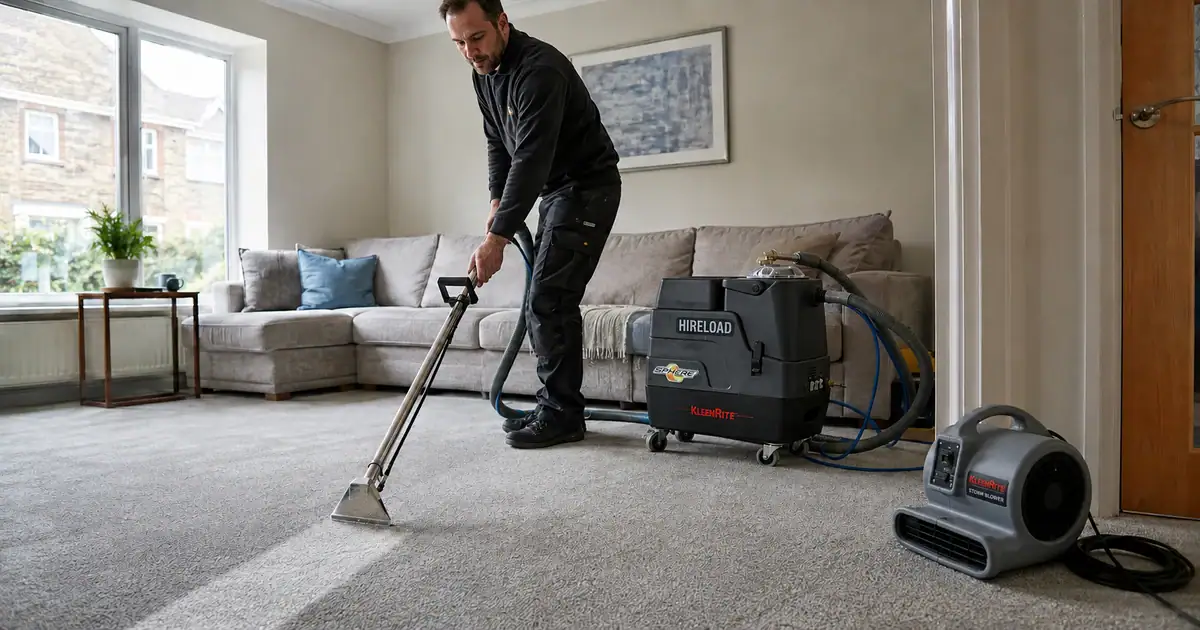
Before You Start — Preparation
Vacuum the entire carpet first. This is the single most important preparation step. A carpet cleaner is designed to deep-clean embedded dirt and stains — not pick up surface debris. If you skip vacuuming, loose dirt mixes with the cleaning solution and creates muddy water that gets pushed deeper into the carpet fibres.
Move all furniture out of the room. Move it before you start, not as you go. Wet carpet and furniture legs are a bad combination — wood stains carpet, metal rusts, and any dye on fabric feet can bleed into wet fibres permanently.
Treat visible stains before machine cleaning. Apply a carpet stain pre-treatment to any visible marks 15-20 minutes before you start. The machine cleans broadly; pre-treatment handles the concentrated spots that need extra attention.
Check the carpet type. Most synthetic carpets (nylon, polyester, polypropylene) handle machine cleaning well. Wool carpets need more care — use a wool-safe solution and avoid over-wetting. If you have a very old or delicate carpet, test a small hidden area first (under a sofa position or in a wardrobe).
Setting Up the Machine
Step 1 — Fill the clean water tank. Use warm water (not hot, not cold). Hot water can shrink some carpet fibres and damages the machine seals over time. Warm water activates the cleaning solution more effectively than cold.
Step 2 — Add cleaning solution. Follow the dilution ratio on the bottle exactly. More solution does not mean better cleaning — over-concentrated solution leaves sticky residue in the carpet that attracts dirt faster after cleaning, making the carpet look worse within weeks.
Step 3 — Check the dirty water tank is empty and seated correctly. If it’s not sealed properly, dirty water leaks onto the carpet you’ve just cleaned.
Step 4 — Plug in and test. Run the machine on a small area to confirm water is dispensing and suction is working. If the brushes aren’t spinning or suction feels weak, check the tank seals before continuing.
The Cleaning Technique
Work one room at a time, starting from the far corner. Clean toward the door so you don’t walk on wet carpet.
The two-pass method:
– Forward pass (push): Triggers the solution spray. Move at a steady walking pace. This lays cleaning solution onto the carpet and the brushes agitate the fibres.
– Backward pass (pull): Extracts the dirty solution. Move slowly — half the speed of the forward pass. This is where the actual cleaning happens. Rushing the pull pass leaves dirty water in the carpet.
Overlap each pass by 5-10cm. Missing strips between passes creates visible lines on the carpet once it dries — light-coloured carpets show this clearly.
Do not over-wet the carpet. Two passes per area is usually sufficient. If you keep going over the same spot, you saturate the underlay, which takes days to dry and can develop a musty smell. If a stain doesn’t come out in two passes, it needs targeted spot treatment — not more machine passes.
Empty the dirty water tank regularly. Don’t wait until it’s completely full — suction power drops as the tank fills. For a typical 3-bedroom house, you’ll empty it 3-5 times.
Drying the Carpet Properly
Open all windows. Cross-ventilation is the most effective way to dry carpet. If weather doesn’t allow open windows, use fans or the home’s heating system.
Expected drying time: 4-6 hours in well-ventilated conditions. In winter with windows closed, allow 8-12 hours. The carpet should feel dry to the touch before you move furniture back.
Do not walk on the carpet in shoes while drying. Socks or bare feet only. Shoes compress wet fibres and leave marks.
Do not replace furniture until the carpet is fully dry. Furniture legs on damp carpet cause indentation marks and potential staining from wood, metal, or dye transfer.
Returning the Machine
Most hire companies charge a cleaning fee if the machine comes back dirty. Five minutes of cleanup avoids this:
Step 1 — Empty both tanks completely. Dirty water tank and clean water tank. Don’t leave solution sitting in the clean tank — it degrades the seals.
Step 2 — Rinse the dirty water tank. A quick rinse with clean water removes residue and odour.
Step 3 — Wipe down the exterior. Remove any dirt or solution splashes from the body of the machine.
Step 4 — Check the brush bar. Remove any hair or thread wrapped around the brushes. This takes 30 seconds and avoids a consumables charge.
Step 5 — Coil the power cable neatly. Don’t wrap it tightly around the machine — loose coils prevent cable damage.
FAQ
How long does it take to carpet clean a house?
Can I use a carpet cleaner on rugs?
Do I need to buy cleaning solution?
How often should carpets be deep cleaned?
What if a stain doesn’t come out?
Related guides: Carpet cleaner hire vs professional | End-of-tenancy cleaning equipment | Which cleaning equipment do I need?

 Drone Survey & Mapping
 Drone Inspections