
 Drone Services
 Access Equipment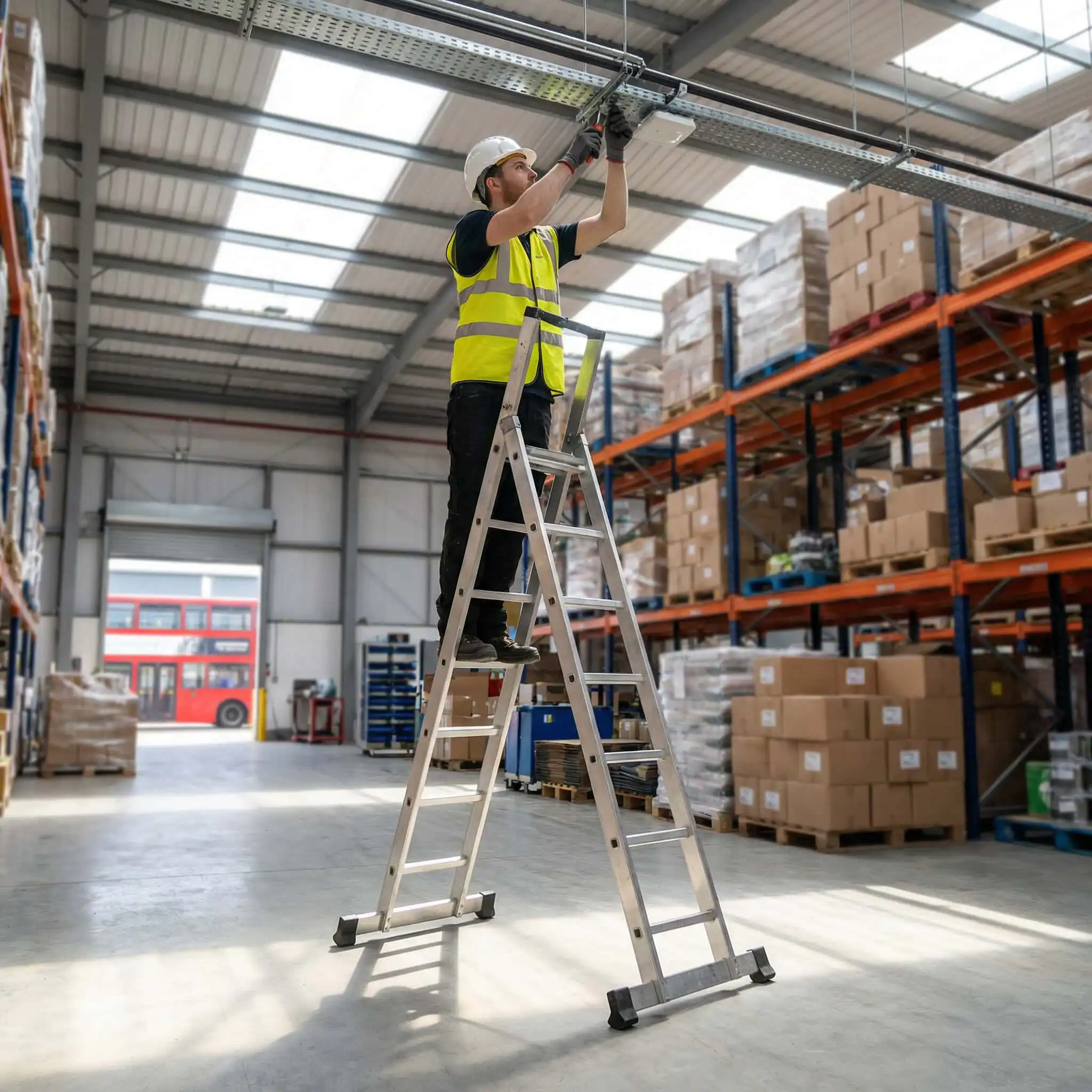
 Breaking & Drilling
 Cleaning Equipment
 Drying & Heating
 General Site Tools
Equipment Hire Guides
Do I Need a Licence to Use a Scissor Lift in the UK?
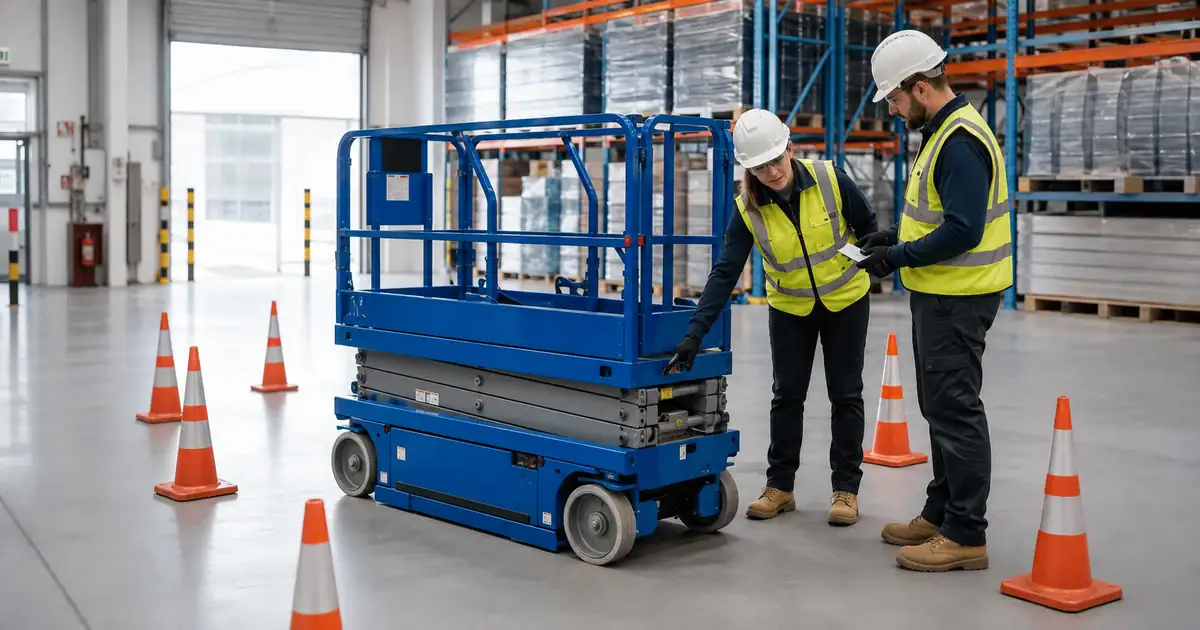
There Is No UK Scissor Lift Licence — But Training Is Legally Required
The term “licence” implies a government-issued permit, and no such document exists for scissor lifts in the UK. There is no DVLA-style licence, no formal register, and no test centre you walk into.
What the law requires instead is proof of competence. Under the Work at Height Regulations 2005 (WAHR), the Provision and Use of Work Equipment Regulations 1998 (PUWER), and the Lifting Operations and Lifting Equipment Regulations 1998 (LOLER), employers must ensure that anyone operating a scissor lift has received adequate training for the specific type of machine they will use.
In practice, this means completing a recognised training course and carrying a card that proves it.
IPAF PAL Card — The Industry Standard
The International Powered Access Federation (IPAF) is the most widely recognised training body for scissor lifts and cherry pickers worldwide. Their PAL Card (Powered Access Licence) is the standard proof of competence across the UK construction and facilities management industries.
For scissor lifts, you need the Category 3a — Mobile Vertical qualification. This covers all types of scissor lift, including electric, diesel, and rough-terrain models.
What the course covers:
Pre-use inspection and daily checks. Safe operating procedures including travel, positioning, and raising the platform. Emergency lowering — both powered and manual. Hazard identification including overhead obstructions, ground conditions, and wind limits. Legal responsibilities of the operator and the employer.
Duration: One day (typically 7–8 hours including a practical assessment and theory test).
Validity: The IPAF PAL Card is valid for 5 years. After that, you need to retake the course.
Cost: Typically £200–£350 per person depending on the training provider and location. Courses are available across London and the South East.
CPCS Card — The Construction Site Alternative
The Construction Plant Competence Scheme (CPCS) is managed by CITB and is widely required on major UK construction sites. Some principal contractors insist on CPCS over IPAF, particularly on Tier 1 and Tier 2 projects.
The CPCS category for scissor lifts is A26 — Mobile Elevating Work Platform (Scissor).
Two card types:
Red card (Trained Operator): Issued after completing a CPCS training course and passing the CITB Health, Safety and Environment (HS&E) test. Valid for 2 years. During this period, you are expected to gain on-site experience and progress to a blue card.
Blue card (Competent Operator): Issued after completing an NVQ assessment based on your on-site experience. Valid for 5 years. This is the card most Tier 1 contractors require.
What Do Hire Companies Actually Ask For?
Requirements vary depending on the type of hire and the end use:
| Situation | What You Need | Why |
|---|---|---|
| Commercial site (construction) | IPAF 3a or CPCS A26 card | Legal requirement under WAHR + site rules |
| Commercial site (facilities/maintenance) | IPAF 3a preferred | Industry best practice, often required by building management |
| Private/domestic use (DIY) | Operator briefing from hire company | No formal card required for private work, but safe operation guidance is given at handover |
| Working at height for an employer | IPAF 3a minimum | Employer has legal duty under PUWER to ensure operator competence |
Scissor Lift vs Cherry Picker — Different Training Categories
Scissor lifts and cherry pickers (boom lifts) are both classified as Mobile Elevating Work Platforms (MEWPs), but they require separate training categories because the operating risks are different.
A scissor lift moves vertically only. The platform stays directly above the base, the centre of gravity is stable, and the risk of tip-over is lower. This is IPAF Category 3a.
A cherry picker extends outward as well as upward. The boom can reach over obstacles, but the outreach creates significantly higher overturning risk. This is IPAF Category 3b.
If you hold a 3a card, you cannot legally operate a cherry picker. If you hold a 3b card, you cannot legally operate a scissor lift. Each machine type requires its own qualification.
How to Get IPAF Trained in London
Step 1 — Find an IPAF-approved training centre. The IPAF website has a searchable directory of accredited providers. There are multiple centres across London and the Home Counties.
Step 2 — Book the 3a (Mobile Vertical) course. Most centres run courses weekly. Some offer next-day availability. The course is one day.
Step 3 — Pass the assessment. The course includes a theory test and a practical assessment on a real scissor lift. Pass rates are high for attentive candidates — this is training, not an exam designed to fail you.
Step 4 — Receive your PAL Card. Your card is usually issued digitally within a few days and the physical card follows by post. You can also access a digital version via the IPAF app.
Frequently Asked Questions
Can I hire a scissor lift without an IPAF card?
How long does IPAF scissor lift training take?
Is IPAF or CPCS better for scissor lifts?
Do I need separate training for electric and diesel scissor lifts?
What height can I reach with a hired scissor lift?
Related guides: Pressure washing decking safely | Post-construction cleaning equipment | Choosing the right equipment

 Drone Survey & Mapping
 Drone Inspections