
 Drone Services
 Access Equipment
 Breaking & Drilling
 Cleaning Equipment
 Drying & Heating
 General Site Tools
Equipment Hire Guides
How to Compact a Sub-Base for a Patio or Driveway (MOT Type 1)
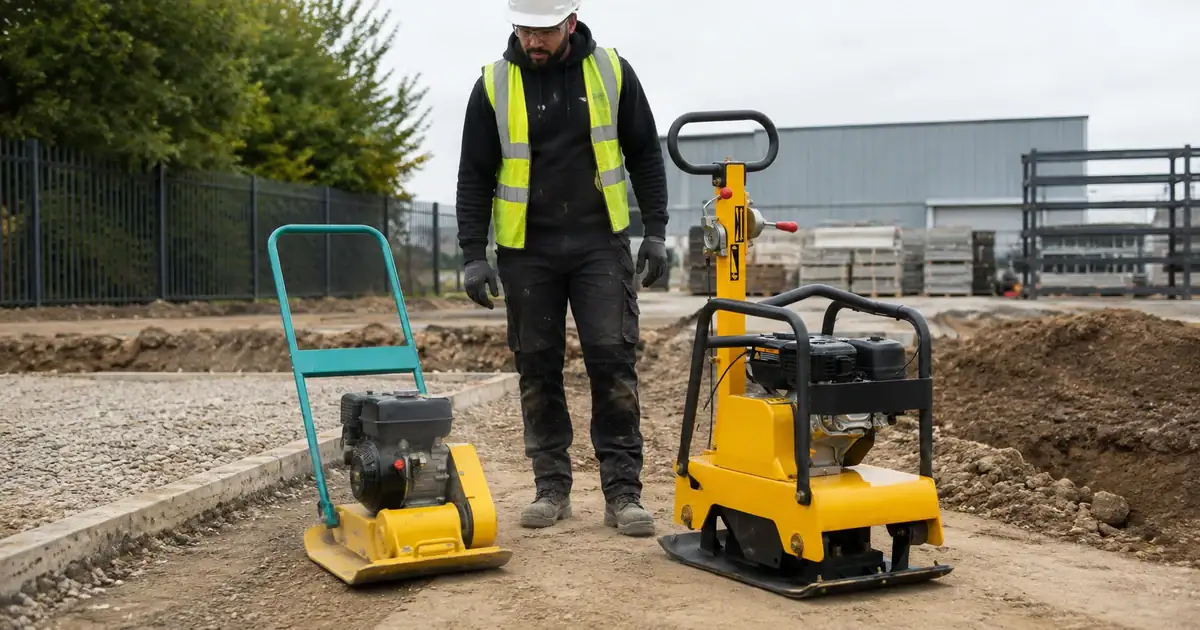
How to Compact a Sub-Base for a Patio or Driveway (MOT Type 1) — the right depth, layers and passes for a base that won’t sink.
Hireload delivers equipment across London from our Greenford / UB6 operating area. View full London delivery areas.
Quick answer: Lay MOT Type 1 in layers of around 100mm and compact each one with a plate compactor before adding the next. As a guide, a patio needs roughly 100-150mm of compacted sub-base over firm ground; a driveway usually needs 150mm or more depending on the soil and the loads. Make three to four passes per layer until it stops settling, and keep a slight fall for drainage.
What Is MOT Type 1?
MOT Type 1 is a graded granular sub-base material — crushed rock such as limestone or granite (or crushed concrete) ranging from roughly 40mm down to dust. The mix of sizes is the point: the larger stones lock together for strength while the fines fill the gaps, so when you compact it the whole layer knits into a dense, stable base. It’s the standard sub-base for patios, driveways and paths because it compacts hard and drains well.
How Deep Should the Sub-Base Be?
Depth depends on what’s going on top and what’s underneath, so treat these as a starting guide rather than a fixed rule:
- Patios and paths (foot traffic): around 100-150mm of compacted MOT Type 1 over firm, well-drained ground.
- Driveways (car traffic): around 150mm or more, increasing on soft or clay ground.
- Soft or wet ground: dig out further and build up more sub-base, and consider a geotextile membrane to separate it from the subsoil.
If in doubt, deeper and well-compacted is safer than shallow. The wrong depth is one of the main reasons paving fails later.
Step by Step
1Excavate to the depth your finished level and build-up require, allowing for sub-base, bedding and the paving itself. Remove soft spots.
2Compact the subgrade (the natural ground) with the plate before you add any material, and lay a geotextile membrane if the ground is soft.
3Spread the first layer of MOT Type 1 to around 100mm, raked roughly level with a slight fall for drainage.
4Compact it with three to four overlapping passes of the plate until the surface stops settling. A light mist of water can help fine material bind on a dry day.
5Repeat in layers until you reach your sub-base level, compacting each layer before adding the next. Then move on to bedding and paving.
New to the machine? Read how to use a wacker plate safely for setup and operation.
How to Know It’s Properly Compacted
A well-compacted layer feels solid underfoot with no movement, and the plate rides higher and moves faster as the material tightens. If you can still see the plate pushing material around or feel it sinking in, it needs more passes — or the layer is too deep and should be split. Tyre ruts from a barrow that don’t recover are another sign a layer hasn’t been compacted enough.
Pro tip: the single biggest mistake is compacting one thick layer instead of several thin ones. The plate can only drive its energy so far down, so a deep layer stays soft underneath even when the top looks firm. Thin layers, every time.
Which Plate to Use
Forward Plate (400mm)
Ideal for patio and standard driveway sub-base on open ground.
View the forward plateReversible Plate (18 inch)
25kN class for deeper driveway sub-base and confined areas.
View the reversible plateNot sure which size suits your depth? See what size wacker plate do I need.
Perfect For
- Homeowners laying a patio or driveway themselves
- Landscapers building a paving or slab base
- Driveway installers prepping block paving or resin
- Anyone who wants a base that stays level for years
What it costs to hire the plate
Layered compaction takes longer than one pass over the whole depth, so price the hire by the number of lifts, not by the area. These are our own rates, ex-VAT.
| Machine | 1 day | Weekend (2 days) | 3–7 days | Longer |
|---|---|---|---|---|
| 400mm forward plate (Belle PCX 13/40 class) — patios, paths, sub-base | £29.99 | £44.97 | £59.99 | £8.40/day |
| 18-inch reversible plate (25kN class) — trenches, deep ground | £49.99 | £74.99 | £99.99 | £13.99/day |
Prices are ex-VAT and match each product page. The 3–7 day band is one flat rate, so a five-day job costs the same as a three-day one — on the forward plate that works out around £12 a day. A refundable deposit applies and comes back in full when the machine returns undamaged. Delivery is £35 + VAT next working day, or collect free from our Greenford UB6 depot.
A worked example. A 150mm sub-base laid in two 75mm lifts across a driveway, three days on site: the 400mm forward plate at £59.99 + VAT — the same flat rate as a full week, so there is no reason to rush the lifts to save a day.
Frequently Asked Questions
Related guides
If the sub-base is going under a concrete pour. Read: cement mixer hire costs.
Get the Base Right First Time
Hire the plate compactor your job needs. Browse the range, or call 020 3375 4048 — delivered across London.
Browse Plate Compactors
 Drone Survey & Mapping
 Drone Inspections