
 Drone Services
 Access Equipment
 Breaking & Drilling
 Cleaning Equipment
 Drying & Heating
 General Site Tools
Equipment Hire Guides
How to Use a Wacker Plate Safely
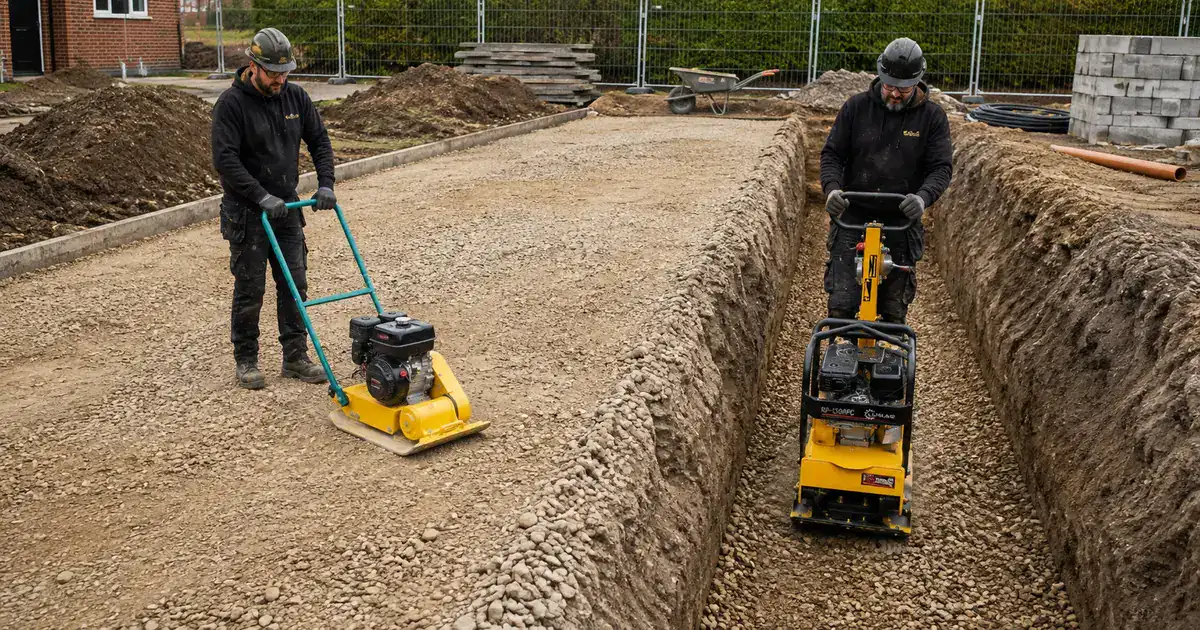
How to Use a Wacker Plate Safely — a step-by-step guide to setting up, operating and getting a proper finish, plus the mistakes that ruin a base.
Hireload delivers equipment across London from our Greenford / UB6 operating area. View full London delivery areas.
Quick answer: Check oil and fuel, set the plate on the material to be compacted, start the engine and let it warm, then walk it slowly forward in overlapping passes. Compact in thin layers with three to four passes each, wear ear and eye protection and sturdy boots, and never run a petrol plate indoors.
Before You Start
A few minutes of preparation makes the job safer and the finish better.
- PPE: ear defenders (these machines are loud), eye protection, gloves and steel-toe boots. Vibrating tools carry a hand-arm vibration risk, so take regular breaks.
- Checks: engine oil level and fuel before you start. Make sure the plate underside is clean and undamaged.
- Ground: clear stones, debris and anything that could be thrown. Have your material spread roughly to depth and level.
- Fuel safely: top up with the engine off and cool, away from ignition sources.
Step by Step
1Position the plate on the loose material you want to compact — not on a finished concrete slab, which can damage the plate and the surface.
2Start the engine using the choke and throttle as set out in the machine’s controls. Let it warm for a moment before applying full throttle.
3Apply throttle and let the plate pull itself forward. Guide it — don’t force or push hard. Walk at a steady pace and keep your feet clear of the plate edges.
4Work in overlapping passes across the whole area so no strip is missed. Then make further passes until the surface stops settling under the plate.
5Build up in layers. For deeper bases, compact one thin layer, add the next, and repeat — don’t try to compact a deep layer in one go.
How Many Passes Do You Need?
As a general guide, make three to four passes over each layer, overlapping each run. You’ll feel and hear the difference as the material tightens: the plate rides higher, moves faster, and the surface stops visibly settling. That’s your sign the layer is done and you can move on. For the full method on a paving base, see how to compact a sub-base.
Safety and common mistakes
Never run a petrol plate compactor indoors or in an enclosed space — exhaust fumes are dangerous. Don’t run it on a finished slab or hard concrete. Keep bystanders clear, watch your footing on slopes, and when compacting block paving fit a paving pad or rubber mat to avoid chipping the blocks.
Which Machine to Use
Forward Plate (400mm)
Easiest to handle for patios, paths and paving sub-base. The right starting point for most jobs.
View the forward plateReversible Plate (18 inch)
Forward & reverse, 25kN class — for trenches and deeper layers. Heavier to handle, so plan loading.
View the reversible plateNot sure which to pick, or what size? See what size wacker plate do I need, or start with the basics in what is a wacker plate.
How Long You’ll Need It
Most jobs are a single day’s hire. Plate compactors are petrol-powered for outdoor use, delivered kerbside across London from our Greenford UB6 base and collected when you’re done.
Perfect For
- First-time users who want to operate the machine correctly
- Homeowners laying a patio, path or artificial lawn
- Landscapers and paving contractors after a consistent finish
- Anyone compacting a base who wants it to last
What it costs to hire the machine
Give yourself the extra day. These are our own rates, ex-VAT.
| Machine | 1 day | Weekend (2 days) | 3–7 days | Longer |
|---|---|---|---|---|
| 400mm forward plate (Belle PCX 13/40 class) — patios, paths, sub-base | £29.99 | £44.97 | £59.99 | £8.40/day |
| 18-inch reversible plate (25kN class) — trenches, deep ground | £49.99 | £74.99 | £99.99 | £13.99/day |
Prices are ex-VAT and match each product page. The 3–7 day band is one flat rate, so a five-day job costs the same as a three-day one — on the forward plate that works out around £12 a day. A refundable deposit applies and comes back in full when the machine returns undamaged. Delivery is £35 + VAT next working day, or collect free from our Greenford UB6 depot.
A worked example. A first-time job done properly over a weekend: the 400mm forward plate at £44.97 + VAT. The second day costs £14.98 more than the first and is usually the difference between rushing the passes and doing the layer count above properly.
Frequently Asked Questions
Related guides
Day rates, weekly rates and what affects them. Read: what wacker plate hire costs in London.
Hire a Wacker Plate, Ready to Go
Browse our plate compactors, or call 020 3375 4048 for advice on the right machine — delivered across London.
Browse Plate Compactors
 Drone Survey & Mapping
 Drone Inspections