
 Drone Services
 Access Equipment
 Breaking & Drilling
 Cleaning Equipment
 Drying & Heating
 General Site Tools
Equipment Hire Guides
What Is a Wacker Plate and What Is It Used For?
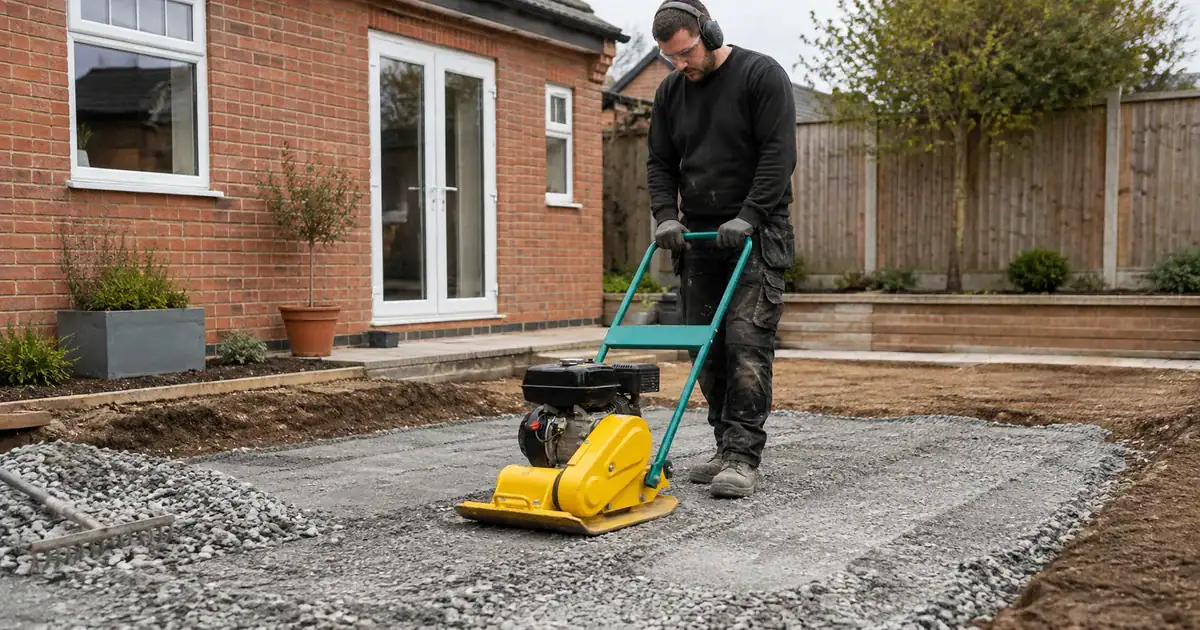
What Is a Wacker Plate and What Is It Used For? — a plain-English guide to what a plate compactor does, the jobs it’s for, and which type suits your project.
Hireload delivers equipment across London from our Greenford / UB6 operating area. View full London delivery areas.
Quick answer: A wacker plate is a petrol-powered vibrating plate compactor used to firm up soil, hardcore and sub-base before laying paving, slabs, a driveway or artificial grass. The vibrating steel plate settles loose material into a dense, stable layer that won’t sink later. For most domestic jobs a 400mm forward plate does the job; for trenches and heavier groundworks a reversible plate is better.
What a Wacker Plate Actually Does
“Wacker plate” is the everyday name for a vibrating plate compactor — the term stuck because Wacker is one of the original manufacturers. The machine is simple: a petrol engine drives an offset weight that vibrates a heavy steel base plate at high speed. As you walk it forward, those vibrations push air and gaps out of loose material and pack the particles tightly together.
That matters because any loose, granular layer — soil, hardcore, MOT Type 1, sharp sand — will keep settling under load if you don’t compact it. Skip this step and a new patio sinks, block paving lifts, and a driveway develops ruts and dips within a season. Compaction gives you a firm, level base that stays put.
What a Wacker Plate Is Used For
Plate compactors are the standard tool for compacting granular materials on residential and light commercial sites. Common jobs include:
- Patio sub-base — compacting hardcore and MOT Type 1 before slabs or porcelain paving
- Driveway preparation — firming the sub-base under block paving, resin or tarmac
- Block paving — bedding blocks down and consolidating the kiln-dried sand between joints
- Artificial grass — compacting the stone base so the lawn sits flat and drains
- Shed and garden bases — a stable footing under a base slab or paving
- Trench backfill — compacting reinstated material in layers after a service run
What a plate compactor is not for is cohesive clay or wet, sticky ground, and it isn’t designed for deep narrow trenches — that’s where a trench rammer or a reversible plate earns its place.
The Two Main Types
There are two you’ll meet for this kind of work, and choosing between them is mostly about the job. Our full forward vs reversible plate compactor guide goes deeper, but in short:
Forward Plate Compactor
Belle PCX 13/40 class, 400mm plate, petrol, forward travel only. Ideal for patio and driveway sub-base, paving and hardcore on open areas.
View the forward plate compactorReversible Plate Compactor
18 inch (approx. 450mm class), petrol, forward & reverse, 25kN class compaction. Built for trenches, deeper sub-base and heavier groundworks.
View the reversible plate compactorNot sure which plate width or force you need? Our guide to what size wacker plate you need matches the machine to the job.
Important: wacker plates are petrol machines. Use them outdoors or in well-ventilated areas only — never inside a closed space. Always read the operating steps before you start; see how to use a wacker plate safely.
How Long Do You Need One For?
Most domestic patio or driveway jobs need a plate compactor for a single day — you compact the sub-base, lay your surface, then bed it down. Larger landscaping or multi-stage groundworks often run to two or three days. Hire is per day, delivered kerbside across London by booking and collected from our Greenford UB6 base, so you’re not paying for a machine sitting idle.
Perfect For
- Homeowners laying a patio, path or artificial lawn
- Landscapers and paving contractors prepping a sub-base
- Driveway installers consolidating block paving or resin bases
- Builders backfilling trenches and footing reinstatements
- Anyone who needs a base that stays level instead of sinking
What a wacker plate costs to hire
Hiring one is cheaper than most people expect, and the multi-day band is where the value sits. These are our own rates, ex-VAT.
| Machine | 1 day | Weekend (2 days) | 3–7 days | Longer |
|---|---|---|---|---|
| 400mm forward plate (Belle PCX 13/40 class) — patios, paths, sub-base | £29.99 | £44.97 | £59.99 | £8.40/day |
| 18-inch reversible plate (25kN class) — trenches, deep ground | £49.99 | £74.99 | £99.99 | £13.99/day |
Prices are ex-VAT and match each product page. The 3–7 day band is one flat rate, so a five-day job costs the same as a three-day one — on the forward plate that works out around £12 a day. A refundable deposit applies and comes back in full when the machine returns undamaged. Delivery is £35 + VAT next working day, or collect free from our Greenford UB6 depot.
A worked example. A garden patio base over a weekend: the 400mm forward plate at £44.97 + VAT. If the ground is soft or you are working in a trench, the reversible machine is the one that compacts downwards rather than just smoothing the top.
Frequently Asked Questions
Hire a Wacker Plate in London
Browse our plate compactors, or call 020 3375 4048 and we’ll match the right machine to your job — delivered across London.
Browse Plate Compactors
 Drone Survey & Mapping
 Drone Inspections