
 Drone Services
 Access Equipment
 Breaking & Drilling
 Cleaning Equipment
 Drying & Heating
 General Site Tools
Equipment Hire Guides
Forward vs Reversible Plate Compactor: Which Do You Need?
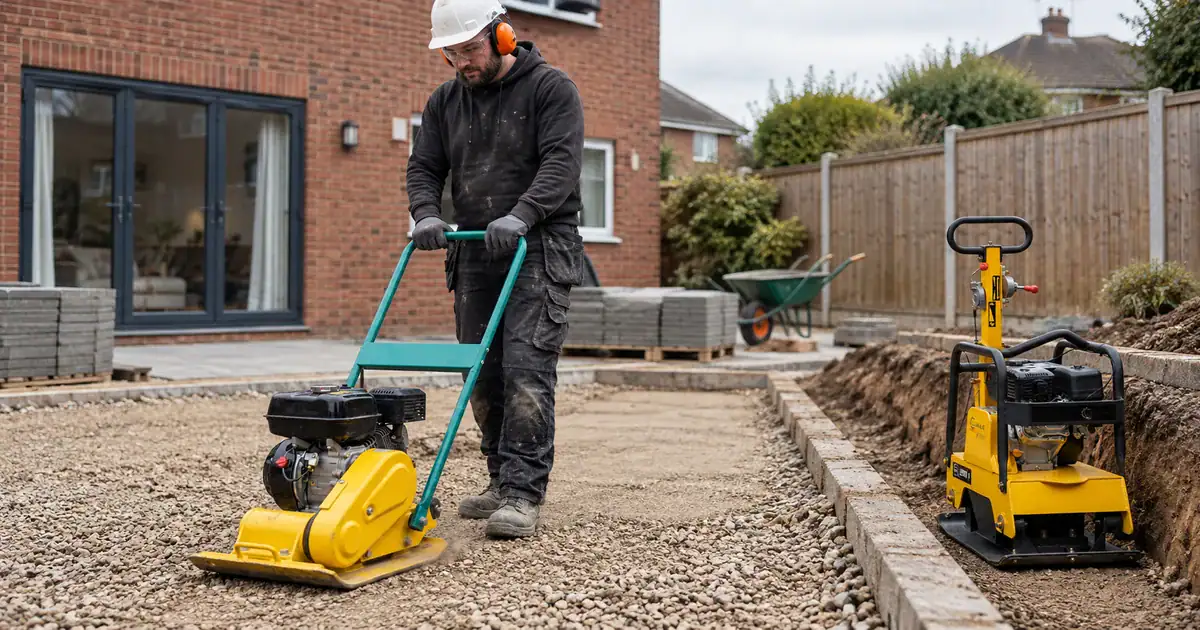
Forward vs Reversible Plate Compactor: Which Do You Need? — the real difference between the two, and a simple way to pick the right one for your job.
Hireload delivers equipment across London from our Greenford / UB6 operating area. View full London delivery areas.
Quick answer: Choose a forward plate compactor for patios, driveways and general paving sub-base on open ground — it’s lighter and easy to handle. Choose a reversible plate for trenches, confined spaces and deeper sub-base, where its extra force and reverse travel let you compact thicker layers and back out of tight runs.
The Core Difference
Both machines do the same fundamental job — vibrate a steel plate to pack down loose material — but they’re built for different ends of the work. A forward plate travels in one direction only and is lighter, which makes it quick and easy to walk across an open area. A reversible plate drives both forward and backward, carries more compaction force, and handles deeper layers, at the cost of being heavier to move and load.
Side by Side
| Feature | Forward plate | Reversible plate |
|---|---|---|
| Plate width | 400mm (16 inch class) | 18 inch (approx. 450mm class) |
| Travel | Forward only | Forward and reverse |
| Compaction | Lighter — surface and shallower lifts | 25kN class — deeper lifts |
| Best for | Patios, driveways, paving sub-base | Trenches, deeper sub-base, groundworks |
| Handling | Light, easy to manoeuvre | Heavier; reverses out of tight runs |
When the Forward Plate Wins
For the vast majority of domestic and landscaping jobs, the forward plate is the right tool. Laying a patio, prepping a driveway sub-base, bedding block paving, compacting a base for artificial grass — these are open-area jobs where you’re working in shallower layers and want a machine that’s easy to lift, load and walk. The 400mm forward plate compactor covers ground quickly without wearing you out.
When You Need a Reversible Plate
The reversible plate comes into its own where a forward-only machine struggles. In a trench, you can’t easily turn a plate around — reverse travel lets you compact up and back out without lifting. The extra force also lets you compact thicker layers, which matters on deeper sub-base and heavier groundworks. If you’re backfilling service trenches or building up a substantial base, the reversible plate compactor is the safer choice.
Quick decision aid
Open area, paving or patio sub-base, shallower layers: forward plate. Trenches, confined runs, deeper sub-base or heavy groundworks: reversible plate. Still unsure? Our what size wacker plate do I need guide walks through it by job.
How Long You’ll Need It
Most patio and driveway jobs need a plate for a single day; trench and larger groundworks often run to two or three. Both machines are petrol-powered for outdoor, off-grid use, hired per day and delivered kerbside across London from our Greenford UB6 base. Before you start, read how to use a wacker plate safely.
Perfect For
- Homeowners and landscapers laying patios or paving (forward)
- Driveway installers prepping block-paving sub-base (forward)
- Groundworkers backfilling trenches (reversible)
- Builders compacting deeper sub-base in confined areas (reversible)
What the two cost to hire
The price gap is part of the decision, so it is worth seeing it next to the capability gap. These are our own rates, ex-VAT.
| Machine | 1 day | Weekend (2 days) | 3–7 days | Longer |
|---|---|---|---|---|
| 400mm forward plate (Belle PCX 13/40 class) — patios, paths, sub-base | £29.99 | £44.97 | £59.99 | £8.40/day |
| 18-inch reversible plate (25kN class) — trenches, deep ground | £49.99 | £74.99 | £99.99 | £13.99/day |
Prices are ex-VAT and match each product page. The 3–7 day band is one flat rate, so a five-day job costs the same as a three-day one — on the forward plate that works out around £12 a day. A refundable deposit applies and comes back in full when the machine returns undamaged. Delivery is £35 + VAT next working day, or collect free from our Greenford UB6 depot.
The decision in one line. Over a week the forward plate is £59.99 + VAT and the reversible £99.99. The £40 difference buys downward compaction and the ability to reverse out of a trench — worth it on deep or confined ground, wasted money on a flat patio base.
Frequently Asked Questions
Forward or Reversible? We’ll Help You Pick
Browse both plate compactors, or call 020 3375 4048 and we’ll match the machine to your job — delivered across London.
Browse Plate Compactors
 Drone Survey & Mapping
 Drone Inspections