
 Drone Services
 Access Equipment
 Breaking & Drilling
 Cleaning Equipment
 Drying & Heating
 General Site Tools
Equipment Hire Guides
What Size Wacker Plate Do I Need?
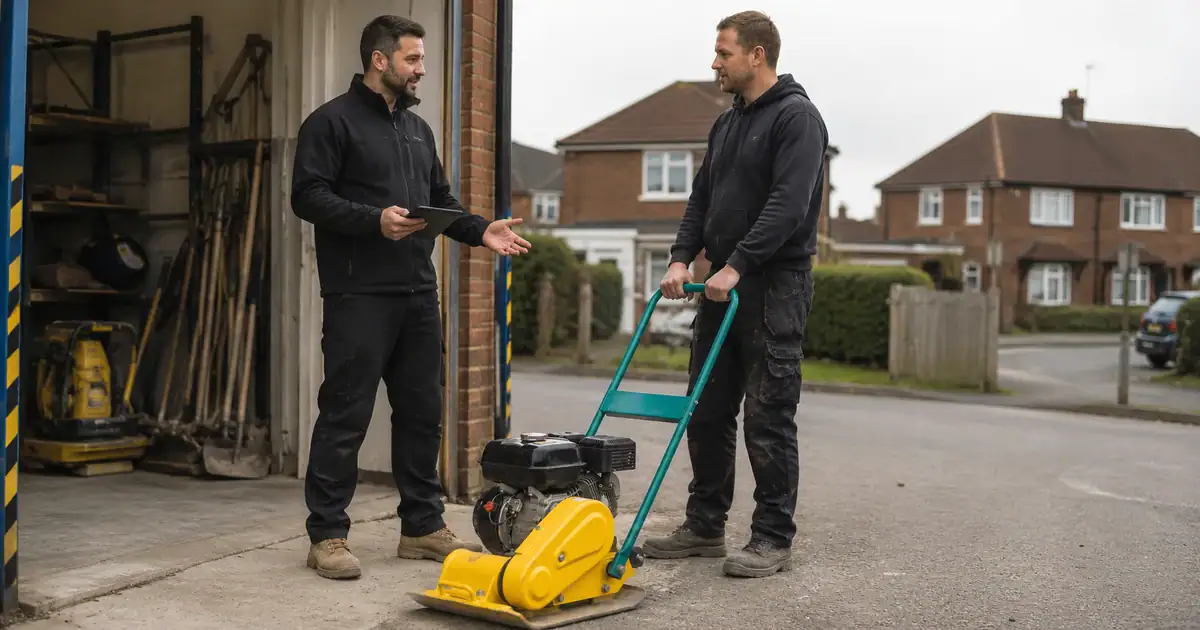
What Size Wacker Plate Do I Need? — how plate width and compaction force match to your job, so you hire the right machine first time.
Hireload delivers equipment across London from our Greenford / UB6 operating area. View full London delivery areas.
Quick answer: For most domestic patios, paths and paving sub-base, a 400mm forward plate is the right size. For deeper driveway sub-base, trench backfill or heavier groundworks, step up to an 18 inch reversible plate (25kN class). Plate width sets how much ground you cover; compaction force sets how deep a layer you can compact in one go.
Two Things Decide the Size
Plate width is the obvious one — a wider plate covers more ground per pass, so a big area goes quicker. But width isn’t the whole story. Compaction force is what determines how thick a layer the machine can actually compact. A light plate can skim the surface of a deep layer and leave it soft underneath; a heavier plate drives the energy further down.
For the jobs most people hire for, you’re choosing between a 400mm forward plate and an 18 inch (approx. 450mm class) reversible plate. The width difference is modest; the force difference is what matters.
Match the Plate to Your Job
| Your job | Recommended plate |
|---|---|
| Patio, path or slabs | 400mm forward plate |
| Block paving driveway (standard build-up) | 400mm forward plate |
| Artificial grass or shed base | 400mm forward plate |
| Deep driveway sub-base / heavy use | 18 inch reversible plate |
| Trench backfill or confined groundworks | 18 inch reversible plate |
400mm Forward Plate
Belle PCX 13/40 class, petrol, forward travel. The everyday choice for patios, paths and standard paving sub-base.
View the forward plate18 inch Reversible Plate
Approx. 450mm class, petrol, forward & reverse, 25kN class. Step up for deeper layers, trenches and heavier groundworks.
View the reversible plateFor the full breakdown of how the two machines differ, see our forward vs reversible plate compactor guide.
Don’t Forget Layer Depth
Size matters less if you ignore how you build up the material. As a rule of thumb, compact granular sub-base in layers of around 75-100mm at a time rather than tipping it all in and trying to compact it in one go. A plate compactor only drives its energy so far down — load it too deep and the bottom stays loose, which is exactly what causes a finished surface to sink later.
Pro tip: a smaller plate used correctly in thin layers beats a bigger plate used badly in one thick layer. Our guide on how to compact a sub-base covers layer depth and passes in detail.
How Long You’ll Need It
A single day covers most patio and small driveway jobs; larger or staged groundworks usually need two to three. Both plates are petrol-powered for outdoor use, hired per day and delivered kerbside across London from our Greenford UB6 base. New to the machine? Read how to use a wacker plate safely first.
Perfect For
- Homeowners sizing a plate for a one-off patio or path
- Landscapers matching the machine to the area and depth
- Driveway installers deciding between forward and reversible
- Groundworkers who need force, not just width, for deeper layers
What each size costs to hire
Once you know the plate size, this is what it costs. Rates are ex-VAT and match each product page.
| Machine | 1 day | Weekend (2 days) | 3–7 days | Longer |
|---|---|---|---|---|
| 400mm forward plate (Belle PCX 13/40 class) — patios, paths, sub-base | £29.99 | £44.97 | £59.99 | £8.40/day |
| 18-inch reversible plate (25kN class) — trenches, deep ground | £49.99 | £74.99 | £99.99 | £13.99/day |
Prices are ex-VAT and match each product page. The 3–7 day band is one flat rate, so a five-day job costs the same as a three-day one — on the forward plate that works out around £12 a day. A refundable deposit applies and comes back in full when the machine returns undamaged. Delivery is £35 + VAT next working day, or collect free from our Greenford UB6 depot.
A worked example. A driveway sub-base laid in two lifts over three days: the 400mm forward plate at £59.99 + VAT, because three days sits in the same flat band as seven. Undersizing here is the expensive mistake — a plate too light for the layer means the base settles later and the surface has to come up.
Frequently Asked Questions
Not Sure Which Size to Hire?
Tell us your job and we’ll match the plate. Browse the range, or call 020 3375 4048 — delivered across London.
Browse Plate Compactors
 Drone Survey & Mapping
 Drone Inspections