
 Drone Services
 Access Equipment
 Breaking & Drilling
 Cleaning Equipment
 Drying & Heating
 General Site Tools
Equipment Hire Guides
How to Stop Condensation on Windows and Walls
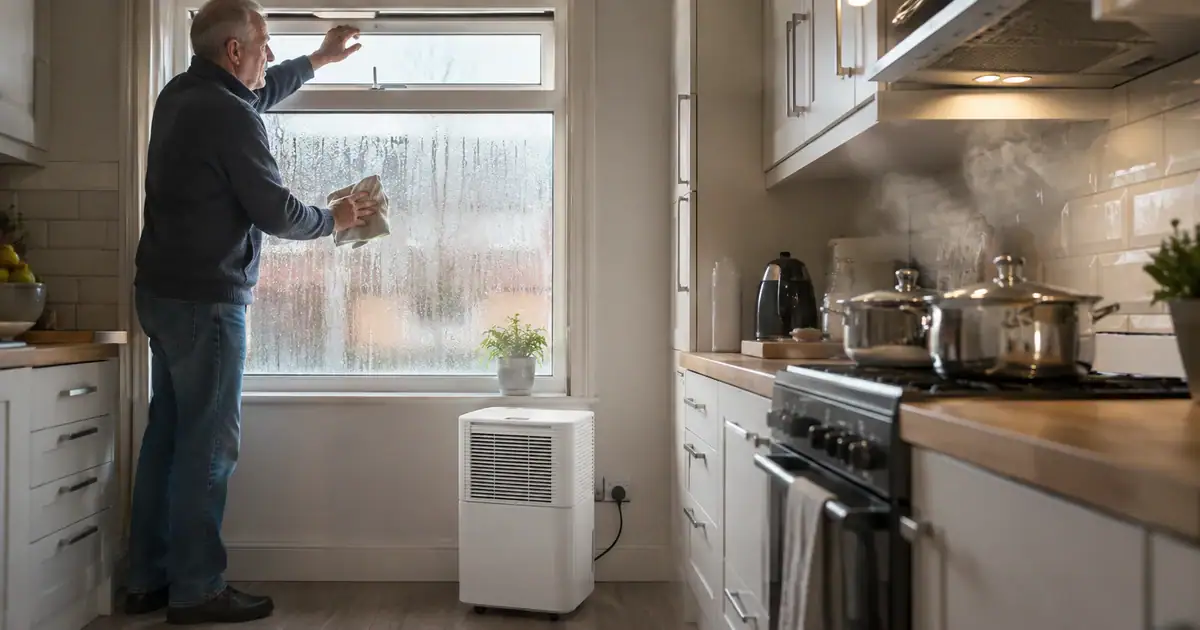
How to Stop Condensation on Windows and Walls
Condensation is the most common type of damp in UK homes, and it is almost always fixable without major building work. This guide covers why condensation forms, which rooms are most at risk, and the practical steps that actually work, from ventilation changes to using a dehumidifier to bring humidity under control fast.
Same-day and next-day delivery across London | Delivery info
Quick Answer
Condensation happens when warm, moist air hits a cold surface. To stop it: improve ventilation (open trickle vents, use extractor fans), reduce moisture at source (lids on pans, vent tumble dryers outside), and use a dehumidifier to pull excess moisture out of the air. For serious condensation, a commercial dehumidifier can drop relative humidity from 80%+ to a safe 50-55% within 24-48 hours.
In This Guide
If the windows running with water are in a pool or spa room, the cause is the same but the stakes are higher — why pool room glass runs with water explains what that condensation is doing to the structure behind it.
Water on the windows every morning, black spots on the wall? Both come from the same thing — more moisture in the air than the room can hold — and both stop when the humidity comes down.
A 19L dehumidifier is £19.99 + VAT for a day and £34.99 for up to a week. A week is usually enough to tell whether humidity alone is the problem, before you spend anything on ventilation work. Delivered across London, or collect free from Greenford UB6.
Browse drying equipment · Not sure what size? Call 020 3375 4048 or message us on WhatsApp.
Why Condensation Forms in Your Home
Every home produces moisture. Cooking, showering, drying clothes, even breathing adds water vapour to the air. Warm air can hold more moisture than cold air. When that warm, moisture-laden air touches a cold surface, such as a single-glazed window or an uninsulated external wall, it cools below its dew point and the water vapour turns back into liquid droplets.
That is condensation. It is not a structural defect. It is a ventilation and humidity problem, and in the vast majority of cases it is something you can fix yourself.
Key Point
Relative humidity above 60% creates ideal conditions for condensation. Above 70%, mould growth becomes likely within days. A healthy home sits between 40% and 55% relative humidity.
Three factors control whether condensation appears:
- Moisture production – how much water vapour your household generates each day
- Ventilation rate – how quickly moist air is replaced with drier air from outside
- Surface temperature – how cold the surfaces are where warm air makes contact
Fix any one of those three and condensation reduces. Fix all three and it stops almost entirely.
Which Rooms Are Worst for Condensation
Condensation does not affect every room equally. The worst rooms are those where moisture is produced or where ventilation is poor.
| Room | Why It Gets Condensation | Typical Moisture Load |
|---|---|---|
| Bathroom | Hot showers and baths release large volumes of steam into a small space | Up to 1.5 litres per shower |
| Kitchen | Boiling, steaming, and dishwashers produce sustained moisture | Up to 3 litres per day from cooking |
| Bedroom | Breathing overnight adds moisture while windows stay closed | ~0.5 litres per person per night |
| Utility / laundry room | Drying clothes indoors is one of the biggest condensation causes | Up to 5 litres per load of washing |
| Unheated spare room | Cold surfaces attract moisture from warmer adjoining rooms | Minimal production, but cold walls act as condensation magnets |
Watch Out
Drying a single load of washing indoors releases up to 5 litres of water into the air. If you have no option but to dry indoors, do it in a closed room with a dehumidifier running, or with a window open.
How to Stop Condensation on Windows
Windows are usually the first place condensation appears because glass is the coldest surface in most rooms. Here is what works, listed from the simplest change to the most effective:
1. Open trickle vents. Most modern windows have small vents along the top frame. These are designed to let a constant trickle of fresh air in without creating a draught. If yours are closed, open them, especially in bedrooms overnight and in bathrooms.
2. Wipe windows in the morning. This sounds basic but it removes the moisture before it drips down and damages the sill or frame. Use a window vacuum or a microfibre cloth and wring it out rather than leaving it to evaporate back into the room.
3. Move furniture away from windows. Curtains, blinds, and furniture pushed against windows trap warm air behind them, creating a cold pocket where condensation thrives. Leave a 10cm gap between curtains and the glass.
4. Run a dehumidifier. If trickle vents and wiping are not enough, a dehumidifier pulls moisture directly out of the air. A compact 20-litre unit is usually enough for a bedroom; for a whole flat or after a flood event, a larger commercial unit is more effective.
5. Upgrade to double or triple glazing. This is the long-term fix. Double glazing keeps the inner glass surface warmer, which means air hitting it stays above its dew point. This is a capital investment but it eliminates window condensation almost completely.
Pro Tip
If you see condensation between the panes of double glazing (not on the inside surface), the sealed unit has failed. That is not a ventilation issue; the unit needs replacing.
How to Stop Condensation on Walls
Wall condensation is harder to spot than window condensation because the water film is often invisible until mould appears. External walls, corners, and areas behind furniture are the most common locations.
Drying Calculator
Two quick questions and we'll size the right dehumidifier — and tell you how long to hire it.
Check for cold spots. Put your hand on the wall. If it feels noticeably colder than internal partition walls, it is likely an external wall with poor insulation, exactly where condensation will settle.
Improve air circulation. Pull wardrobes, beds, and sofas at least 50mm away from external walls. Still air trapped behind furniture holds moisture against the cold wall surface.
Use an air mover. In persistent cases, an air mover pointed at the affected wall forces warm air across the cold surface, raising its temperature and breaking the condensation cycle. This is especially effective in rental properties where you cannot alter the building fabric.
Consider internal wall insulation. For long-term cases, insulated dry-lining raises the wall surface temperature. This is a bigger job but it permanently solves condensation on that wall.
Watch Out
Do not paint over mould caused by condensation without treating the underlying moisture problem first. Anti-mould paint is a surface treatment, not a cure. If the humidity remains high, mould will grow back within weeks.
Ventilation Fixes That Actually Work
Ventilation is the most effective long-term condensation control. The goal is to replace moisture-heavy indoor air with drier outdoor air without making the house cold.
Extractor fans in wet rooms. Building regulations require intermittent extract at 15 litres/second in kitchens and 8 l/s in bathrooms. If your fan is old, undersized, or not running long enough, upgrade or set it to run for 15 minutes after you finish cooking or showering.
Cross-ventilation. Opening windows on opposite sides of the house for even 10 minutes a day creates a through-draught that carries moisture out efficiently.
Positive Input Ventilation (PIV). A PIV unit sits in the loft and gently pushes filtered, tempered air into the house through a ceiling diffuser. It creates slight positive pressure, pushing stale moist air out through natural gaps. Effective for whole-house condensation problems.
Mechanical Ventilation with Heat Recovery (MVHR). For new builds or major refurbishments, MVHR extracts stale air and recovers its heat to warm incoming fresh air. It solves condensation permanently with minimal energy cost.
When You Need a Dehumidifier
A dehumidifier is the fastest way to bring humidity under control. It is the right choice when:
- Ventilation alone is not enough (common in basement flats, HMOs, and poorly insulated buildings)
- You are drying a property after a leak or flood
- Mould is already present and you need to bring humidity down quickly before treatment
- You cannot modify the building (rental, listed building, temporary situation)
- Relative humidity reads above 65% on a hygrometer
Key Point
Commercial dehumidifiers extract 20-63 litres per day compared to 6-12 litres for domestic units. For a serious condensation problem or multi-room situation, hiring a commercial unit for a week is faster and more cost-effective than running a small domestic unit for months.
How to use a dehumidifier for condensation:
- Place the unit centrally in the worst-affected room or in a hallway serving multiple rooms
- Close windows and external doors while it runs (it is extracting moisture from the air; open windows add more)
- Set the target to 50-55% relative humidity
- Empty the water tank regularly, or connect continuous drain if available
- Run for 3-7 days to bring the property to a safe baseline, then address ventilation for long-term control
Recommended equipment for condensation control:
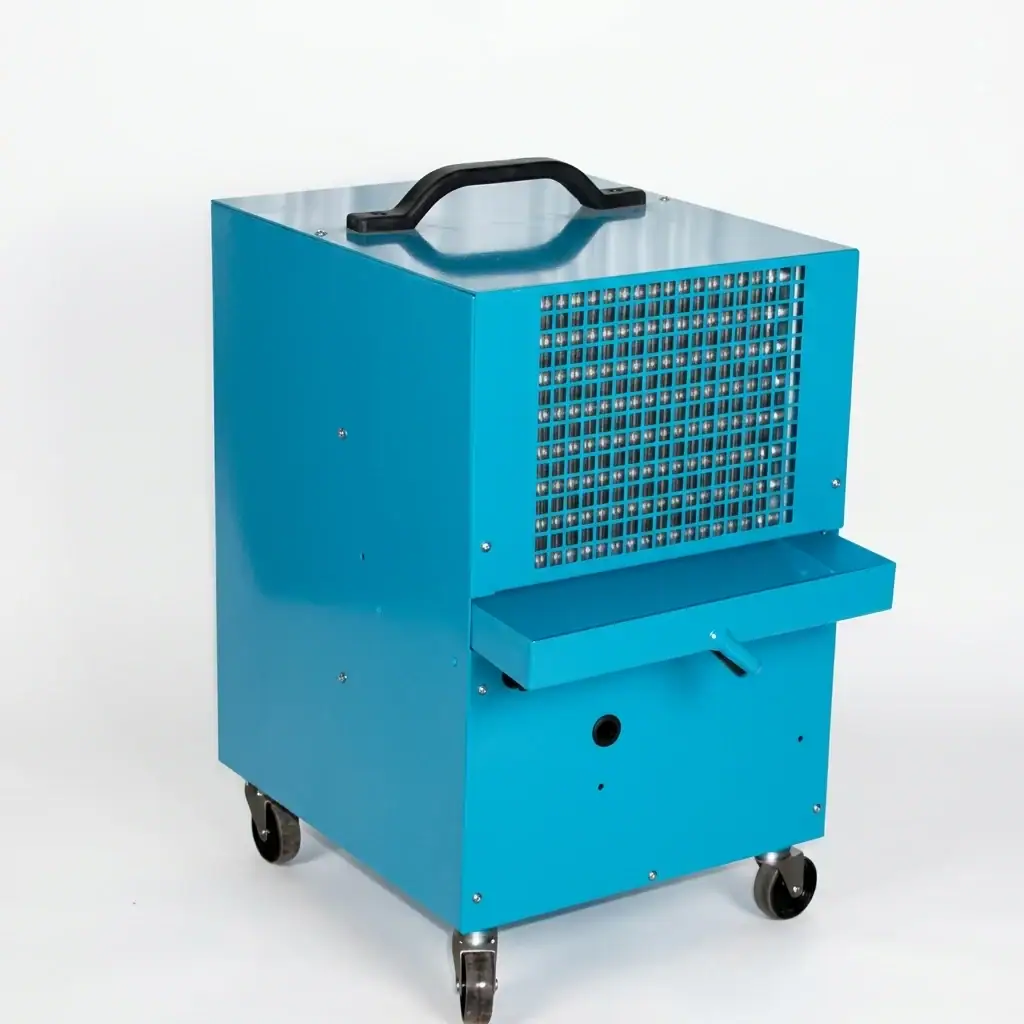
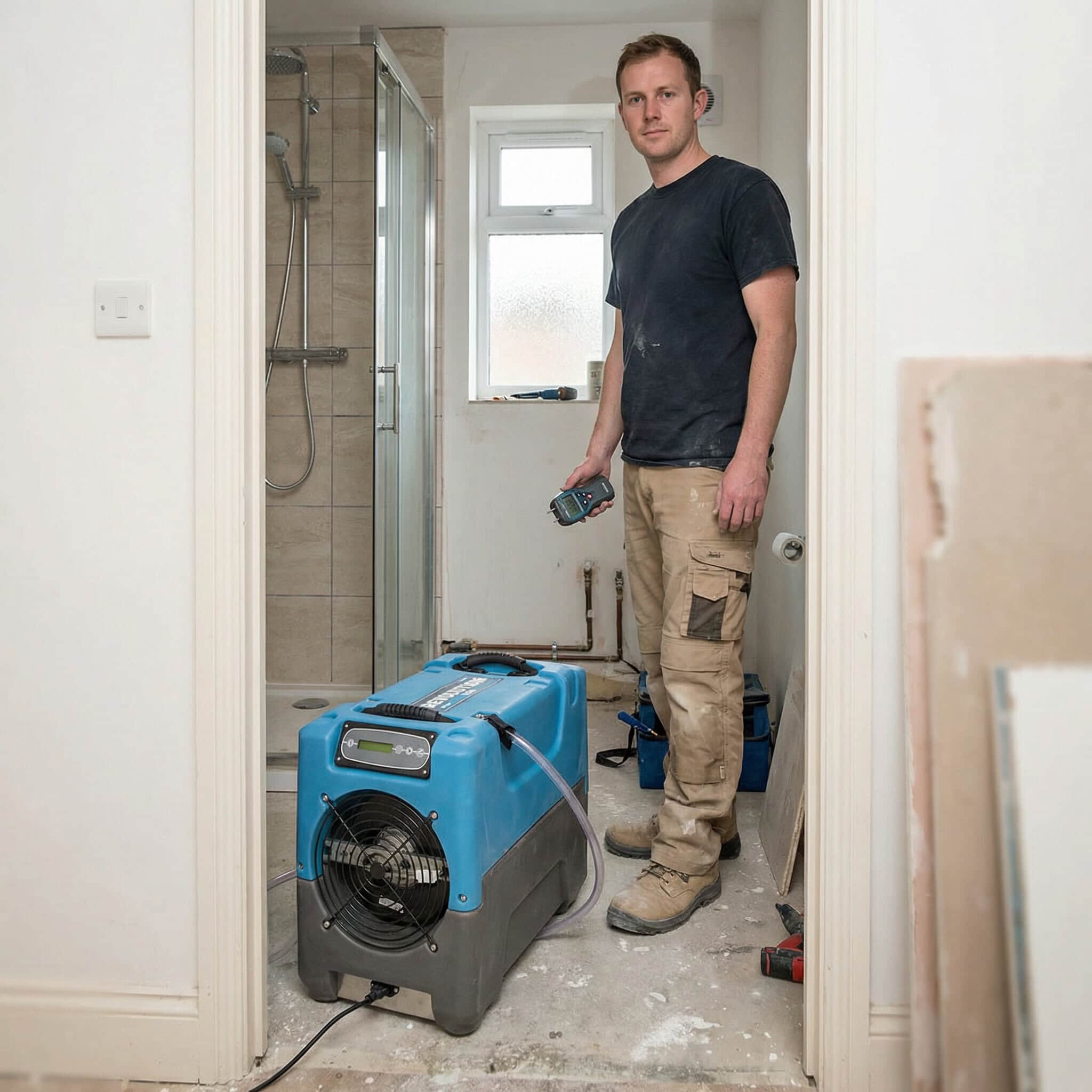
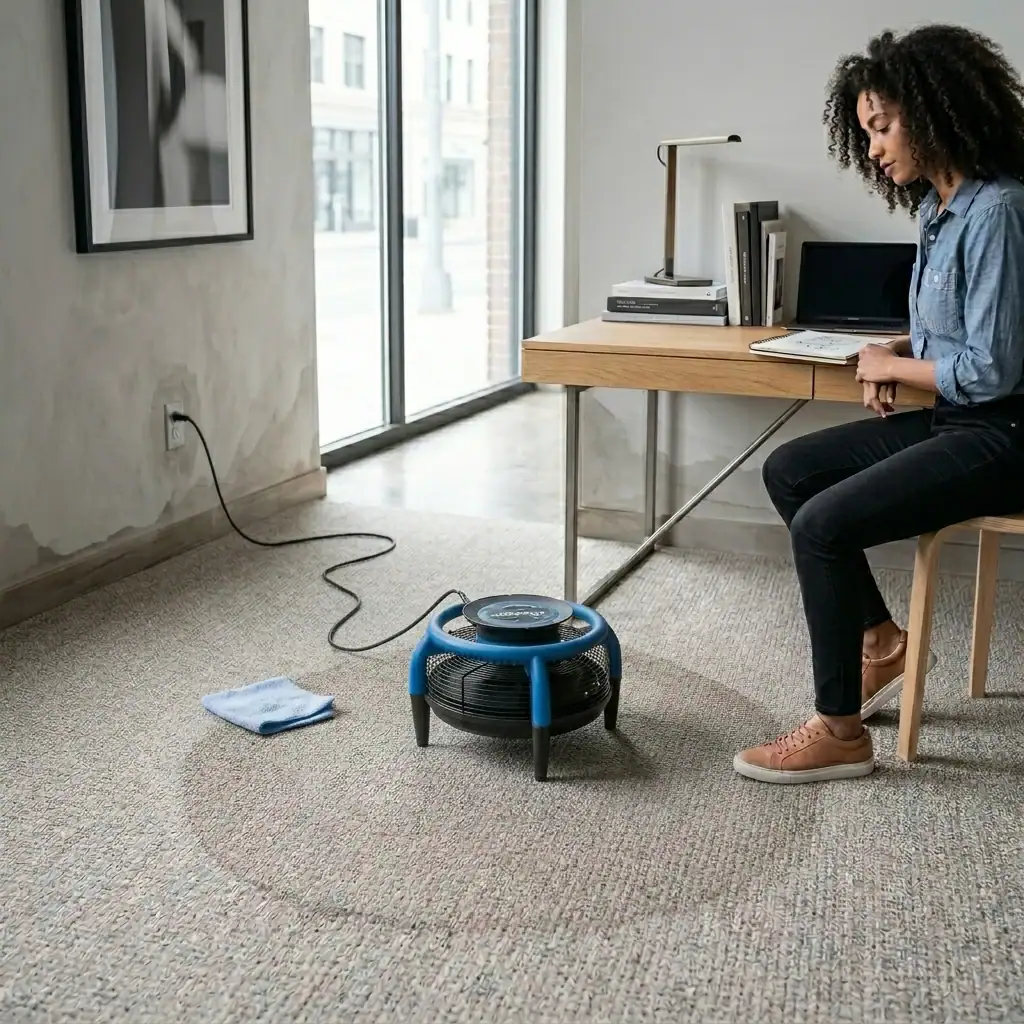
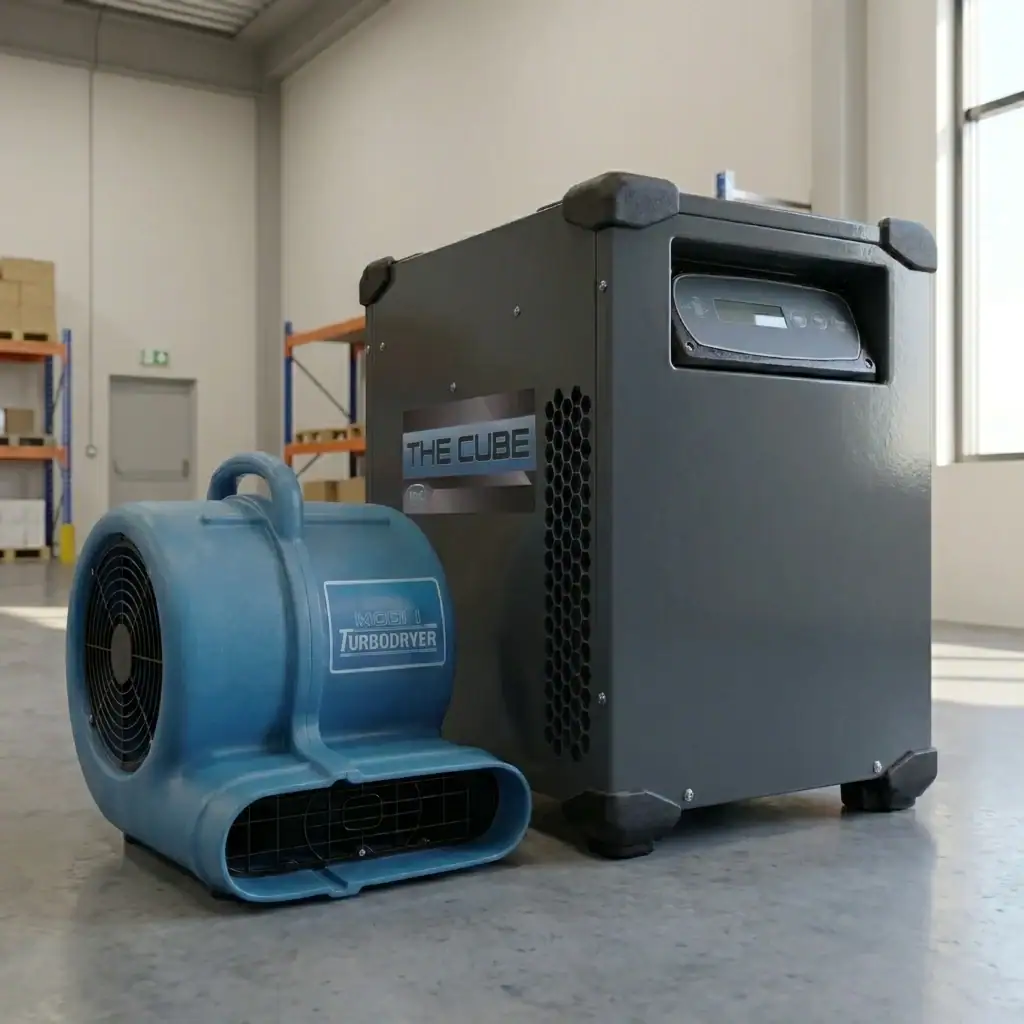
What it costs to hire one
Hiring first answers the question a purchase cannot: whether a dehumidifier actually fixes your condensation, and what size you need. Prices are ex-VAT and match each product page. A refundable deposit applies and comes back in full when the equipment returns undamaged.
| Machine | 1 day | 2 days | Up to a week | Longer |
|---|---|---|---|---|
| 19L compact — a room or small flat | £19.99 | £24.99 | £34.99 | £4.50/day |
| 38L commercial — a whole flat or house floor | £29.99 | £44.99 | £59.99 | £8.40/day |
A worked example. A flat where two bedrooms and the bathroom wall are affected: a 19L unit for a week is £34.99 + VAT. Run it in the worst room for two or three days, then move it, and keep a note of how quickly the tank fills — a tank that stops filling is the clearest sign the air has actually dried out.
Delivery and collection is £35 + VAT next working day, £59 before 11am, or £69 same day. Collection from our Greenford UB6 depot is free.
Daily Habits That Reduce Condensation
Equipment fixes the immediate problem. Habits prevent it from coming back. These are the highest-impact behaviour changes:
Keep lids on pans while cooking. A pan of boiling water without a lid releases steam continuously. A lid reduces moisture output by roughly 90%.
Use the extractor fan every time. Run it during and for 15 minutes after cooking or showering. If you do not have a fan, open the window in that room and close the door to the rest of the house.
Do not dry clothes on radiators. A typical wash load releases 5 litres of water. If you must dry indoors, use a dehumidifier in the same room, or use a vented tumble dryer (not a condenser type unless it is ducted outside).
Open bedroom windows briefly in the morning. Overnight breathing puts significant moisture into bedroom air. Ten minutes of fresh air in the morning resets the humidity level before you close up for the day.
Keep the house at a consistent temperature. Rapid temperature swings create cold surfaces. A steady low background heat (even 15-16 degrees overnight) keeps wall surfaces above dew point better than cycling between cold and hot.
Check for blocked vents. Airbricks, trickle vents, and extraction ducts get blocked over time by paint, dust, or furniture. Check them twice a year.
Pro Tip
Buy a cheap hygrometer (under ten pounds). Place it in the room where you notice the most condensation. If it reads above 60%, you know you need to take action. Below 55% and condensation is unlikely to form on any surface except single-glazed glass.
Condensation Action Plan: Quick Decision Table
Use this table to match your situation to the right action:
| Your Situation | First Action | Equipment Needed | Timeframe |
|---|---|---|---|
| Light condensation on bedroom windows | Open trickle vents, wipe daily, ventilate in morning | None (behaviour change) | Improvement within days |
| Heavy condensation + mould starting | Hire a 20L dehumidifier, improve ventilation | 20L dehumidifier | 3-5 days to stabilise |
| Whole-house condensation, multiple rooms | Industrial dehumidifier + air mover in worst room | 50L+ dehumidifier + air mover | 5-7 days |
| Condensation after a leak or flood | Drying package with LGR dehumidifier + air movers | Drying package (dehumidifier + 2-3 air movers) | 7-14 days |
| Persistent condensation in rental property | Dehumidifier + air mover; report to landlord re: insulation | 20-50L dehumidifier + air mover | Ongoing management |
| New build drying out (first winter) | Run dehumidifiers continuously, ventilate daily | 2x industrial dehumidifiers | First heating season (3-6 months intermittent) |
Common Mistakes That Make Condensation Worse
Watch Out
These common responses to condensation actually make the problem worse:
- Blocking all ventilation to save heat. Sealing trickle vents and blocking airbricks traps moisture inside.
- Only heating one room. The unheated rooms become condensation traps as moisture migrates to their cold surfaces.
- Using a portable gas heater. Unflued gas heaters produce roughly 1 litre of water for every litre of gas burned. They make condensation dramatically worse.
- Painting over mould without drying. The mould grows back within weeks under the paint.
- Running a dehumidifier with windows open. The unit fights a losing battle against unlimited outdoor moisture. Close windows while it runs.
Related Guides
Frequently Asked Questions
Need to Get Condensation Under Control Fast?
Hire a commercial dehumidifier for same-day or next-day delivery across London. Our drying packages include everything you need to bring humidity down to a safe level.
Browse DehumidifiersView Drying PackagesStill Wiping Windows Every Morning?
Hire a dehumidifier for a week and find out whether humidity is the whole problem — before you spend on ventilation work.
Browse DehumidifiersTell us the size of the flat and which rooms are worst and we will size it with you. Call 020 3375 4048 or message us on WhatsApp.

 Drone Survey & Mapping
 Drone Inspections