
 Drone Services
 Access Equipment
 Breaking & Drilling
 Cleaning Equipment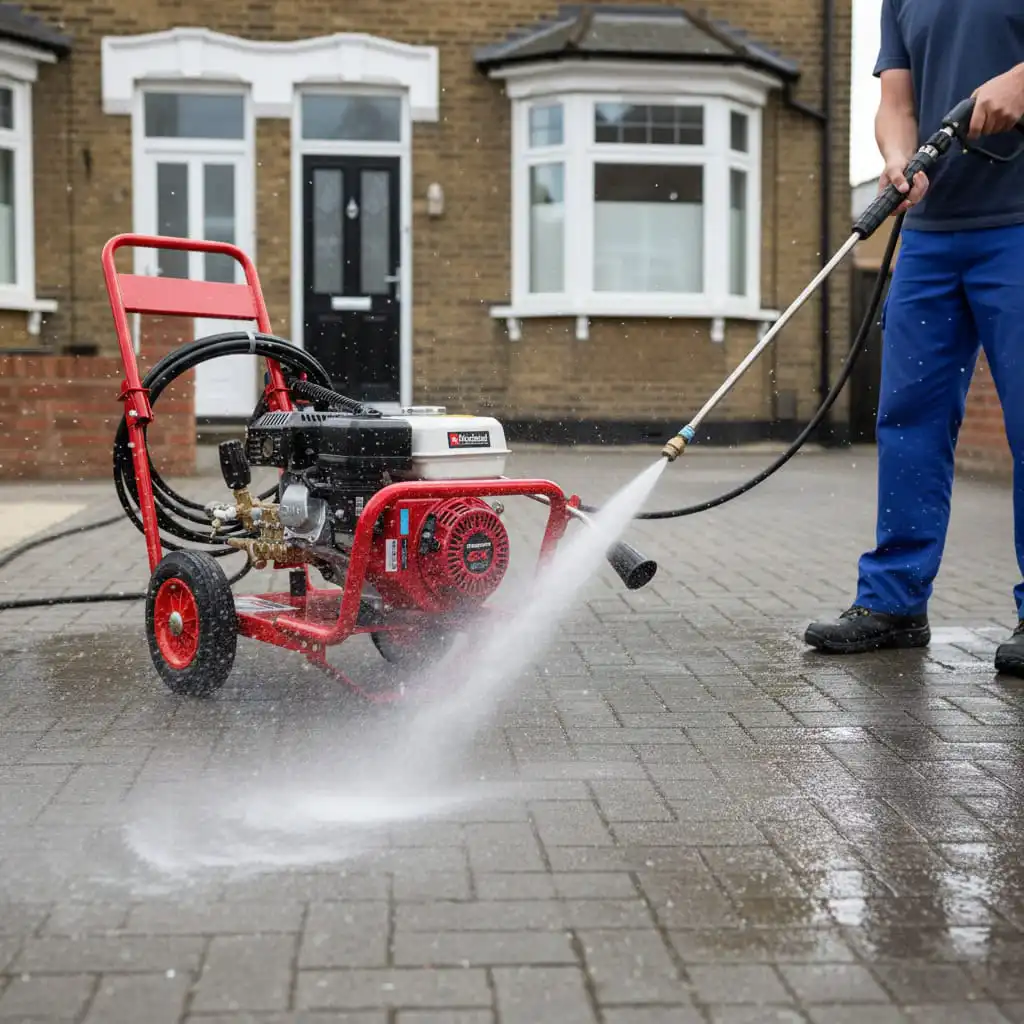
 Drying & Heating
 General Site Tools
Equipment Hire Guides
Pressure Washer Hire vs Buying — What Actually Saves You Money?
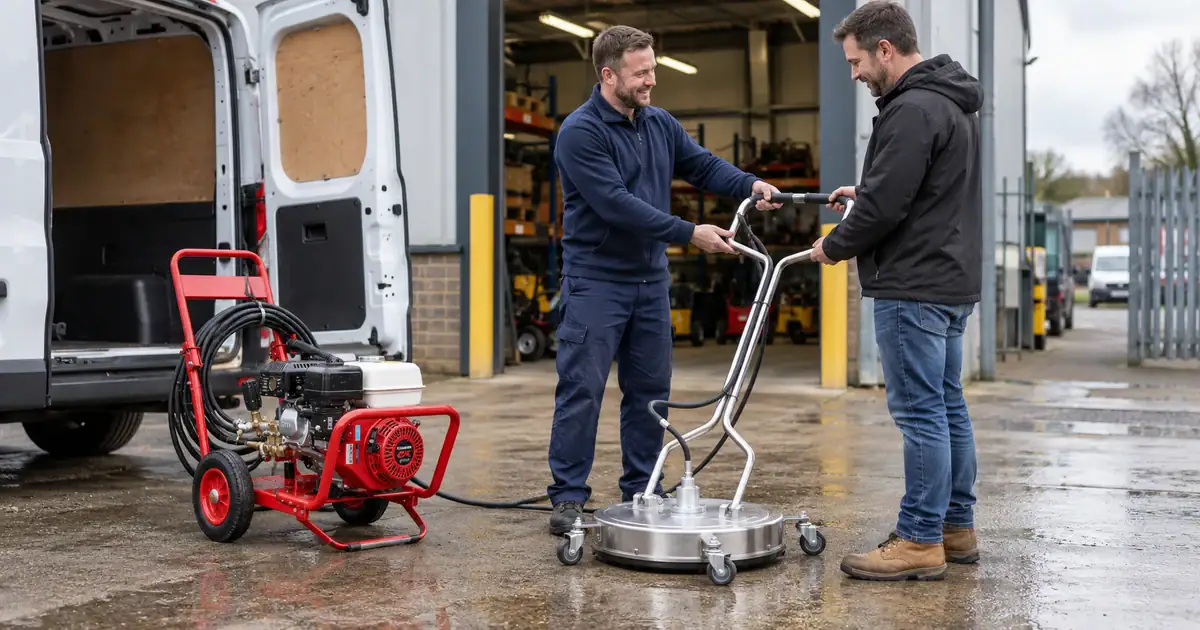
The Real Cost of Buying a Pressure Washer
The purchase price is the number people fixate on. But a pressure washer sitting in a garage costs money even when it’s not running.
Purchase price: A decent domestic electric pressure washer runs £150-250. A commercial-grade petrol unit — the kind that actually shifts oil stains and moss — costs £400-800. Below £150, you’re buying something that will frustrate you on anything tougher than a car wash.
Maintenance costs: Pump oil changes, nozzle replacements, hose fittings, and lance seals. Budget roughly £30-50 per year for a domestic unit. Petrol machines also need annual servicing — around £60-100 if you don’t do it yourself.
Storage: A pressure washer takes up space year-round for a tool you might use 2-3 times. It needs to be stored frost-free in winter or the pump seals crack — one of the most common ways people destroy a perfectly good machine.
Depreciation: A £400 machine loses roughly 30-40% of its value in the first year. By year three, it’s worth less than the cost of three day-hires.
Total cost of ownership (3 years, light use — 3 uses per year): Purchase: £400. Maintenance: £120. Storage/winterisation: ongoing hassle. Total: ~£520 for 9 uses = ~£58 per use.
The Real Cost of Hiring
Hiring is simple: you pay for the days you use it, return it, and somebody else deals with maintenance, storage, and repairs.
What it actually costs at Hireload. These are our own published rates, ex-VAT, and they match each product page:
| Machine | 1 day | 2 days | Up to a week | Longer |
|---|---|---|---|---|
| Karcher HD 5/11 — 110 bar, mains 230V; patios, paving, property maintenance | £24.99 | £29.99 | £39.99 | £6.90/day |
| 240V electric washer — patios and driveways, mains powered | £29.99 | £34.99 | £49.99 | £8.99/day |
| KEW commercial cold water — Danish trade pump, 240V socket | £39.99 | £69.99 | £99.99 | £13.99/day |
| Petrol 2450 PSI — no mains needed, heaviest work | £62.39 | £89.99 | £119.99 | £16.80/day |
| Surface cleaner attachment — flat discs, no stripes | £19.99 | £29.99 | £49.99 | £7.00/day |
Prices are ex-VAT and match each product page. A refundable deposit applies and comes back in full when the equipment returns undamaged. Delivery is £35 + VAT next working day, £59 before 11am or £69 same day, or collect free from our Greenford UB6 depot. A heavy-duty 240V trade washer is also available from £59.99 + VAT a day if you need more flow than the machines above.
What’s included: The machine, lance, hose, and standard nozzle. Detergent is not supplied. A surface cleaner attachment is a separate hire at £19.99 + VAT a day — on a patio or driveway it is the single thing that most changes how the finished job looks, because it cleans in even discs instead of leaving lance stripes.
What’s NOT included: Your time collecting and returning the machine (unless you book delivery). Hireload delivers and collects across London, which removes this friction entirely.
Total cost (3 uses per year, 1 day each, over 3 years): 9 hires at £50/day: £450. Delivery/collection: varies. Total: ~£450-500 for 9 uses = ~£50-55 per use.
The Break-Even Calculation
Hiring: ~£450-500 total over 3 years for 9 uses = £50-55/use. Nothing to store, nothing to maintain, commercial-grade machine every time.
The break-even point is roughly 4-5 uses per year. Below that, hiring is cheaper or comparable. Above that, ownership starts to save money — but only if you maintain the machine properly and don’t need to replace parts.
The hidden factor: Hire machines are commercial-grade. A £50/day hire gets you a machine with 2,000-3,000 PSI output — equivalent to buying a £400-600 unit. The domestic machines most people buy (1,300-1,800 PSI) simply cannot match this performance, which means longer cleaning times and weaker results on tough jobs.
What Hire Gets You That Buying Doesn’t
Commercial-grade power every time. No degradation over years of use. No worn pump seals reducing pressure. The machine you collect or receive is serviced and tested.
No storage problem. A pressure washer, hose, lance, and accessories take up meaningful garage or shed space for 350+ days a year when they’re not being used.
No maintenance liability. Pumps fail. Seals wear. Hoses perish. When you hire, these are the hire company’s problem. When you own, they’re your Saturday afternoon.
Access to the right machine for the job. A patio clean needs different pressure than a driveway degrease. Hiring lets you match the machine to the job rather than making one purchase work for everything.
When Buying Does Make Sense
Hiring isn’t always the answer. Buying makes sense if you use a pressure washer 5+ times per year, have dry frost-free storage available year-round, are comfortable with basic pump maintenance, and only need light-duty cleaning where a 1,300-1,800 PSI domestic unit is sufficient.
If all four apply, a mid-range domestic machine (£200-350) will pay for itself within 18 months. If even one doesn’t apply — particularly the storage and maintenance points — hiring remains the more practical and often cheaper choice.
Which Pressure Washer to Hire
| Your Situation | Hire or Buy? | Why |
|---|---|---|
| Annual patio + driveway clean (1-2x/year) | Hire | Far cheaper per use, commercial power, no storage |
| Regular car washing (weekly) | Buy domestic | High frequency justifies purchase, light duty sufficient |
| End-of-tenancy deep clean | Hire | One-off job, need maximum power, return when done |
| Builder / contractor (frequent jobs) | Buy commercial | Daily use justifies £500+ investment |
| No garage or shed for storage | Hire | Nowhere to store safely — frost damage risk |
| Removing heavy oil/paint/graffiti | Hire | Need 2,500+ PSI — commercial hire only |
| Keeping decking/fence clean (2-3x/year) | Hire | Low frequency, light duty but hire still cheaper |
Light duty (patios, cars, garden furniture): The 240V electric pressure washer handles these comfortably — quiet, lightweight, runs from a standard plug. £29.99 + VAT a day, £49.99 for up to a week.
Medium duty (driveways, decking, render): The Karcher HD 5/11 delivers consistent commercial-grade pressure — 110 bar working, up to 160 bar — from a 240V supply. The most popular hire choice for residential outdoor cleaning. £24.99 + VAT a day, £39.99 for up to a week. For a bigger job in one go, the KEW commercial cold water washer is £39.99 a day.
Heavy duty (oil stains, paint removal, commercial cleaning): The petrol 2450 PSI washer delivers the highest cleaning power in the range and needs no mains supply at all. Louder and heavier, but significantly more effective on stubborn contamination. £62.39 + VAT a day, £119.99 for up to a week.
Not sure which you need? Our PSI guide by surface breaks it down by job type.
Is it cheaper to hire or buy a pressure washer?
How much does it cost to hire a pressure washer for a day?
Can I hire a pressure washer and have it delivered?
What PSI pressure washer do I need for my patio?
Do hired pressure washers come with detergent?
Related guides: What PSI do I need? | How to pressure wash a patio | 5 pressure washing mistakes

 Drone Survey & Mapping
 Drone Inspections