
 Drone Services
 Access Equipment
 Breaking & Drilling
 Cleaning Equipment
 Drying & Heating
 General Site Tools
Equipment Hire Guides
Drying Clothes Indoors Without Causing Damp: What Actually Works
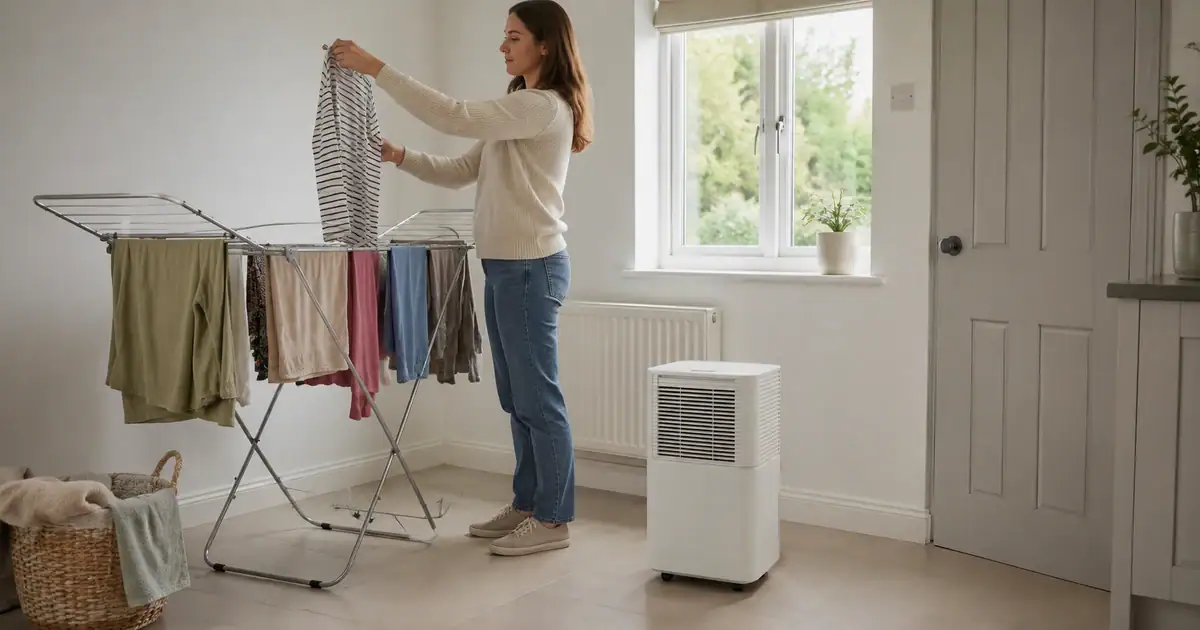
Drying Clothes Indoors Without Causing Damp — why indoor laundry drives condensation and mould, and the practical ways to dry clothes inside without damaging your home.
Hireload delivers equipment across London from our Greenford / UB6 operating area. View full London delivery areas.
The Problem Nobody Talks About
A single load of wet laundry on a drying rack releases around 2 litres of water into your home. In winter, when windows stay closed and the heating is on, that moisture has nowhere to go — so it condenses on windows, soaks into walls, and creates the ideal conditions for mould.
If you dry clothes indoors regularly — and in the UK most of us do for at least six months of the year — your home is absorbing litres of extra moisture every week. Multiply that across a winter and it is no surprise that condensation and damp become problems.
Why Radiator Drying Makes It Worse
Hanging wet clothes on radiators is the most common indoor drying method, and the worst for your home. The heat evaporates water from the clothes quickly, but all that moisture goes straight into the room air. The radiator also loses efficiency — it is heating wet fabric instead of the room — so you turn the thermostat up, which drives more evaporation, which creates more moisture.
The result: higher energy bills, more condensation, and a room that feels damp despite the heating being on.
The Equipment Approach
If you are going to dry clothes indoors regularly, managing the moisture is non-negotiable. Here are the options that actually work.
Drying Calculator
Two quick questions and we'll size the right dehumidifier — and tell you how long to hire it.
Option 1: Dehumidifier in a closed room
Set up your drying rack in one room. Close the door and windows. Run a dehumidifier. The machine captures the moisture as it evaporates from the clothes, keeping it out of the rest of your home.
This is the most effective method for regular indoor drying. A compact 19L dehumidifier handles a single drying rack in a standard room. For families doing several loads a week, a 38L commercial unit extracts moisture faster and copes with heavier laundry loads.
Bonus: clothes dry faster in a dehumidified room, because the lower humidity allows quicker evaporation. Most loads dry overnight with a dehumidifier running.
Option 2: Heated airer plus dehumidifier
A heated drying rack (around £40-80 from most retailers) provides gentle warmth that helps clothes dry while using less energy than a radiator. Pair it with a dehumidifier and you get fast drying without adding moisture to your home.
Option 3: Ventilated drying room
If you have a utility room with an extractor fan, use it as a dedicated drying space. Run the extractor while clothes are drying to pull moisture out of the room. Not as effective as a dehumidifier, but far better than drying in a living room with no extraction.
What About a Tumble Dryer?
A vented tumble dryer sends moisture outside — problem solved, but at a high energy cost (typically £0.60-£1.00 per load). A condenser dryer captures moisture internally but heats the room. A heat pump dryer is the most efficient, but costs £400-800 to buy.
For anyone without a tumble dryer, or without space for one, a dehumidifier is the practical alternative. Running a compact dehumidifier for 24 hours costs roughly 30-50p in electricity — around half the cost of a tumble dryer cycle, with the added benefit of drying the room rather than heating it.
The Maths: How Much Moisture Are You Adding?
| Laundry habit | Moisture added per week |
|---|---|
| 2 loads a week on an indoor rack | ~4 litres |
| 4 loads a week (family) on an indoor rack | ~8 litres |
| Daily washing with radiator drying | 10-14 litres |
To put that in context: a typical UK home already produces 10-15 litres of moisture a day from cooking, washing and breathing. Adding 4-14 litres a week from laundry on top of that can push a home from manageable to damp.
Quick Wins If You Can’t Hire a Dehumidifier
- Spin clothes on the highest setting. Higher spin speeds extract more water before the clothes even leave the machine. An 1800rpm spin versus 1200rpm can roughly halve the moisture left in the load.
- Dry in a room with an extractor fan. Bathroom or kitchen — use the extraction that is already there.
- Don’t bunch clothes together. Space items on the rack with air gaps between them. They dry faster and release moisture more evenly.
- Wipe windows in the morning. If you see condensation after overnight drying, wipe it before it runs down into the frame and causes mould.
Frequently Asked Questions
Keep Your Home Dry This Winter
If indoor drying is causing condensation, a short-term dehumidifier hire takes the moisture problem off the table. Call us on 020 3375 4048 for sizing advice.
Browse Dehumidifiers
 Drone Survey & Mapping
 Drone Inspections