
 Drone Services
 Access Equipment
 Breaking & Drilling
 Cleaning Equipment
 Drying & Heating
 General Site Tools
Equipment Hire Guides
Condensation on Windows Every Morning? Here’s Why and How to Fix It
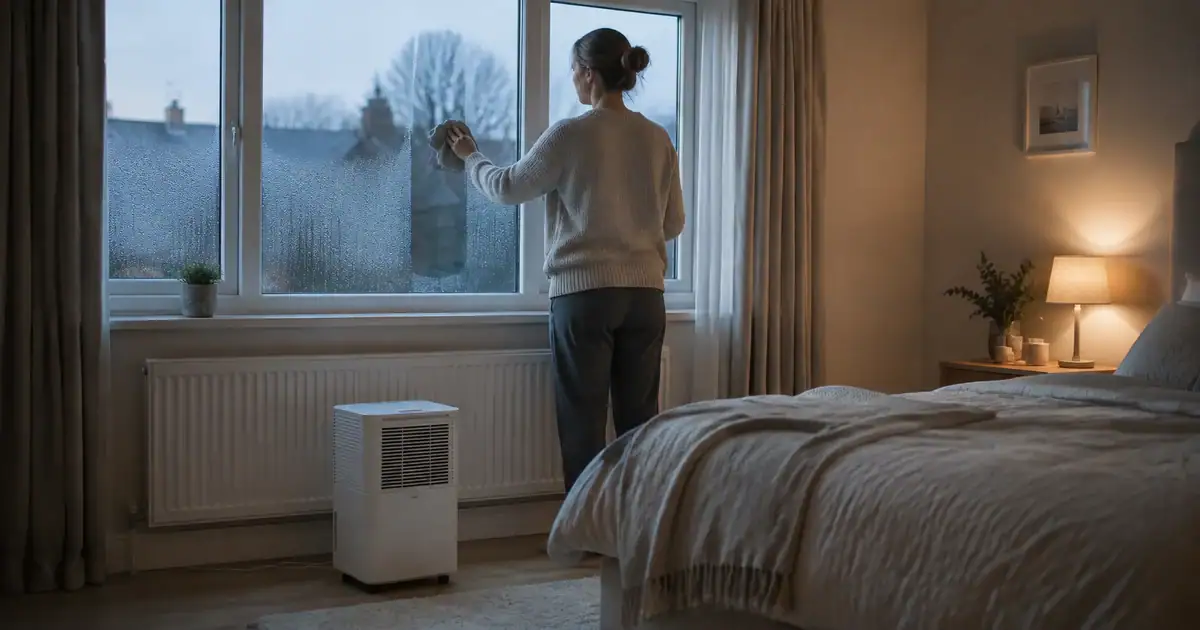
Condensation on Windows Every Morning? — what actually causes streaming windows, when it points to something more serious, and what genuinely stops it beyond the usual advice.
Hireload delivers equipment across London from our Greenford / UB6 operating area. View full London delivery areas.
If your dehumidifier is barely collecting anything in an unheated room, that is usually the temperature rather than a fault — here is what is actually going on.
Wiping windows every morning? The water on the glass came out of the air inside the room overnight — it is a humidity problem, not a window problem, and it comes back every night until the moisture level drops.
A 19L dehumidifier is £19.99 + VAT for a day and £34.99 for up to a week — long enough to pull a flat back down to a normal humidity level and see whether the streaming stops. Delivered across London, or collect free from Greenford UB6.
Browse drying equipment · Not sure what size? Call 020 3375 4048 or message us on WhatsApp.
Why Your Windows Stream Every Morning
Condensation forms when warm, moisture-laden air meets a cold surface. Your windows are the coldest surface in most rooms — especially at night, when the heating drops and outside temperatures fall. The moisture in the air condenses into water droplets, and by morning your windows are streaming.
It is physics, not a fault. But left unmanaged, daily condensation leads to black mould around window frames, rotting timber sills, peeling paint, and eventually damp that spreads into walls and ceilings.
The Real Cause Isn’t Your Windows — It’s Your Humidity
Most people blame the windows. Double glazing companies sell replacements. Landlords blame tenants. But the windows are just where the symptom shows up. The actual problem is the humidity level inside your home.
A typical UK household produces 10-15 litres of moisture every day: cooking, showering, breathing, drying clothes, even houseplants. If that moisture cannot escape — because ventilation is poor, windows are sealed, or extractor fans are inadequate — humidity climbs until condensation appears on the coldest surfaces.
Rule of thumb: if your indoor humidity sits above 60%, condensation on windows is almost guaranteed during cold weather.
The Usual Tips (and Why They’re Not Enough)
You have probably read these already: open windows, run extractor fans, wipe windows in the morning, don’t dry clothes on radiators, keep lids on pans. They all help, and you should do them.
But if your home has poor natural ventilation — sealed double glazing with no trickle vents, no extractor fans, or a building design that traps moist air — these habits alone won’t fix the problem. You are bailing water from a boat with a hole in it.
What Actually Fixes Persistent Condensation
Fix 1: Improve extraction
Extractor fans in bathrooms and kitchens are the first line of defence. If you don’t have them, fit them. If you have them and they are weak or noisy, replace them. A modern intermittent extractor with a humidity sensor costs £30-60 and runs automatically when moisture levels rise.
Drying Calculator
Two quick questions and we'll size the right dehumidifier — and tell you how long to hire it.
Trickle vents on windows should be open all year round. They provide a controlled trickle of fresh air that helps moisture escape without significant heat loss. Many homeowners close them to save energy — the resulting damp damage usually costs far more than the marginal heating loss.
Fix 2: Reduce moisture sources
The biggest controllable source is indoor clothes drying. A single drying rack adds around 2 litres of moisture per load. Either dry clothes with a dehumidifier running, use a tumble dryer, or dry in a ventilated room with the door closed and the extractor on — our guide on drying clothes indoors without damp covers this in detail.
Other sources to manage: uncovered fish tanks, large numbers of houseplants, boiling water without a lid, and long showers without extraction.
Fix 3: Control humidity with a dehumidifier
If ventilation improvements alone don’t bring humidity below 60%, a dehumidifier is the most effective intervention. It directly extracts moisture from the air, lowering humidity to a level where condensation cannot form.
A compact 19L dehumidifier is sized for a single problem room. For a home with condensation in several rooms, a 38L commercial unit provides whole-floor extraction capacity.
Short-term hire versus buying: if the condensation is seasonal (roughly November to March), a short hire during the worst weeks usually makes more sense than buying a machine that sits unused for seven months of the year.
Fix 4: Consistent heating
Temperature swings cause condensation bursts. A warm house that goes cold overnight creates the biggest temperature difference between the air and the windows — exactly when condensation forms.
Keeping a low background heat overnight (around 15-16C) reduces that difference enough to noticeably cut morning condensation. It costs a little more in heating, but it helps prevent the damp damage that costs far more.
When Condensation Means Something More Serious
Daily condensation on windows is manageable. But some patterns point to a bigger problem.
Condensation between the glass panes means the window seal has failed. The sealed unit needs replacing — no amount of ventilation fixes a failed seal.
Damp patches on walls away from windows suggest penetrating or rising damp, not just condensation. That needs investigation.
Mould that returns quickly after cleaning suggests humidity is consistently too high and the ventilation strategy isn’t working. A dehumidifier combined with improved extraction is usually the answer.
Condensation in rooms where extractor fans are running means either the fans are undersized, the ductwork is blocked, or the moisture load is too high for passive ventilation alone.
What it costs to hire a dehumidifier
Hiring first tells you whether a dehumidifier fixes your condensation before you spend on buying one. Prices are ex-VAT and match each product page. A refundable deposit applies and comes back in full when the equipment returns undamaged.
| Machine | 1 day | 2 days | Up to a week | Longer |
|---|---|---|---|---|
| 19L compact — a room or a small flat | £19.99 | £24.99 | £34.99 | £4.50/day |
| 38L commercial — a whole flat or house floor | £29.99 | £44.99 | £59.99 | £8.40/day |
A worked example. A two-bedroom flat with streaming windows every morning: a 19L unit for a week is £34.99 + VAT. Run it in the room that gets worst first, move it after a couple of days, and you will know by the end of the week whether humidity was the whole story or whether there is also a ventilation or cold-bridge problem to fix.
Running cost is small next to the hire: a compact unit draws a few hundred watts, so a week of overnight running is a couple of pounds of electricity, not tens.
Delivery and collection is £35 + VAT next working day, £59 before 11am, or £69 same day. Collection from our Greenford UB6 depot is free.
Frequently Asked Questions
Take Control of Condensation
If ventilation alone isn’t cutting it, a hired dehumidifier brings humidity under control quickly. Call us on 020 3375 4048 for sizing advice.
Browse Dehumidifiers
 Drone Survey & Mapping
 Drone Inspections