
 Drone Services
 Access Equipment
 Breaking & Drilling
 Cleaning Equipment
 Drying & Heating
 General Site Tools
Equipment Hire Guides
Floor Scrubber vs Mop vs Steam Cleaner — When Does a Machine Actually Help?
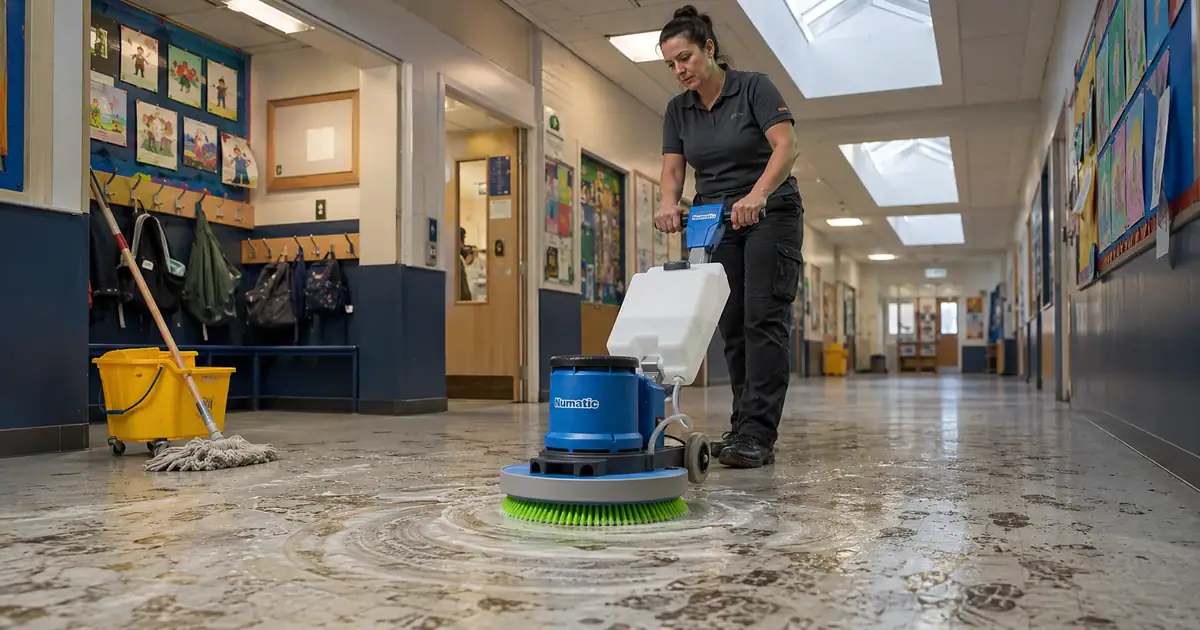
The Three Methods Compared
| Factor | Mop & Bucket | Steam Cleaner | Floor Scrubber |
|---|---|---|---|
| Cost | £5-20 (buy) | £80-300 (buy) or £30-50/day (hire) | £40-70/day (hire) |
| Coverage speed | 50-80m2/hour | 30-60m2/hour | 400-800m2/hour |
| Cleaning depth | Surface dirt only | Sanitises surface | Deep clean + dry in one pass |
| Floor left wet? | Yes (5-20 min drying) | Slightly damp (2-5 min) | Dry immediately (squeegee extracts) |
| Best for | Small areas, quick spills | Sanitisation, kitchen/bathroom | Large areas, heavy soiling, commercial |
| Physical effort | High | Medium | Low |
When a Mop Is Enough
A mop works perfectly well for:
Small rooms under 50m2. Kitchens, bathrooms, hallways. The effort is manageable and the cost is negligible.
Light soiling. Regular maintenance of a floor that gets swept daily. A quick mop keeps it presentable.
Domestic settings. Home kitchens, residential bathrooms, small utility rooms. A mop and bucket handle the scale and the dirt level without any machinery.
Quick spill cleanup. Immediate response to a spill doesn’t need a machine. Mop it, dry it, move on.
The mop’s limitations: For any floor area over 50m2, mopping becomes time-consuming. The bucket water gets dirty quickly — after a few minutes, you’re spreading diluted grime rather than cleaning. And a mop can’t extract water from the floor surface, so you’re left with a damp floor that takes 5-20 minutes to air-dry. In a commercial setting, that damp floor is a slip hazard.
When a Steam Cleaner Makes Sense
Steam cleaners heat water to near-boiling and release it as steam through a microfibre pad. They’re excellent for sanitisation but limited in other ways.
Best applications: Kitchen floors where hygiene matters (kills up to 99% of bacteria). Bathroom floors and tiles. Any situation where chemical-free cleaning is preferred (nurseries, clinics, food prep areas). Small hard floor areas that need sanitising, not heavy cleaning.
Limitations: Slow coverage — 30-60m2 per hour at best. Minimal cleaning power on heavy soiling or grease. Can damage certain floor types (unsealed wood, laminate with gaps, some vinyl). Not suitable for carpets unless specifically designed for them. The pad needs frequent changing as it absorbs dirt.
When You Need a Floor Scrubber
A floor scrubber becomes the right tool when manual methods stop being practical.
Floor area above 200m2. At this size, mopping takes 3-4 hours. A floor scrubber does the same area in 30-45 minutes — and the result is cleaner because the machine uses fresh solution and extracts dirty water throughout.
Heavy soiling. Oil, grease, tyre marks, ground-in grime. A mop can’t provide the mechanical scrubbing action needed to break these up. A rotating brush at the right pressure does.
Time matters. A warehouse or shop floor that needs to be back in use quickly can’t afford a 20-minute drying period from mopping. A floor scrubber leaves the floor dry and usable immediately.
Regular cleaning schedule. If you clean the same large floor weekly or more often, the cumulative time saving of a scrubber vs mopping is substantial.
Scrubbing the same floor: 1 person x 1.5 hours. Floor dry immediately. Dirty water extracted and removed. Cost: £40-70 machine hire + labour.
The scrubber costs more in equipment but less in labour, delivers a better result, and leaves the floor usable immediately.
The Break-Even Point
Under 50m2: Mop. No question.
50-200m2: Depends on frequency and soiling. For a one-off or monthly clean, a mop still works. For weekly cleaning or heavy soiling, a scrubber saves time from the first use.
Over 200m2: Floor scrubber. The time saving alone justifies the hire cost, and the cleaning quality is measurably better.
For sanitisation (any size): Steam cleaner if the floor type allows it and the area is under 100m2. Above 100m2, a scrubber with sanitising solution is faster.
| Your Situation | Best Method | Why |
|---|---|---|
| Home kitchen (10-20m2) | Mop | Small area, manageable effort |
| Small office (50-100m2) | Mop or scrubber | Scrubber if heavy traffic or weekly |
| Restaurant / cafe (50-150m2) | Scrubber | Grease + hygiene + daily cleaning |
| Warehouse (200m2+) | Scrubber | Time saving is massive, better result |
| Nursery / clinic (any size) | Steam cleaner | Chemical-free sanitisation priority |
| One-off deep clean (any size) | Scrubber | Best single-day results |
| Quick spill cleanup | Mop | Immediate, no setup needed |
FAQ
Is a floor scrubber worth hiring for a one-off clean?
Can I use a floor scrubber on wooden floors?
Do floor scrubbers need special cleaning solution?
How much does it cost to hire a floor scrubber?
Related guides: How to use a floor scrubber | Walk-behind vs ride-on | Floor scrubber hire costs

 Drone Survey & Mapping
 Drone Inspections