
 Drone Services
 Access Equipment
 Breaking & Drilling
 Cleaning Equipment
 Drying & Heating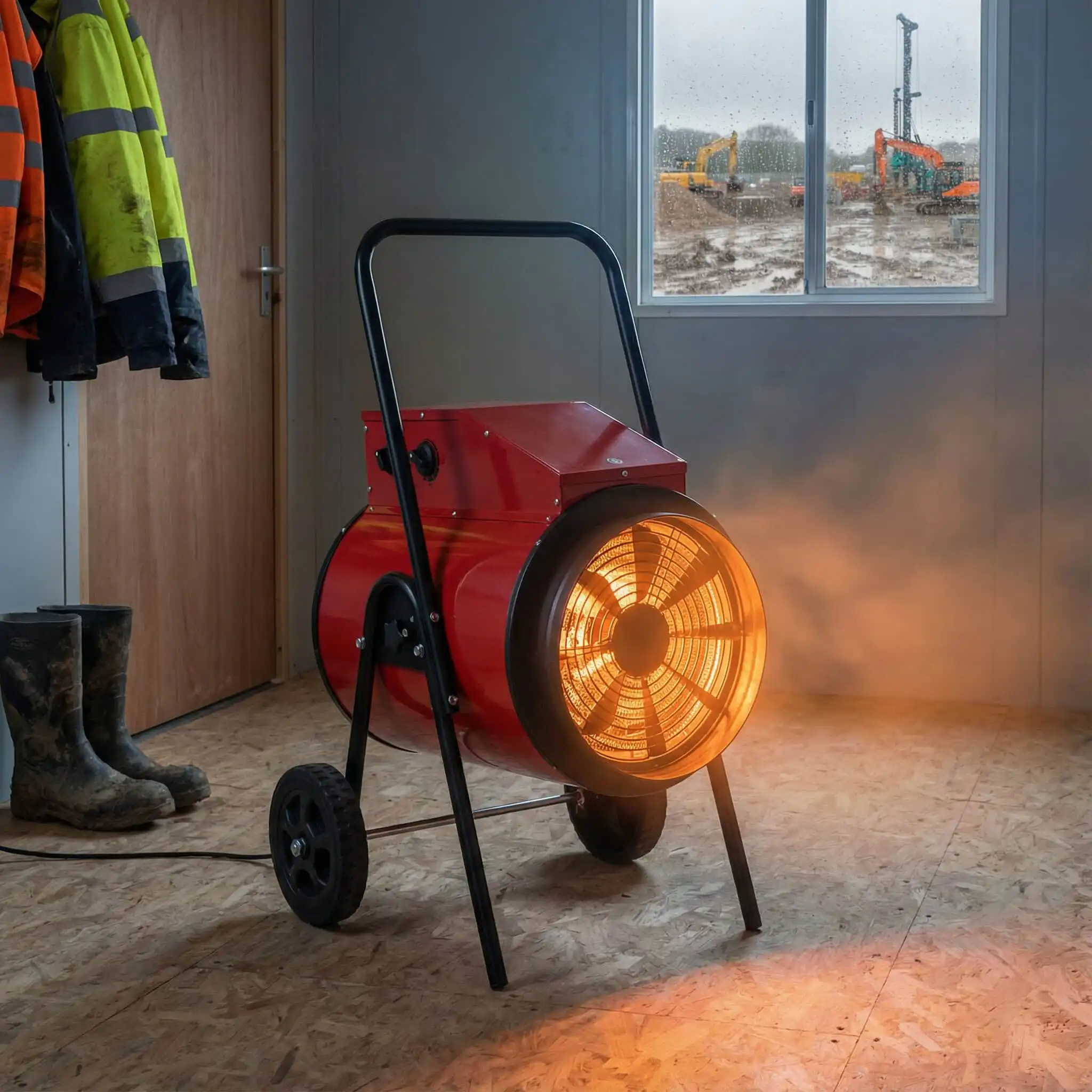
 General Site Tools
Equipment Hire Guides
Plaster Still Wet After a Week? What’s Normal and When to Act
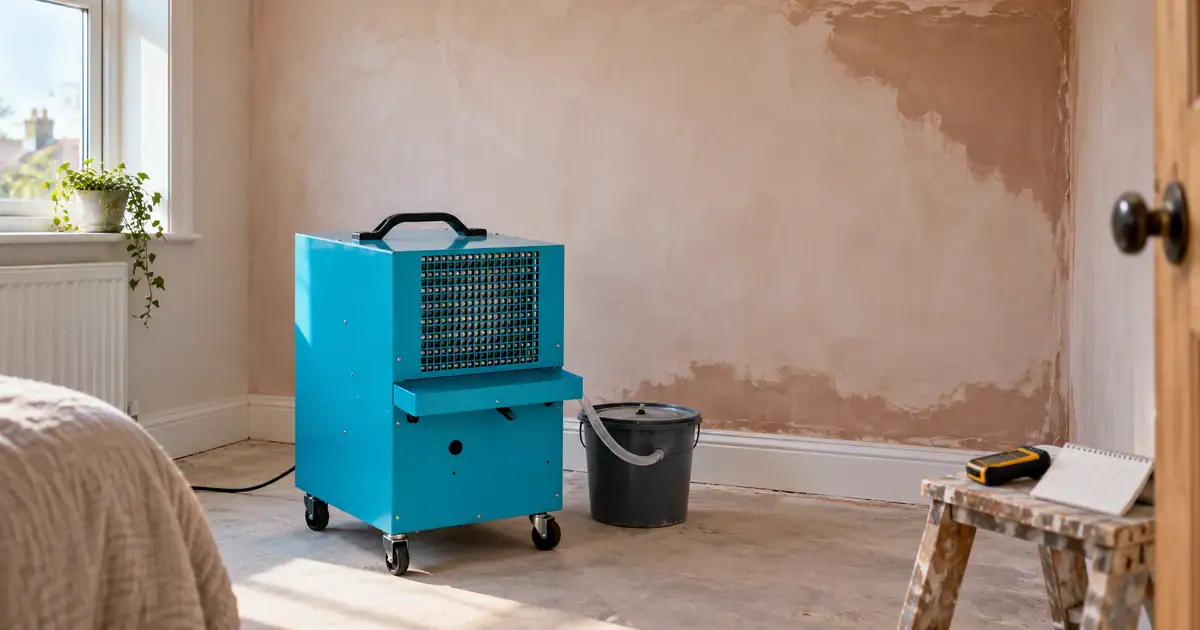
You had the room plastered a week ago. The walls are still dark, damp to the touch, and showing no sign of drying out. You are wondering whether something has gone wrong — or whether you just need to wait longer.
The short answer: a week is not always enough. But if conditions are right and nothing is happening, there are practical steps you can take — and equipment that speeds things up safely without risking cracks or damage.
Is It Normal for Plaster to Still Be Wet After a Week?
Often, yes. Drying time depends on the type of plaster, the thickness of the coat, room temperature, ventilation, and the time of year.
A thin skim coat in a warm, well-ventilated room can dry in 3 to 5 days. A full replaster with a thick base coat can take 2 to 6 weeks. In a cold UK winter with the windows closed and no heating, even a skim coat can take well over a week.
The key indicator is colour change. Plaster dries from the edges inward and lightens as it dries — dark patches turning to a uniform pale pink or off-white. If you can see that progression happening, even slowly, the plaster is drying normally. If the entire surface is still uniformly dark after 7 or more days in a ventilated room with some background heat, it is worth investigating why.
Why Your Plaster Is Not Drying — The 5 Common Causes
1. Poor ventilation
This is the most common cause. If the windows are closed and there is no airflow, moisture has nowhere to go. The water evaporating from the plaster saturates the air in the room, and drying slows to a crawl. Opening windows on opposite sides of the room to create a cross-draught makes a noticeable difference.
2. Cold room temperature
Plaster dries very slowly below 10°C and barely dries at all below 5°C. If the room has no heating and the outside temperature is low, the drying process can stall completely. Background heat — enough to keep the room above 10°C — helps significantly.
3. High ambient humidity
In winter, during prolonged rain, or in naturally damp properties, the air itself may already be holding too much moisture to absorb more from the plaster. Even with windows open, if the outdoor air is humid, drying will be slow. This is where a dehumidifier becomes the most effective tool.
4. Thick or multi-coat application
A deep base coat or multi-coat replaster holds significantly more water than a skim. If your plasterer applied a full base coat plus skim, expect weeks rather than days. This is normal — not a defect.
5. Underlying damp or a leak
If the moisture is coming from behind the plaster — rising damp, penetrating damp, or an undetected leak — no amount of ventilation or dehumidification will fix it permanently. The plaster will keep getting wet because the source has not been addressed. If you suspect this, get a damp survey before spending money on drying equipment. Fix the source first, then dry the room.
What Actually Speeds Up Plaster Drying (Safely)
Ventilation first
Open windows on opposite sides of the room. Even a small draught helps move moisture-laden air out and drier air in. This costs nothing and should be the first step.
Gentle background heat
Keep the room above 10°C. A low-level radiator or oil-filled heater works well. Do not point fan heaters or heat guns directly at the plaster — rapid localised drying causes cracking. The goal is to raise the room temperature evenly, not to blast the walls.
Dehumidifier
This is the most effective single tool for controlled plaster drying. A dehumidifier pulls moisture out of the air, which in turn allows more moisture to evaporate from the plaster surface. The cycle is continuous and significantly faster than ventilation alone.
For a standard bedroom or living room, a compact professional dehumidifier rated at 40 to 45 litres per day is usually sufficient. Place it in the centre of the room, not against the wet wall. Set the humidity target to 55 to 65% relative humidity — going below 50% risks drying the plaster too fast and causing cracks.
Drying Calculator
Two quick questions and we'll size the right dehumidifier — and tell you how long to hire it.
The Dri-Eaz Cube 43L is a good match for single-room plastering jobs. For larger spaces or multi-room renovations, a higher-capacity unit like the 55L DrizAir 1200 covers more ground.
Air mover
Pairing a dehumidifier with an air mover dramatically improves drying time. The air mover pushes air across the wet surface, preventing moisture pockets from forming in corners and speeding up evaporation across the whole wall. The dehumidifier then extracts that moisture from the air.
A compact 240V air mover is easy to position — tilt it toward the wall, choose a low or medium speed, and let it run alongside the dehumidifier. For the full range of options, see our air movers and carpet dryers.
What not to do
Do not use fan heaters pointed at the walls. Do not use heat guns. Do not use industrial heaters in small rooms — they can overdry the surface while leaving moisture trapped beneath, which leads to cracking and delamination. Do not paint over plaster that is still damp. The paint will blister and peel within weeks.
When to Hire a Dehumidifier vs. When to Call a Professional
A simple decision framework:
Hire a dehumidifier and air mover if: the plaster is wet, the room is cold or humid, ventilation has been poor, and there is no sign of an underlying moisture source. This is the most common scenario — the conditions just need improving.
Get a damp survey first if: the plaster has been wet for 3 or more weeks despite good conditions (warm room, windows open, decent ventilation), or if the damp seems to be coming from behind the wall rather than from the plaster surface. This could be rising damp, penetrating damp, or a hidden leak — and a dehumidifier will not fix the root cause.
Fix the source first if: there is a visible water source — a leaking pipe, rainwater ingress, or flood damage. Dry the room only after the source is repaired.
How to Use a Dehumidifier on New Plaster Without Damage
Wait until the plaster has initially set — the surface should be firm to the touch, typically 24 to 48 hours after application. Do not run a dehumidifier on freshly applied wet plaster.
Place the dehumidifier in the centre of the room, not directly against the damp wall. Set the target humidity to 55 to 65% relative humidity. Run it continuously for the first 48 to 72 hours, then check progress. The plaster should be lightening progressively from the edges inward.
If using an air mover alongside the dehumidifier, point it toward the wall on a low or medium setting. The combination of air movement and moisture extraction is significantly more effective than either alone.
Monitor the water tank and empty it regularly, or use the continuous drain option if the unit has one. Most single-room plastering jobs need 3 to 7 days of dehumidifier hire to dry properly.
What it costs to hire
Prices are ex-VAT and match each product page. A refundable deposit applies and comes back in full when the equipment returns undamaged.
| Machine | 1 day | 2 days | Up to a week | Longer |
|---|---|---|---|---|
| 19L compact — one room | £19.99 | £24.99 | £34.99 | £4.50/day |
| 38L commercial — full replaster, several rooms | £29.99 | £44.99 | £59.99 | £8.40/day |
| Air mover — moves air across the wall | £19.99 | £24.99 | £29.99 | £4.80/day |
A worked example. A skimmed room that has stalled: a 19L dehumidifier for a week is £34.99 + VAT. A full base-coat replaster that needs two to three weeks is better hired on the longer-term rate — a 38L at £8.40 a day is about £58.80 a week. Delivery is £35 + VAT next working day, or collect free from Greenford UB6.
How Long Should You Hire a Dehumidifier For?
It depends on the job:
A skim coat in a warm room with good airflow typically dries in 2 to 3 days with a dehumidifier running. A full replaster in a single room usually needs 5 to 7 days. A multi-room renovation can take 1 to 2 weeks. Post-flood or post-leak drying in a plastered property may need 2 to 4 weeks with larger units.
Hireload offers flexible daily and weekly hire with same-day London delivery, so you can match the hire period to your actual drying time rather than guessing upfront. Browse our full dehumidifier range to find the right capacity for your job.
Frequently Asked Questions
Plaster Still Dark After a Week?
A 19L dehumidifier is £34.99 + VAT for up to a week — enough to tell you whether the room was the problem.
Browse DehumidifiersTell us the room size, the coat thickness and how long ago it was plastered and we will size it with you. Call 020 3375 4048 or message us on WhatsApp.

 Drone Survey & Mapping
 Drone Inspections