
 Drone Services
 Access Equipment
 Breaking & Drilling
 Cleaning Equipment
 Drying & Heating
 General Site Tools
Equipment Hire Guides
How Much Does It Cost to Run a Hired Dehumidifier?
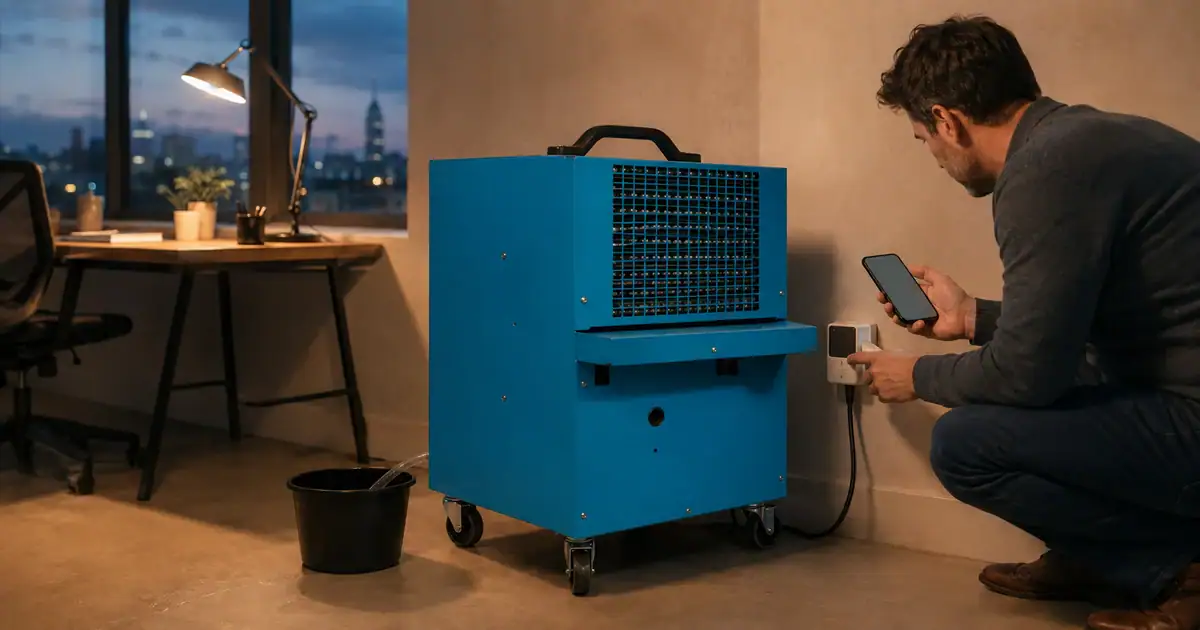
How Much Does It Cost to Run a Hired Dehumidifier? — A clear breakdown of electricity usage, daily running costs, and how hire compares to buying outright, using real UK energy rates.
Hireload delivers equipment across London from our Greenford / UB6 operating area. View full London delivery areas.
The Quick Numbers
Running a hired commercial dehumidifier costs between 30p and £1.50 per day in electricity, depending on the unit size and how hard it is working. That is less than running a tumble dryer for a single load.
The total cost of hiring — equipment hire rate plus electricity — is almost always cheaper than buying a commercial unit outright, especially for a one-off job that lasts a few days to a few weeks.
Here is how the numbers break down.
Electricity Cost by Unit Size
Dehumidifiers draw power based on their compressor size. Larger units extract more moisture but use more electricity. Here is what to expect at current UK energy rates (approximately 24.5p per kWh as of early 2026):
| Unit Type | Typical Wattage | Daily Running Cost (24hrs) |
|---|---|---|
| Compact domestic (19–20L) | 250–350W | 30p – 50p |
| Commercial (38–43L) | 500–700W | £0.60 – £1.00 |
| Industrial LGR (63L) | 700–900W | £0.85 – £1.20 |
| Heavy industrial (70–90L) | 900–1,200W | £1.10 – £1.50 |
These are running estimates, not exact figures. Actual consumption depends on ambient temperature, humidity level, and how saturated the room is. A dehumidifier in a very damp room works harder at first — higher power draw — then uses less electricity as humidity drops and the compressor cycles less.
Most units cycle on and off rather than running at full power continuously. Once the room reaches a stable humidity level, the compressor runs less frequently, so daily costs reduce as drying progresses.
What About the Hire Cost?
The total cost of using a hired dehumidifier has two components: the hire rate and the electricity.
Typical scenario: hiring a 38L commercial dehumidifier for 7 days to dry a room after a leak.
Drying Calculator
Two quick questions and we'll size the right dehumidifier — and tell you how long to hire it.
- Hire cost: check the specific product page for current rates
- Electricity: roughly £0.70/day x 7 days = approximately £5 in electricity
- Total electricity for the job: around a fiver
The electricity is a small fraction of the overall cost. The hire rate is the main expense — and it is still significantly cheaper than buying. If you are drying after a water leak, see our guide on how to dry a room after a leak for a full step-by-step process.
One thing worth adding to the sum. A machine that has stopped because its tank is full is not drawing any power, but it is not drying either, and those idle hours stretch the hire out. A dehumidifier with automatic pump-out keeps working through the night, which on a genuinely wet room can mean fewer hire days for the same result.
Hire vs Buy — The Real Cost Comparison
A commercial dehumidifier that extracts 38–43L/day costs between £500 and £900 to buy new. An industrial LGR unit runs £1,200 to £2,500+. Add to that storage, maintenance, PAT testing, and the fact that most people need a dehumidifier once or twice in their lives.
When hiring makes sense:
- One-off jobs: leak, flood, plaster drying, condensation burst
- You do not want to store a 25kg machine in your garage
- You need industrial-grade extraction but only for one to two weeks
- The equipment is maintained, PAT tested, and delivered to your door
When buying might make sense:
- You run a property portfolio and deal with damp regularly
- You operate a restoration or building business
- You have a property with chronic humidity that needs permanent management
For the vast majority of one-off situations — a burst pipe, a damp room, a plastering job — hiring is the obvious choice. You get a commercial-grade unit for a fraction of the purchase price, use it for exactly as long as you need it, and return it. If you are unsure how many units you need, our guide on how many dehumidifiers you need covers sizing in detail.
How to Keep Running Costs Down
Right-size the unit. A machine that is too small for the job runs at full capacity for longer, uses more electricity, and dries more slowly. A properly sized unit reaches target humidity faster and then cycles less — actually saving energy.
Close windows and external doors. You are paying to extract moisture from the air inside the room. If you leave windows open, you are fighting outdoor humidity and the machine runs harder for longer.
Use air movers alongside the dehumidifier. Air movers use very little power (typically 150–350W) and dramatically speed up the drying process. Faster drying means fewer days of hire and fewer days of electricity. The small extra cost of hiring an air mover usually pays for itself in reduced overall hire time.
Empty the tank or connect a drain hose. A dehumidifier with a full tank shuts off automatically. If nobody empties it overnight, it stops extracting moisture for hours. Connect a continuous drain hose to a sink or container and the unit runs uninterrupted.
Do not run it after the job is done. Once surfaces feel dry, condensation has stopped, and the tank is barely collecting water, the job is done. Return the equipment. Running it for an extra week adds cost without adding value.
What About My Electricity Bill?
If you are hiring a dehumidifier after a water damage insurance claim, note that some insurers will reimburse electricity costs for running drying equipment. Take an electricity meter reading before you switch the dehumidifier on and another when you return it. Keep the hire receipt too — this gives you a clear record if you need to include drying costs in a claim.
Even without an insurance claim, the electricity cost of running a dehumidifier is modest. A week of commercial dehumidifier use adds roughly £5–£8 to your electricity bill. For most people, that is less than a takeaway.
Frequently Asked Questions
Browse Our Dehumidifier Range
Every unit on our site includes power consumption and extraction rates so you can estimate running costs before you book.
View Dehumidifiers
 Drone Survey & Mapping
 Drone Inspections
Having a water leak from the appartment above is traumatic and expensive. Hireload are quick to understand the problem, recommend the equipment required and deliver. They don’t recommend a plumber, use you own local person. I was so impressed with their availability via WhatsApp. You can make orders, change them when needed and it’s so simple. Prices are very competitive and service first class.