
 Drone Services
 Access Equipment
 Breaking & Drilling
 Cleaning Equipment
 Drying & Heating
 General Site Tools
Equipment Hire Guides
Will My Floor Take a Scissor Lift Indoors?
Quick answer
That is a structural question about your building, not about the machine. Get the permitted floor loading confirmed by a structural engineer, building owner or facilities manager, and check it against the specific unit’s weight and wheel loading. A ground-floor slab is usually fine; a suspended floor, mezzanine or car park deck should be confirmed first.
Key takeaways
- Floor loading first, before you choose a height.
- Working height is not platform height. A 10m working height machine puts the platform at roughly 8m.
- Measure the whole route, including stowed height through door heads.
- Operator training is required. IPAF is the recognised route and most sites insist on it.
| The task | Machine | Suitable? | Why |
|---|---|---|---|
| Straight-up access, room to position, need platform space | Scissor lift | Yes | Large stable platform with real capacity |
| Lifting materials rather than people | Genie material lift | Depends | RSJs, ducting, plasterboard |
| Confined internal work, stairs, no powered access | Scaffold tower | Depends | Fits where a chassis cannot |
| Short duration, low level, one fixing | Extension ladder | No | A lift is over-specified for this |
What do we actually hire?
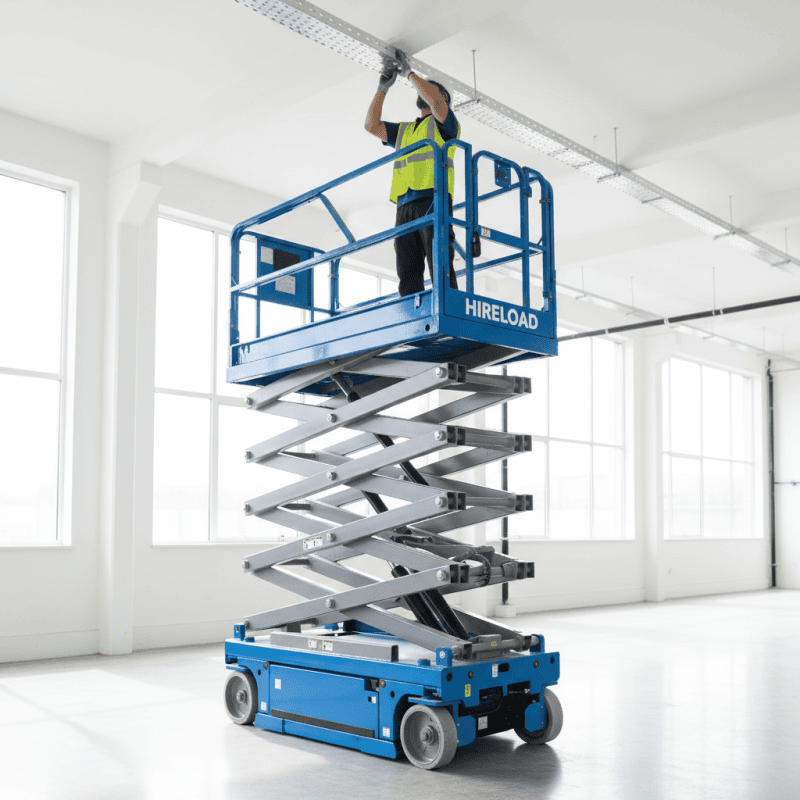
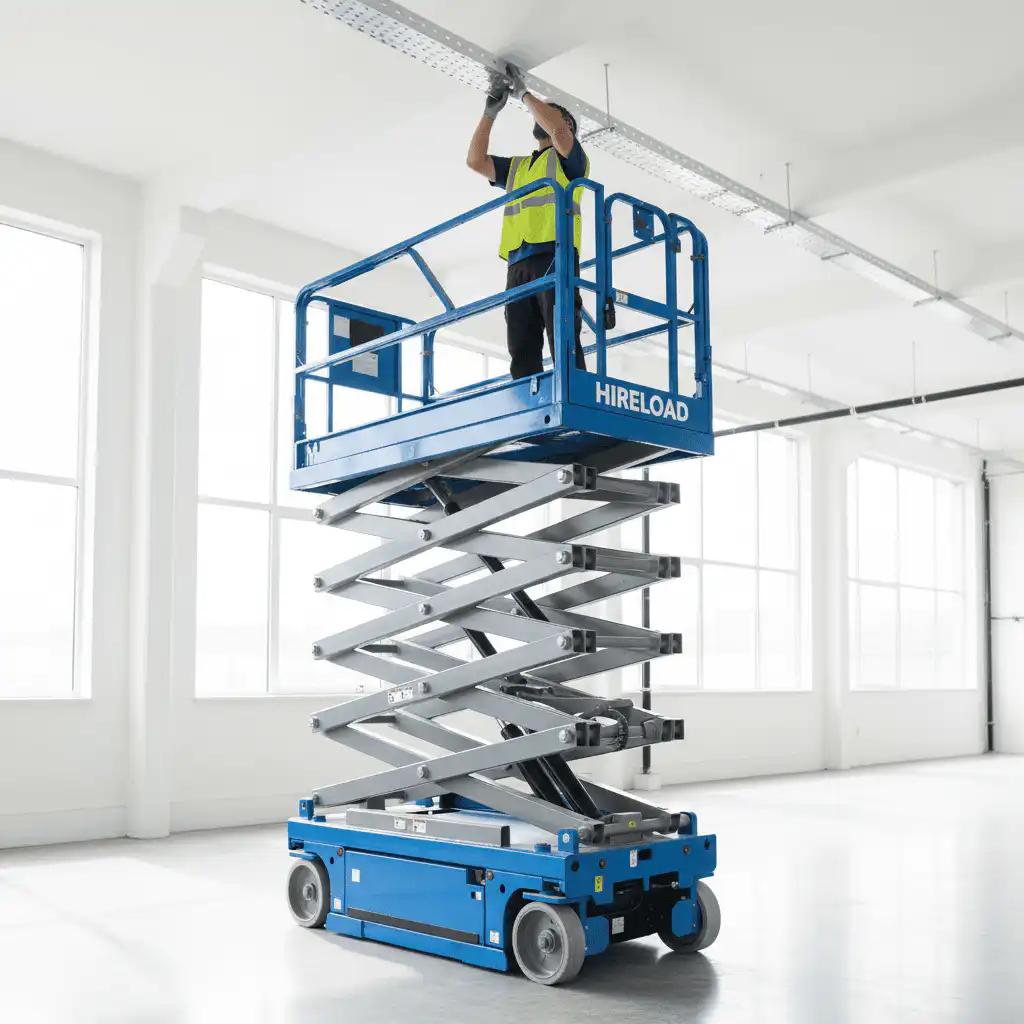
The electric scissor lift is battery powered, with 5m, 8m and 10m working-height options selected at booking, subject to availability and suitability for the site.
Why is working height not the same as platform height?
Working height is a convention: platform height plus roughly two metres, representing the reach of a person standing on the platform. Platform height is how high the platform floor goes.
So a 10m working height machine does not lift you 10m. It lifts the platform to roughly 8m and assumes you can reach about two metres above where you are standing.
Our guide on working height versus platform height sets this out with worked examples.
Which floors are a real question?
A scissor lift concentrates significant weight onto four small wheel contact patches. That load goes somewhere. On a ground-floor slab in a warehouse or retail unit this is usually fine. It becomes a real question on:
- Suspended floors: any upper storey, mezzanine, car park deck, or floor over a basement or void
- Timber floors in older buildings
- Finished floors where the surface is the concern: resin, vinyl, polished concrete, tiles, new screed
- Anything over a service void or a drainage run
Read more: the four steps before booking, and marking risk
- Establish the weight of the specific unit being supplied and its wheel loading.
- Check that against the permitted floor loading for the working area.
- Where the floor is suspended or the loading is unknown, get it confirmed in writing by someone qualified.
- Consider spreader plates where advised.
On a finished floor, also think about marking. Non-marking tyres help, but grit picked up on the route in can still score a resin or vinyl surface. Clean the route, and protect it if the finish matters.
What do I need to measure on the route in?
Measure the whole path, not just the destination.
- Door and opening widths at every point, including the narrowest
- Door head height: the machine’s stowed height must clear it
- Corners and turning space: a scissor lift does not pivot like a trolley
- Lift car dimensions and capacity if it goes up in a goods lift
- Thresholds, steps and ramps: even a modest step can stop it
- Ceiling height at the working position, and anything hanging from it
Do I need a licence to operate one?
Powered access is not equipment you can simply switch on because you have hired it.
Under UK health and safety law, employers must ensure anyone using work equipment has received adequate training, and work at height must be properly planned, supervised and carried out by competent people. For MEWPs, IPAF is the widely recognised route, and many sites, insurers and building managers require a current card.
Our note on scissor lift licence requirements covers the common questions, and ladder, tower or scaffold covers the alternatives. For current rules, see the HSE guidance on work at height.
Frequently asked questions
Do you offer 5m, 8m and 10m scissor lift hire?
Is a 10m scissor lift a 10m platform?
Can I use a scissor lift on an upper floor or mezzanine?
Will it fit through my door?
Do I need a licence or training to operate one?
Can I use it indoors in an occupied building?
The Hireload team runs the hire fleet from our Greenford depot in west London and handles the delivery calls.
Check the lift before you book the date
Tell us the height, the floor and the route in. We will confirm what fits. London delivery or free Click & Collect from Greenford UB6.
See electric scissor lift hireOr call 020 3375 4048 with the height and the floor type
Related guidance
- Working height vs platform height explained
- Scissor lift licence UK: what you need
- Ladder, tower or scaffold?
- What is a Genie lift used for?
This is general practical guidance, not a structural assessment or a substitute for a site-specific risk assessment. Floor loading must be confirmed for your building by a qualified person. Work at height is regulated in the UK; follow current HSE guidance and ensure operators are adequately trained and competent for the specific machine.

 Drone Survey & Mapping
 Drone Inspections