

 Drone Services
 Access Equipment
 Breaking & Drilling
 Cleaning Equipment
 Drying & Heating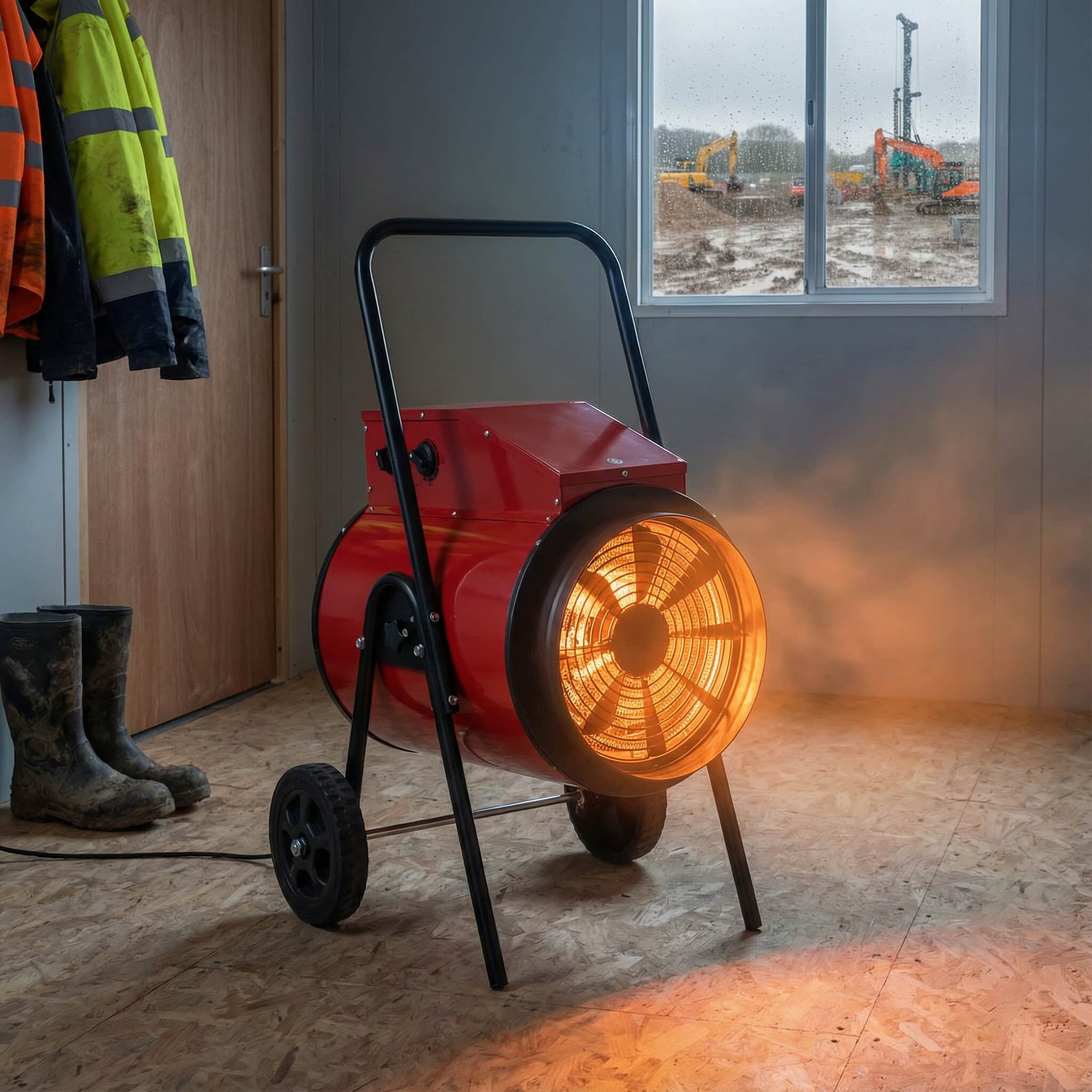
 General Site Tools
Equipment Hire Guides
Winter Construction Hire Checklist: Equipment for Cold Weather Sites
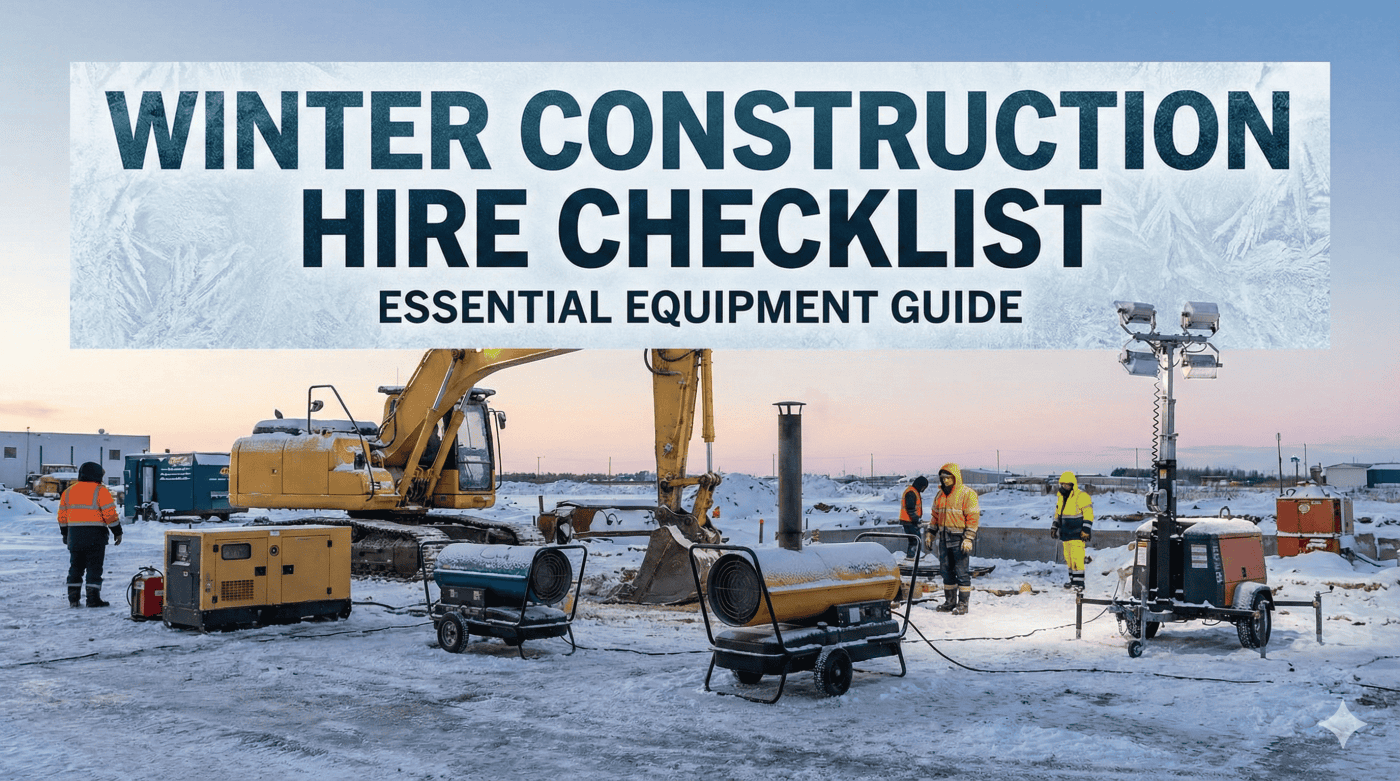
The equipment you need to keep a UK construction site running safely through cold, wet, and dark winter months — from site heating and drying to lighting and power.
All equipment delivered across London — browse drying and heating
A winter construction site needs four things most standard sites do not: heating to protect workers and materials, dehumidifiers to manage moisture from rain and condensation, site lighting for shorter daylight hours, and reliable 110V power distribution. Getting these in place before the first cold snap avoids delays, frozen materials, and safety incidents.
Why Winter Sites Need Different Equipment
Between November and March, UK construction sites face conditions that warm-weather planning does not account for. Temperatures regularly drop below 5°C, which is the threshold where concrete curing slows dramatically, paint and adhesives fail to bond, and plaster drying times double or triple. Add shorter daylight — sunrise after 8 a.m. and sunset before 4 p.m. in December — and a standard site setup falls short.
Rain and condensation compound the problem. A newly plastered room or freshly poured slab that would dry naturally in July will sit damp for weeks in January without mechanical drying. Workers in unheated site cabins lose productivity and morale. And dark mornings and evenings create safety risks if the site is not properly lit.
The solution is not to stop working — it is to hire the right equipment to keep conditions within workable parameters. Most of this equipment is only needed for four to five months, which is exactly why hiring makes more sense than buying.
The four pillars of winter site readiness are heating, drying, lighting, and power. If any one is missing, the others become less effective — a heater without a dehumidifier just moves moisture around, and lighting without adequate power supply means tripped breakers and downtime.
Heating: Keep Workers Safe and Materials Protected
Site heating serves two purposes in winter: keeping workers warm enough to work safely and effectively, and maintaining minimum temperatures for materials that need it. Concrete, plaster, paint, and adhesives all have minimum application and curing temperatures — typically 5°C or above.
For enclosed spaces like site cabins, welfare units, and small rooms under renovation, electric fan heaters in the 3 kW range are the most practical option. They heat quickly, run on standard 110V or 240V supply, and need no ventilation. For larger spaces — workshops, warehouses, and open-plan areas — industrial fan heaters at 9 kW or above deliver the volume of warm air needed to maintain working temperature.
Infrared heaters are a better choice when you need to heat people or surfaces rather than air. They warm objects directly, which means they work in draughty spaces where a fan heater would lose heat immediately. They are also useful for keeping freshly plastered or painted surfaces above minimum temperature overnight.
If you are drying plaster or screed in winter, do not just blast heat at it. High heat with no air circulation creates a hard skin on the surface while the material underneath stays wet. Use a heater to maintain 15-20°C, a dehumidifier to pull moisture from the air, and keep a window cracked for airflow. This combination dries evenly and prevents cracking.
Drying and Moisture Control
Winter moisture comes from everywhere — rain blowing in through openings, condensation forming on cold surfaces, rising damp from saturated ground, and construction water from wet trades. Without active drying, moisture levels in a building can climb steadily through the winter months, delaying follow-on trades and creating conditions for mould growth.
Dehumidifiers are the primary tool. Refrigerant (compressor) dehumidifiers work well in heated spaces above 15°C, pulling 20-50 litres per day depending on size. For unheated or cold spaces below 10°C, desiccant dehumidifiers are more effective because they do not rely on condensation — they use a chemical wheel to absorb moisture from the air regardless of temperature.
For serious water damage or flood recovery, LGR (low grain refrigerant) dehumidifiers extract moisture more aggressively than standard units. If you are dealing with a burst pipe, flood, or major leak during winter, an LGR unit paired with air movers will dry the space faster than any other combination.
Refrigerant dehumidifiers: best above 15°C, lower running cost, ideal for heated sites. Desiccant dehumidifiers: work at any temperature including near-freezing, lighter and quieter, better for unheated shells. LGR dehumidifiers: maximum extraction for flood and water damage recovery.
Lighting for Shorter Days
In December, a London construction site gets usable daylight from roughly 8:15 a.m. to 3:45 p.m. — about seven and a half hours. If your shift runs 7 a.m. to 5 p.m., that leaves two to three hours of work in the dark at each end of the day. Without proper lighting, those hours are either wasted or unsafe.
Tripod floodlights are the workhorse solution for most sites. A 30W LED tripod light on 110V provides focused illumination for a specific work area — enough for a room, a section of scaffolding, or a stairwell. They are portable, quick to set up, and run off a standard site transformer.
For larger areas — car parks, external works, road reinstatements — a portable lighting tower gives high-output coverage across a wide area. These units are self-contained with their own power source, so they work independently of the site’s electrical supply.
Twin-head tripod floodlights split the beam across two adjustable heads, which is useful when you need to light two faces of a room or cover a wider angle without running a second unit.
Position site lights to eliminate shadows in walkways and stairwells — that is where most winter slips and trips happen. One floodlight at the top of a stairwell pointing down is more useful than two lights illuminating the main work area if it means the stairs are dark.
Power Supply: Transformers and Generators
Every piece of winter equipment — heaters, dehumidifiers, lights — needs power. In summer, a single 3 kVA transformer might handle your tools comfortably. In winter, add two heaters, a dehumidifier, and three floodlights, and that transformer is overloaded before your angle grinder even switches on.
Plan your winter power budget before the equipment arrives. A 3 kW heater draws 3,000W. A dehumidifier draws 500-700W. A 30W LED floodlight draws about 35W. Add your regular tools — breakers, drills, saws — and total the wattage. If you are running more than 3 kVA of continuous load, step up to a 5 kVA transformer or run two 3 kVA units on separate circuits.
If the site has no mains supply at all, a portable generator is the answer. A 5 kVA generator provides 110V and 240V outputs and will run a heater, a dehumidifier, and lights simultaneously. For larger sites or multiple zones, you may need a bigger unit or multiple generators — call us to discuss your requirements.
Never daisy-chain extension leads to get around an undersized transformer. Overloaded cables overheat, especially in cold weather when insulation is less flexible. If your transformer keeps tripping, the solution is a bigger transformer — not more extension leads.
Ground Conditions and Access
Wet winter ground creates problems for access, deliveries, and foundation work. Mud, standing water, and frost all affect how safely people and equipment can move around a site. While ground conditions are partly a site management issue, the right equipment makes a significant difference.
Scaffold towers with adjustable legs handle uneven ground better than ladders, and they give a stable working platform even when surfaces are wet. For sites where the ground is soft or waterlogged, board out walkways and access routes before they churn into mud — it is cheaper than dealing with a slip injury or a stuck delivery vehicle.
If you are pouring concrete or laying foundations in winter, protect fresh concrete from frost with insulating blankets and maintain temperature above 5°C for at least 48 hours after pouring. A heater and insulation setup is far cheaper than having to break out and re-pour a frozen slab.
Winter Hire Checklist: What You Need by Situation
Use this table to match your site conditions to the equipment you need. Most winter sites need items from at least three of these categories.
| Situation | Equipment Needed | Why |
|---|---|---|
| Site cabin below 10°C | 3 kW fan heater (240V or 110V) | Legal minimum for welfare facilities; keeps workers warm and productive |
| Workshop or warehouse | 9 kW industrial heater + dehumidifier | Large volume needs high output; dehumidifier prevents condensation on stock and surfaces |
| Freshly plastered rooms | Heater + dehumidifier + air circulation | Plaster needs 15-20°C and low humidity to cure properly; cold damp air stalls drying |
| Early morning and late afternoon work | Tripod floodlights (110V) | Safe working requires adequate illumination; December daylight is only 7-8 hours |
| External works or car park | Portable lighting tower | Self-contained high-output coverage for large open areas without mains power |
| Multiple heaters + lights on one supply | 5 kVA site transformer | Standard 3 kVA overloads quickly in winter; 5 kVA handles the extra draw |
| No mains power on site | 5 kVA portable generator | Provides 110V and 240V output for all winter equipment independently |
Common Winter Site Mistakes
These are the issues we see every winter. Each one costs time and money, and all are preventable with basic planning.
No heating until someone complains. By the time workers are cold enough to complain, productivity has already dropped. Get heaters in place before temperatures drop, not after. The Workplace (Health, Safety and Welfare) Regulations 1992 require a reasonable working temperature — there is no specific minimum for construction, but HSE guidance suggests 16°C for sedentary work and 13°C for physical work as starting points.
Drying without dehumidifying. Opening windows to dry plaster in winter introduces cold, damp air that makes the problem worse. A dehumidifier actively removes moisture from the air. A window in January just invites more of it in.
Undersized power supply. A site that ran fine on a 3 kVA transformer in summer suddenly trips constantly in winter when heaters, dehumidifiers, and lights are added. Calculate your winter power draw before the equipment arrives and upgrade the transformer if needed.
No lighting plan for short days. Setting up floodlights after someone trips in the dark is reactive. Plan your lighting positions at the start of winter, before the clocks go back, and keep lights in place until March.
Ignoring frost protection for materials. Concrete poured below 5°C can fail to reach design strength. Adhesives applied in cold conditions may never bond properly. Check material data sheets for minimum application temperatures and use heaters to maintain them.
The cheapest winter site problem to fix is the one you prevent. Hire heating, drying, and lighting before you need it — not after the first frost, the first damp complaint, or the first trip in the dark.
Equipment Available for Winter Hire
We deliver all winter construction equipment across London. Here is a selection of the most commonly hired items for cold weather sites.
Heating
Drying
Lighting
Power
Related Guides
These guides cover specific equipment decisions in more detail.
Frequently Asked Questions
What temperature is too cold to pour concrete?
Can I use a dehumidifier in an unheated building?
How many site lights do I need for winter?
Is there a legal minimum temperature for construction sites?
When should I start hiring winter equipment?
Browse our full range or call us to plan your winter hire package.
Browse Drying and Heating

 Drone Survey & Mapping
 Drone Inspections