
 Drone Services
 Access Equipment
 Breaking & Drilling
 Cleaning Equipment
 Drying & Heating
 General Site Tools
Equipment Hire Guides
Burst Pipe? What to Do in the First 24 Hours
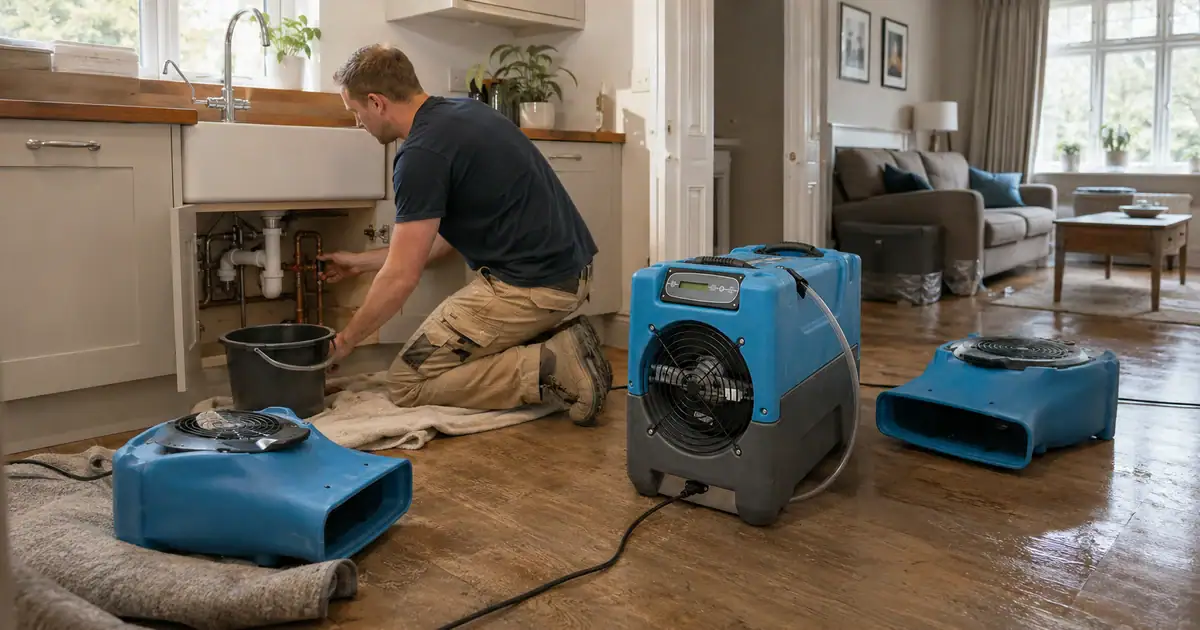
A burst pipe can put litres of water into your home in minutes. The good news: the first hour is the one that matters most — and the steps that limit the damage are ones you can do yourself, before anyone else arrives.
Burst pipe? The first hour, in short
- Turn the water off at your internal stop tap (usually under the kitchen sink — turn it clockwise).
- Switch off the boiler and central heating, then open all the cold taps to drain the system (save a bucketful).
- If water is anywhere near electrics, don’t touch them — switch them off at the fuse box.
- Soak up and contain the water with towels; move what you can to safety.
- Call your insurer (most have 24-hour lines) and a WaterSafe-approved plumber — and don’t turn the water back on until it’s repaired.
Then dry the property out fast: running a dehumidifier and air mover in the first day or two can help reduce the risk of mould and secondary damage — and for a clean-water leak you can reach, it’s a job you can do yourself with hired kit.
See drying kit for water damageSources: Association of British Insurers. Figures are typical, not guaranteed.
A burst or frozen pipe is one of the most common — and most expensive — things that go wrong in a home. But most of the damage happens in the hours after the burst, not the burst itself, so how fast you react decides how bad it gets. The line to remember: the first hour limits the damage; the first 48 hours decide whether you’re drying or replacing.
Hireload supplies drying kit across London from our Greenford (UB6) base. For the full range and how to size it, see our flood and water-damage equipment hire hub.
Step 1 — Stop the water
Your first job is to cut the supply. Find your internal stop tap (also called a stopcock) — in most homes it’s under the kitchen sink, but it can be in a downstairs cupboard, the bathroom, or near the front door. Turn it clockwise until it stops. That isolates the water feeding the burst.
If the stop tap is stuck or won’t turn, don’t force it until it snaps — call an emergency plumber, and if you still can’t stop the flow, your water company can turn the supply off at the outside stopcock. It’s worth finding and testing your stop tap before you ever need it: they seize up when left for years.
Step 2 — Turn off the heating, then drain the system
Switch off the boiler and central heating, and any other water heating. Then open all the cold taps and flush the toilets to drain the water still sitting in the pipes — saving a bucketful for washing and flushing while the supply is off. Draining the system stops more water reaching the burst while you arrange a repair.
Step 3 — Electrics: the one rule that matters
If water has got anywhere near your electrics, do not touch them. Switch the power off at the fuse box (consumer unit) — but only if you can reach it without standing in water. If you can’t get to it safely, leave it, keep everyone clear, and call an electrician or the emergency services. Water and electricity are the one part of this job that is never worth a risk.
This is the official line, too: the UK government’s flooding guidance says that if water has leaked near your electrics, don’t touch them and switch them off at the fuse box.
Step 4 — Contain it and protect what you can
Catch and soak up water with towels, buckets and a mop. Lift rugs, and move furniture and electricals off wet floors — get anything valuable or sentimental up high and out of the way. If it’s safe, slip foil or a block of wood under furniture legs so they don’t wick water and stain carpets. Insurers also recommend photographing everything before you move or remove it — it makes any claim far easier.
Step 5 — Call your insurer and a WaterSafe plumber
With the water off, make two calls. Your insurer first — most have 24-hour emergency lines, and they would rather hear from you early; they can tell you what’s covered and how to proceed. Then a WaterSafe-approved plumber to repair the pipe properly. A clamp or tape is a temporary hold only — don’t turn the water back on until the repair is done, or you risk a second flood.
Drying Calculator
Two quick questions and we'll size the right dehumidifier — and tell you how long to hire it.
Step 6 — Start drying: the part everyone forgets
Here’s the bit the water companies and insurers don’t tell you: a plumber fixes the pipe, but nobody dries your home. Drying is where the lasting damage is won or lost — wet plaster, skirting, floors and joists left damp are what lead to mould, smells and warping later.
It comes down to the same drying principle the professionals use: air movement plus dehumidification — and you can hire professional-grade kit to do it yourself. Air movers push a high-volume stream of air across wet floors and walls so moisture evaporates much faster. A dehumidifier then pulls that moisture out of the air and collects it, so it can’t soak back in. Run them together within the first day or two and you can significantly reduce the risk of mould and secondary damage.
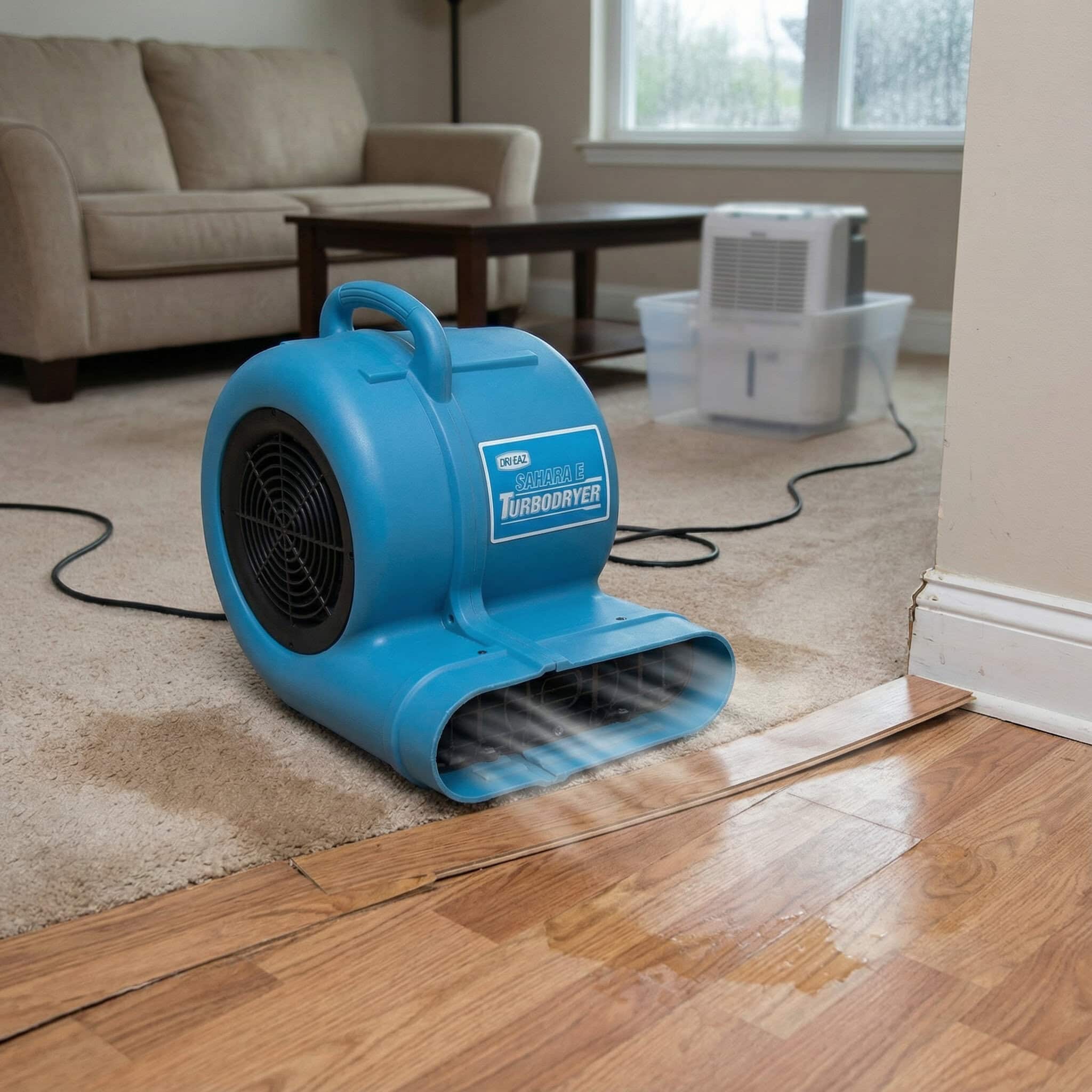 Air mover
Move the moisture out
High-volume airflow dries wet floors, carpets and skirting far faster than leaving them.
View air movers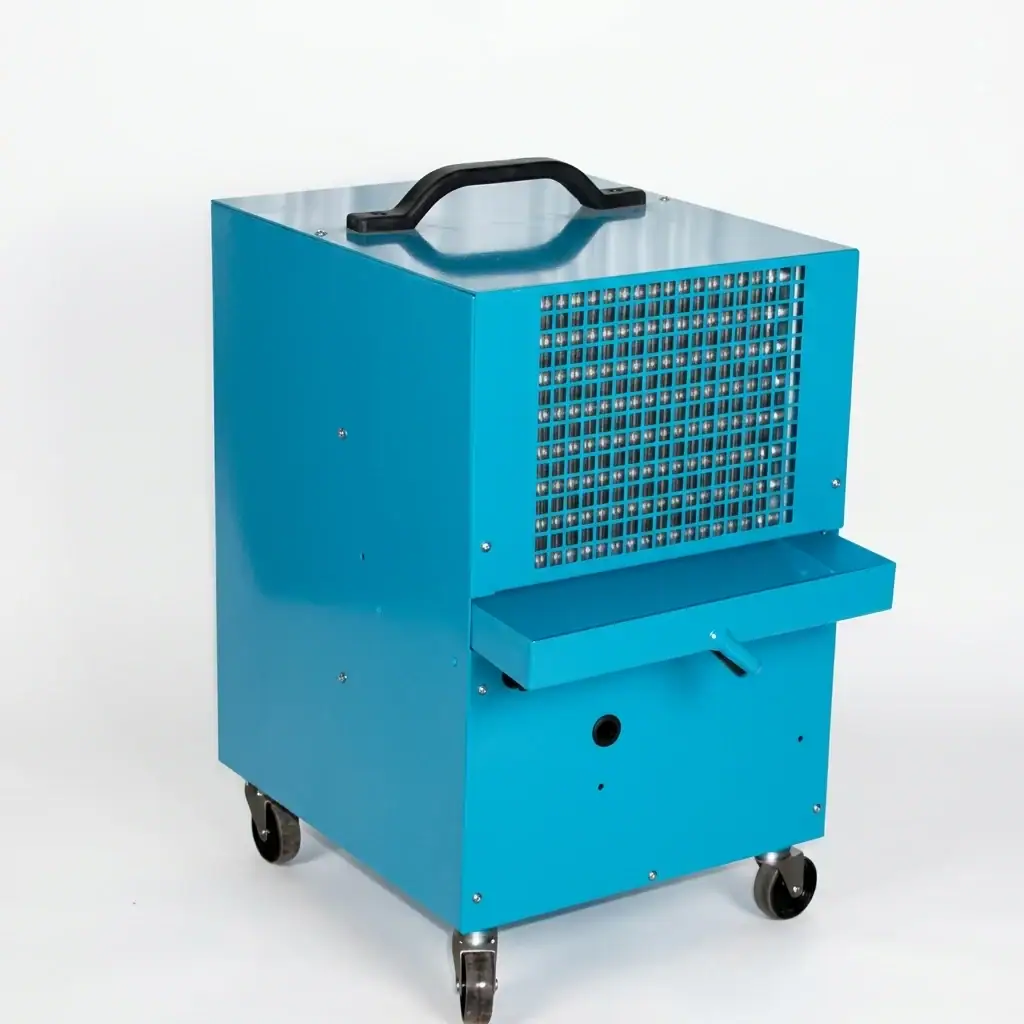 Dehumidifier
Take it out of the air
A 38L commercial dehumidifier pulls the moisture out of the room so it can’t soak back in.
View the 38L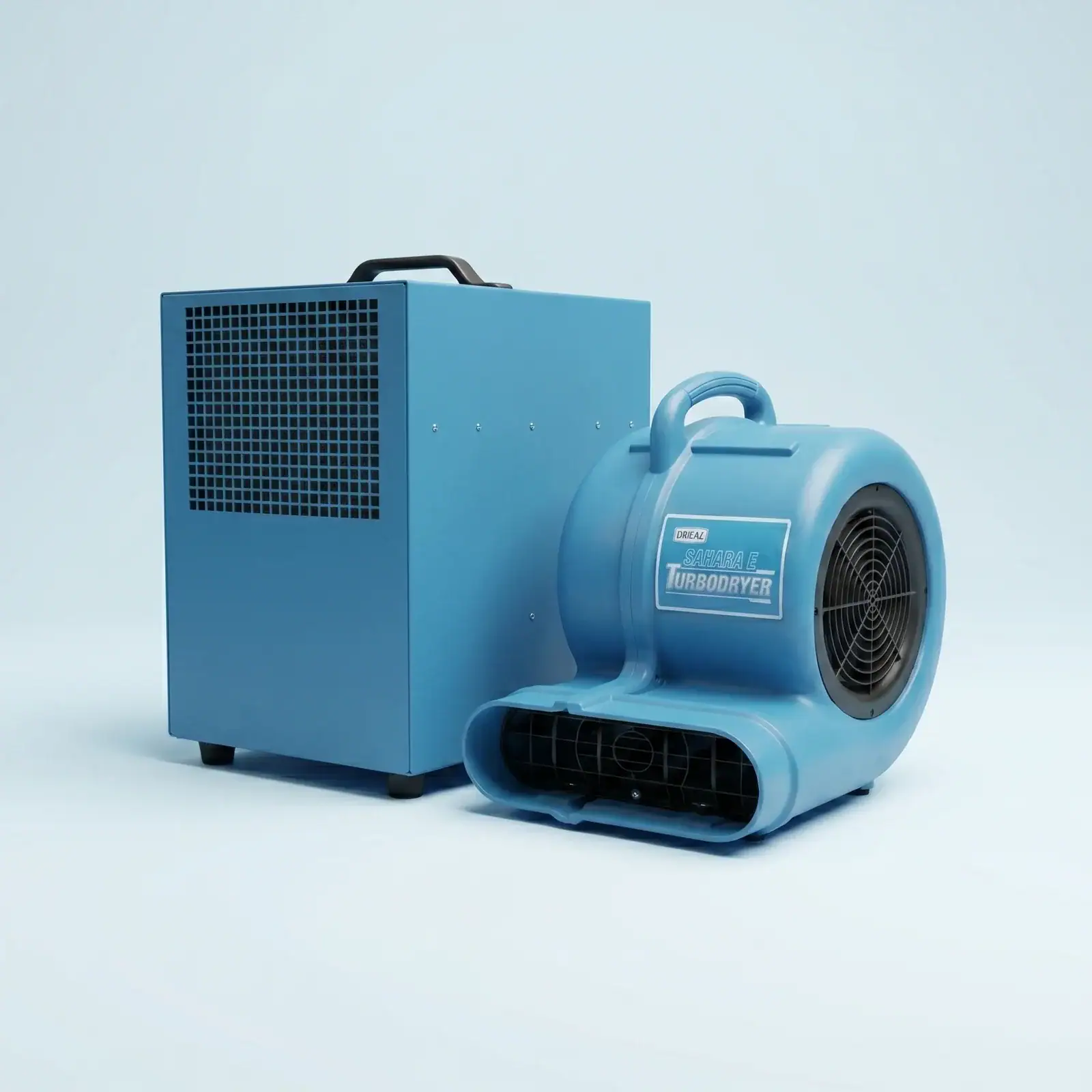 Ready-made kit
The one-room pack
Not sure what to pick? The entry drying package pairs a dehumidifier with an air mover.
View the packageHiring drying kit for a small clean-water job can be significantly cheaper than a restoration call-out, and the numbers are not vague: a 38L dehumidifier is £29.99 + VAT for a day or £59.99 for up to a week, an air mover £19.99 a day or £29.99 for up to a week. One room for five days with both is £89.98 + VAT. A refundable deposit applies and comes back in full when the equipment returns undamaged. For the full method, see our guide on how to dry out a house after a leak or flood.
If the burst was upstairs, or you are in a flat, plan the drainage before the machine arrives. There is no floor gully to run a hose into, and a tank that needs emptying every few hours will quietly cost you the overnight hours when drying does most of its work. A compact dehumidifier with a built-in pump sends the water straight to a basin or sink instead — what to do when the wet room is a flat or an upstairs bedroom walks through the setup.
How long will it take to dry out?
Longer than most people hope. Surfaces can feel dry within a few days, but the moisture trapped inside walls, screed and timber takes far longer to leave — often weeks. The single biggest factor in your control is running enough equipment, continuously. We cover the full picture in how long it takes to dry out a room.
Insurance: who pays?
A burst pipe is usually covered as standard under buildings insurance — often called “escape of water”. Broadly, buildings cover handles the structure (walls, ceilings, floors) and contents cover handles your possessions. One thing worth checking on your own policy is “trace and access” — the cost of finding and getting to a hidden leak (lifting floors, opening walls); it isn’t always included as standard, and an excess usually applies. Policies vary, so check yours or call your insurer — and if your home is left empty in winter, look at any unoccupied-property conditions. (We’re not insurers; this is general information, not advice on your individual claim.)
When to call a professional, not DIY
Drying it yourself is the right call for a clean-water leak you can reach, with the source stopped, on a small scale. Bring in a professional restoration firm — and don’t try to DIY — if any of these apply: sewage or contaminated water; water near or through electrics; a ceiling bulging or sagging with water (don’t stand under it, and don’t pierce it); structural concerns; a large flood; or water that has been standing for days. Hireload supplies the drying equipment; we are not a restoration service.
Stop it happening again
Most burst pipes are a winter problem: water freezes, expands and splits the pipe, and the leak starts when it thaws. Lag exposed pipes in the loft, garage and outside taps; keep a low background heat on through cold snaps; and make sure you know where your stop tap is and that it actually turns. One safety note: never thaw a frozen pipe with a naked flame or blowtorch — it can damage the pipe and start a fire.
Common questions
Who do I call first — a plumber or my insurer?
How do I turn the water off, and where is my stopcock?
Does home insurance cover a burst pipe?
What is “trace and access” cover?
How long does it take to dry out after a burst pipe?
Can I dry it out myself, or do I need a professional?
My ceiling is bulging with water — what do I do?
Do you deliver to my part of London?
Sources checked
This guide was fact-checked against UK authorities before publishing:
- Association of British Insurers (ABI) — escape-of-water and burst-pipe claim figures.
- Met Office / gov.uk — frozen and burst pipe, and flooding, guidance.
- Thames Water and United Utilities — first-step burst-pipe advice.
- WaterSafe — approved-plumber guidance.
- Insurer and Citizens Advice guidance — home-insurance cover basics.
Need drying kit in London fast?
Air movers, dehumidifiers and ready-made drying packages — delivered and collected across London, same-day where scheduling allows.
Or call 020 3375 4048 · not sure what to hire? Tell us the rooms affected and we’ll size it with you.A burst pipe is clean water arriving in a place you can point at. Flood water is contaminated, it covers the whole footprint and it fills the voids you cannot see, so the recovery runs differently — drying a flooded house sets out that version step by step.
Water Off, Drying On
Once the leak is stopped, the clock is on the drying. Same-day and next-day delivery across London.
Browse Drying EquipmentTell us the room size and how long it has been wet and we will size it with you. Call 020 3375 4048 or message us on WhatsApp.

 Drone Survey & Mapping
 Drone Inspections