
 Drone Services
 Access Equipment

 Breaking & Drilling
 Cleaning Equipment

 Drying & Heating
 General Site Tools
Equipment Hire Guides, Scaffold Towers
Scaffold Tower for Decorating: Ceilings, Stairwells and High Walls
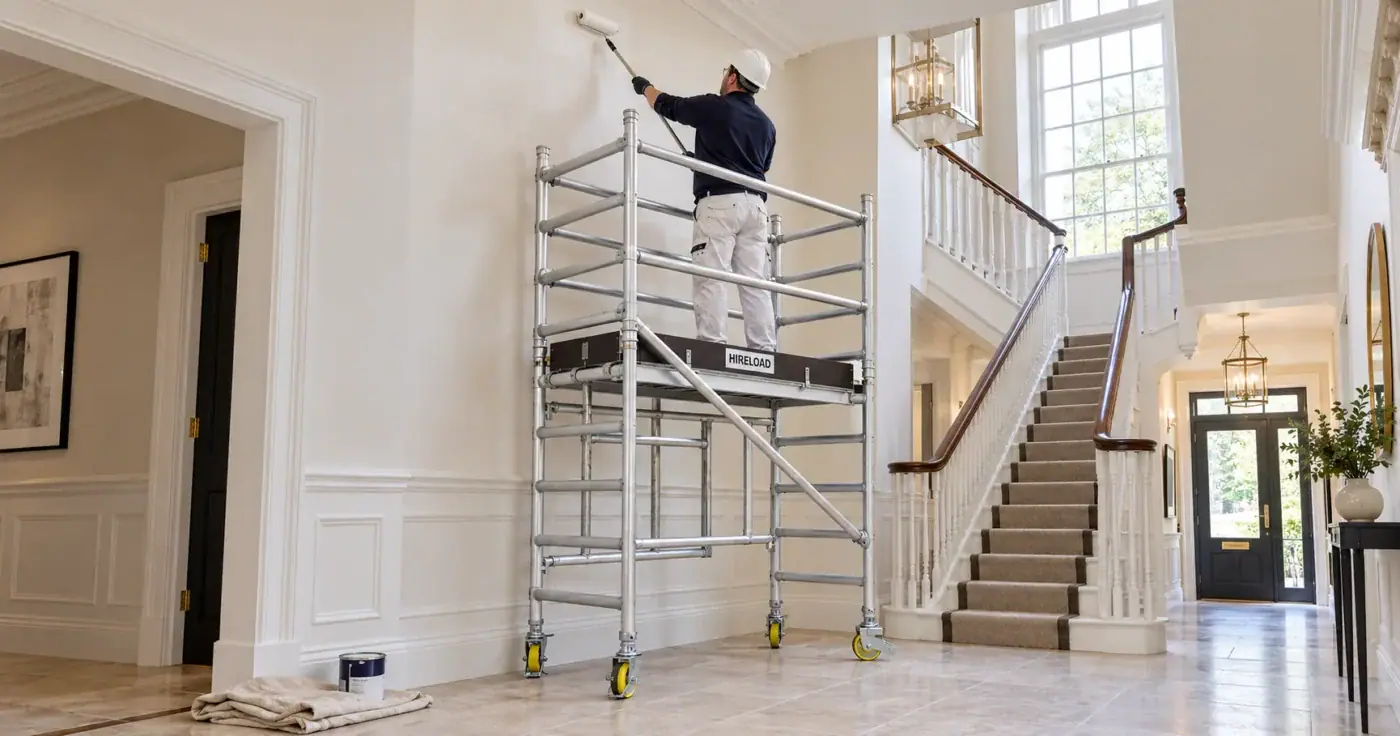
Paint the whole ceiling, not one ladder-width at a time.
Painting a high ceiling, a double-height hallway or a stairwell from a ladder means climbing down and moving it every metre, with a tin in one hand. A scaffold tower gives you a guarded platform across the room, so you can cut in, roll and fill in one pass. This guide shows which tower suits which room, how high you need to go, whether it will fit through the door, and how decorators work from one safely.
What is the best scaffold tower for decorating indoors?
For most decorating inside a house or flat, a folding scaffold tower is the easiest choice. It arrives assembled, unfolds from a rolling trolley, fits through standard doorways and gives you a guarded platform at the height you need. For a stairwell, use a stairwell tower with adjustable legs. If you are working alone, a one-person tower such as the MiTower is built without a second pair of hands.
For a standard 2.4 m ceiling you may not need a tower at all. Towers come into their own in period properties, double-height hallways, stairwells, loft conversions and commercial spaces. At Hireload, folding towers start from £45.49 + VAT for weekly hire, delivered across London.
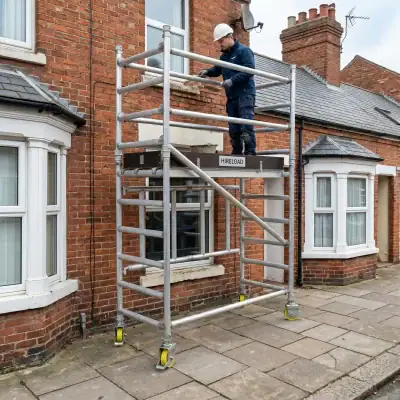
Which tower for which room
Decorators choose the tower by the room, not the other way round. These are the jobs we hire towers for most often inside homes, flats, shops and offices.
| Room or job | Why a tower helps | Tower |
|---|---|---|
| High ceilings in period homes | Ceilings of around 3 m or more are common in Victorian and Edwardian houses. A platform lets you reach the whole ceiling and the cornice. | Folding tower |
| Double-height hallway or atrium | Walls and ceilings 4 to 6 m up, often with a staircase in the way. | Folding tower, or MiTower if you work alone |
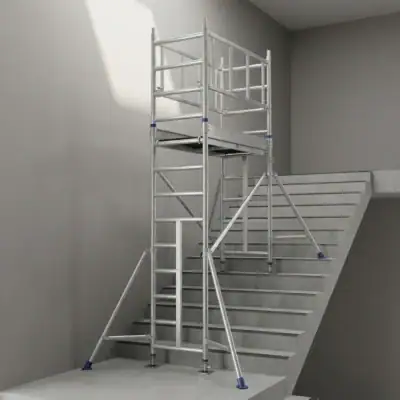
| Stairwell and landing | The floor is not level, so a normal tower cannot stand on the stairs. | Stairwell tower |
| Loft conversion or vaulted ceiling | Sloping ceilings and new plasterboard to fill, sand and paint. | Folding tower or Miniscaff Solo |
| Shop, office, church or school hall | Large ceilings, high walls and lighting, often with more room to build. | 3T tower |
How high you need to go
Tower sizes are given as working height: the platform height plus about 2 m, which is roughly where an adult can comfortably reach. Because working height already includes your reach, choose a working height close to, or slightly above, the height of the ceiling.
| Ceiling or wall height | Typical room | Working height to look for |
|---|---|---|
| About 2.4 m | Most modern homes | Usually no tower needed; a low platform or steps will do |
| About 3 to 3.5 m | Period living rooms and bedrooms | About 3 to 3.6 m |
| About 4 to 5 m | High hallways, loft conversions, shops | About 4 to 5 m |
| About 5 to 8 m | Double-height spaces, atriums, halls | About 5 to 8 m |
Our folding tower comes in working heights from 2.6 m up to 8.1 m, so you only hire the height you need. The MiTower and Miniscaff Solo go from 4.2 m to 6.2 m. If you are unsure, our guide on working height vs platform height explains the 2 m rule.
Will it fit through the door?
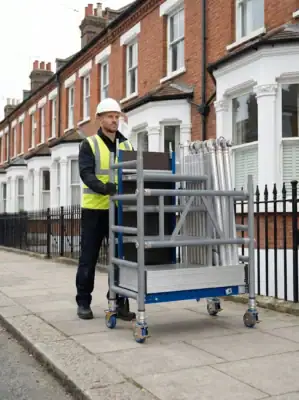
This is the first question most homeowners ask, and the reason the folding tower is so popular for decorating. It arrives in one piece, folded, on its own trolley. You wheel it through the front door and into the room, then unfold it. The MiTower also fits through a standard doorway and clips together without tools.
A standard 3T tower is delivered as separate frames, braces and platforms, so it goes through any door you can carry a ladder through and is built inside the room. The limit there is the room itself: you need enough floor space for the base and, if the manual requires them at your height, the stabilisers.
Painting a ceiling from a tower, the way decorators do it
A tower changes the job from a series of short stretches into a few long passes. This is how a ceiling usually goes:
1. Clear and protect the room
Move furniture out or to the middle of the room and cover it. Sheet the floor. Take down light shades and mask fittings.
2. Position the tower and lock it
Set the tower near the first wall, level it and lock all the castor brakes before anyone climbs it.
3. Cut in along the edges
From the platform, cut in where the ceiling meets the walls and around the cornice, working along the length of the platform.
4. Roll in strips
Roll the ceiling in strips the width of the platform. Keep a wet edge so the strips blend.
5. Climb down, move, repeat
Come down, take the tins and tools off the platform, release the brakes and roll the tower to the next strip. Lock it again before climbing back up.
Most of the time saved comes from not moving a ladder. With a tower, a decorator moves it once per strip rather than every arm’s length, and paint, brushes and a tray sit on the platform instead of on a ladder shelf.
Stairwells and landings
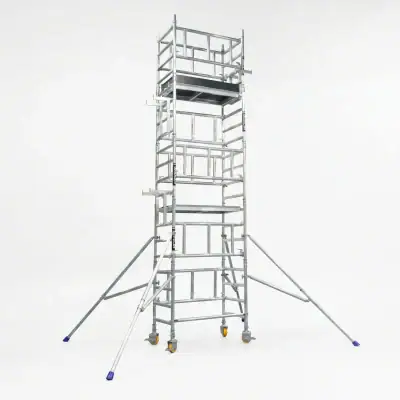
Stairwells are the hardest part of most decorating jobs, because the wall you need to reach rises above the stairs and there is nowhere level to stand. A normal tower cannot be built on steps. A stairwell tower has legs that adjust independently, so it stands level with two legs on one step and two on another, or across the landing.
For step-by-step help, read how to set up a scaffold tower on stairs and our guide to scaffolding for stairs.
Working safely indoors
Indoors there is no wind, but the main rules from tower instruction manuals still apply. Follow the manual supplied with your tower.
Frequently asked questions
Do I need a scaffold tower to paint a ceiling?
Not for a standard 2.4 m ceiling; a low platform, steps or a roller on an extension pole will do. A tower is worth it for ceilings above about 3 m, double-height spaces and stairwells, where ladders become slow and awkward.
Will a scaffold tower fit through my front door?
A folding tower and the MiTower fit through standard doorways. A standard 3T tower comes in separate parts and is built inside the room, so the room size matters more than the door.
Can I use a scaffold tower on the stairs?
Only a tower designed for it. A stairwell tower has independently adjustable legs so it can stand level on steps. Do not put a normal tower on stairs or prop it up with boards or blocks.
Can I build a tower on my own?
The MiTower and Miniscaff Solo are designed to be built by one person. A folding tower arrives pre-assembled and mostly unfolds rather than being built from parts. Standard towers are easier with two people.
How much does it cost to hire a tower for decorating?
At Hireload, folding towers start from £45.49 + VAT for weekly hire, with the price rising with height. One-person towers start from £89.99 + VAT and stairwell towers from £116.49 + VAT. There is a £100 refundable deposit and ID is required.
Will the tower mark my floors?
Lay boards or heavy dust sheets under the tower, especially on wooden floors, and lift and place it carefully rather than dragging it.
Tell us the room, we will pick the tower
Send the ceiling height and a photo of the room or stairwell. We will suggest the tower and height, and deliver it across London.
Limits: this guide is general information about using scaffold towers for decorating. Heights are typical examples, not measurements of your room. Always follow the instruction manual supplied with the tower, check every part before use, and stop if anything is damaged or missing. If electrical fittings need moving or isolating, use a qualified electrician.

 Drone Survey & Mapping
 Drone Inspections