
 Drone Services
 Access Equipment

 Breaking & Drilling
 Cleaning Equipment
 Drying & Heating
 General Site Tools
Drying & Heating, Equipment Hire Guides
Drying Survey After a Leak: What It Checks and What It Costs
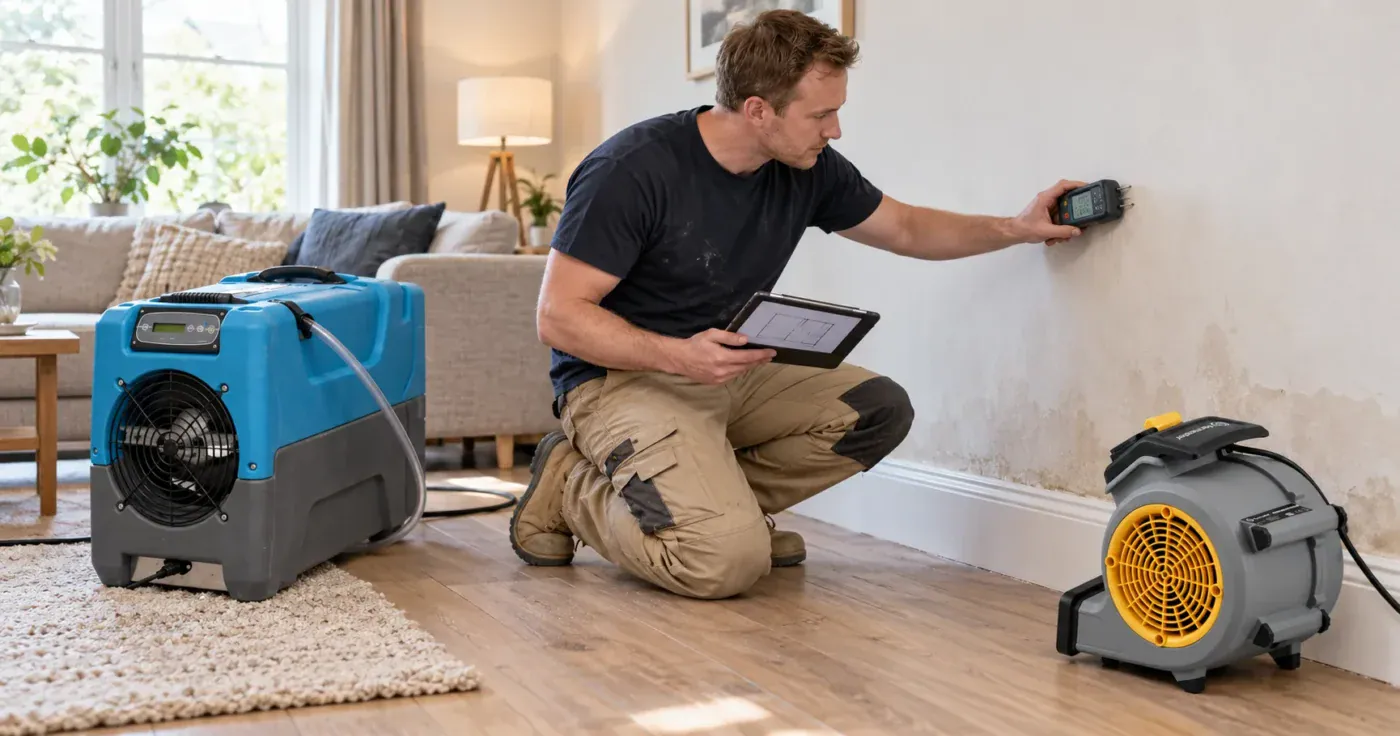
Dry to the touch is not the same as dry.
After a leak, the walls can look and feel fine weeks before the plaster, brick or screed behind them has given its water back. A drying survey is how professionals prove the difference with readings rather than guesswork. Here is what a drying survey checks, the tools it uses, who carries one out, what it usually costs in the UK, and the checks you can do yourself before you pay anyone. Hireload hires the drying equipment; we do not carry out surveys.
What is a drying survey after a leak?
A drying survey, also called a moisture survey or drying validation, is a set of moisture and humidity readings that shows whether the walls, floors and timbers hit by water are back to their normal, pre-leak dryness. The readings are compared with an unaffected area of the same material, and when they match, the drying company usually issues a drying certificate so repairs and decorating can start.
Surveys are carried out by drying contractors, damp specialists and surveyors. A standalone damp or moisture survey in the UK typically costs around £150 to £500, depending on the size of the property and the methods used. If an insurer is handling the leak, ask them first: drying and the final readings are often arranged through the claim.
Hireload hires drying equipment. We do not carry out surveys or issue certificates, but we can help you get the building dry before one.
What a drying survey actually is
Water does not stay where it lands. It soaks into plaster, wicks up brickwork, sits under floor coverings and spreads into timber. The surface dries first, which is why a wall can look finished while it is still wet a few centimetres in. Paint, wallpaper or flooring laid at that point traps the moisture, and the usual results are blistering, staining, a musty smell or mould a few weeks later. For every size we stock, see our dehumidifier hire London page.
A drying survey answers one question: has the building given its water back? The surveyor maps where the water went, takes readings in a grid across the affected areas, and compares them with readings from a part of the same building that never got wet. That comparison point is often called the dry standard or reference reading. When the wet areas match it, and stay matched, the drying goal has been met.
You will hear the same job called different things:
How dryness is measured
No single tool proves a building is dry. A good survey uses two or three methods and looks at the pattern, not one number. These are the tools you are likely to see.
| Tool | What it tells you | Its limits |
|---|---|---|
| Pin (resistance) moisture meter | Pushes two pins into the surface and reads electrical resistance. Good for timber, where it gives a moisture content. | On plaster, brick and concrete the number is only relative. Salts left by floodwater and metal fixings in the wall both push readings up. |
| Pinless (capacitance) meter | Scans the surface without marking it. Quick for mapping where the wet patch starts and ends. | Relative readings only, and it mostly reads near the surface. |
| Thermo-hygrometer | Measures air temperature and relative humidity in the room, and lets the surveyor work out the dew point. | Tells you about the air, not the wall. Useful for tracking whether drying is still happening. |
| Thermal imaging camera | Shows cooler areas where water is evaporating, which helps find hidden wet patches behind finishes. | It does not measure moisture. Anything it finds has to be confirmed with a meter. |
| Hood or probe humidity test on floors | Seals a hood to a screed or concrete floor and measures the humidity underneath. This is the standard test before laying flooring. | Slow. Drying equipment has to be off for days first, and the target depends on the flooring maker. |
| Drilled samples | Dust or core samples tested by weight or by the carbide method give a true moisture content. | Invasive, so it is kept for walls or floors where a big decision depends on the answer. |
Two of these are worth knowing in more detail. Electrical meters were designed around wood, so on masonry they show where it is wetter or drier, not exactly how wet it is. That is why surveyors lean on the reference reading and on the trend over several visits. And on floors, the hood test is what flooring fitters work to: in the UK, a figure of 75% relative humidity or lower under the hood is the usual threshold before resilient flooring such as vinyl goes down, though the flooring or adhesive maker can set a different figure. If your leak soaked a screed, read our guide on how long screed takes to dry.
Why one reading proves nothing
The single most common mistake after a leak is taking one reading, seeing a low number and declaring the job done. What surveyors actually look for:
Who carries out a drying survey
It depends on how the leak is being handled and what you need the survey for.
The insurer usually appoints a drying contractor. They take the first readings, install and monitor the equipment, and issue the drying certificate at the end. Check with your insurer before booking anyone yourself.
An independent damp specialist or building surveyor can visit once, take readings and give you a written report. Useful before you redecorate or put down new flooring.
Most flooring fitters test the screed or subfloor themselves before they lay anything. Ask yours what test they use and what figure they need.
If the leak has caused structural, electrical or long-standing damp issues, a chartered building surveyor or the relevant trade is the right person, not a moisture meter.
Whoever you use, ask what tools they will use, whether they will take reference readings, and what you will get in writing. A survey that ends with “it seems fine” and no numbers is not much better than doing it yourself.
What a drying survey costs in the UK
There is no fixed price, because a one-room ceiling leak and a flooded ground floor are very different jobs. As a guide, these are typical UK prices for a standalone damp or moisture survey, from MyBuilder’s damp survey price guide updated in August 2026.
| Survey | Typical price |
|---|---|
| Basic survey | £150 to £250 |
| Comprehensive survey | £200 to £500 |
| Small flat | £150 to £200 |
| Terraced house | £180 to £250 |
| Semi-detached house | £200 to £300 |
| Detached house | £250 to £350 |
| Survey using thermal imaging | £200 to £350 |
| Extra follow-up or reporting | Around £50 to £100 more |
Prices in London can sit at the top of these ranges. A drying contractor who is already monitoring the job will usually include the final readings and certificate in their drying price rather than charge for a separate survey, so ask before you book two visits.
Checks you can do yourself before paying anyone
For a small leak that you dried yourself, a few simple checks will tell you whether a paid survey is worth it. None of them replace a professional report if an insurer or someone else needs written proof, but they stop you redecorating too early.
Getting the building dry before the survey
A survey only confirms what the drying has achieved, so the cheapest survey is the one you only need to book once. Buildings dry faster when you take the water out of the air and keep it out:
These are the machines our customers use to get a room or a floor dry before the final readings. Prices are ex VAT and match the product pages.
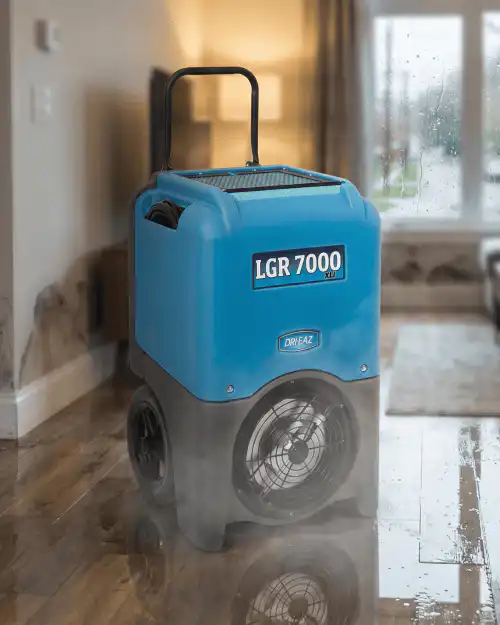
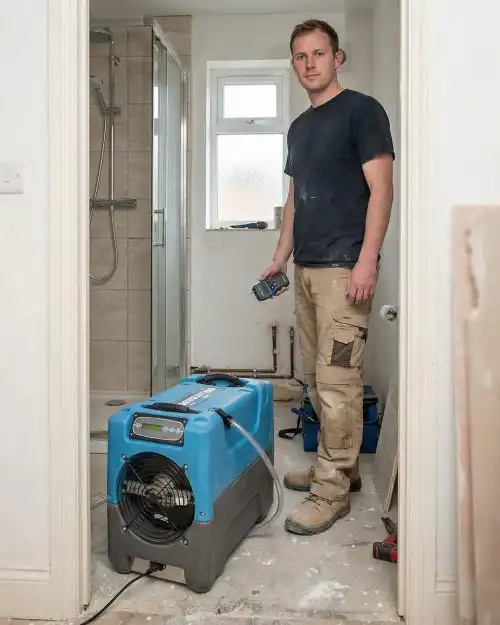 63 L LGR building dryerSeveral rooms and the final drying stretch£119.99 + VAT up to 7 daysHIRE NOW →
| Machine | Best for | Price |
|---|---|---|
| 43 L Dri-Eaz Cube | A flat or a single room after a small leak | £74.99 up to 7 days (1 day £39.99) |
| 55 L Dri-Eaz DrizAir 1200 | Larger rooms, open-plan spaces and plaster | £89.99 up to 7 days (1 day £49.99) |
| Leak & Plaster package | 55 L dehumidifier plus a 2700 CFM air mover for a recent leak | £99.99 up to 5 days, £150 refundable deposit |
| 63 L LGR building dryer | Several rooms, and the last stretch when the air is already drier | £119.99 up to 7 days (1 day £59.99) |
| 95 L LGR building dryer | Whole floors, flood recovery and building sites | £149.99 up to 7 days (1 day £77.99) |
Low grain refrigerant (LGR) dryers keep pulling water out of air that is already fairly dry, which is where standard machines slow down. That makes them useful for the final days before a survey. If you are not sure which size you need, our guide on drying out a house after a leak walks through it room by room.
Frequently asked questions
Do I need a drying survey after a small leak?
Not always. For a small, recent leak that you dried quickly, your own reference readings and a switch-off test are often enough to know when to redecorate. A professional survey is worth paying for when an insurer or someone else needs written proof, when the water spread under floors or into stud walls, or when readings will not come down.
When should the drying survey be done?
Once your own readings have stopped falling and the room humidity has settled. For floors, the hood test usually needs drying equipment to be switched off for several days beforehand, so plan for that gap.
Can I decorate before the survey?
It is better to wait. Paint, wallpaper and flooring slow drying down and can trap moisture, which tends to show up later as blistering, staining or mould.
Is a drying certificate the same as a damp survey?
No. A drying certificate records that a specific water leak has been dried out to the agreed goal. A damp survey looks for the cause of ongoing damp, such as condensation, penetrating damp or rising damp, and recommends a fix.
Can a moisture meter tell me my plaster is dry?
It can tell you whether the wet wall now matches a dry wall of the same type, which is what matters. The number itself is not an exact moisture content on plaster or brick, so always compare it with a reference reading and watch the trend over several days.
Does Hireload carry out drying surveys?
No. We hire dehumidifiers, air movers and drying packages across London from our Greenford depot. We do not survey buildings or issue drying certificates. If you need a survey, use a drying contractor, damp specialist or surveyor, and call us if you need equipment to get the building dry first.
Need the building dry before the survey?
Tell us the rooms, what got wet and when. We will suggest the right dehumidifier or package and deliver it across London.
Limits: this guide gives general information about how drying is checked. It is not a survey, a drying certificate or professional advice for your property. Survey prices are typical UK ranges and will vary. Hireload hires drying equipment and does not carry out surveys. If a leak has affected electrics, structure or a shared building, or if damp keeps coming back, get a qualified professional to look at it.

 Drone Survey & Mapping
 Drone Inspections