
 Drone Services
 Access Equipment
 Breaking & Drilling
 Cleaning Equipment
 Drying & Heating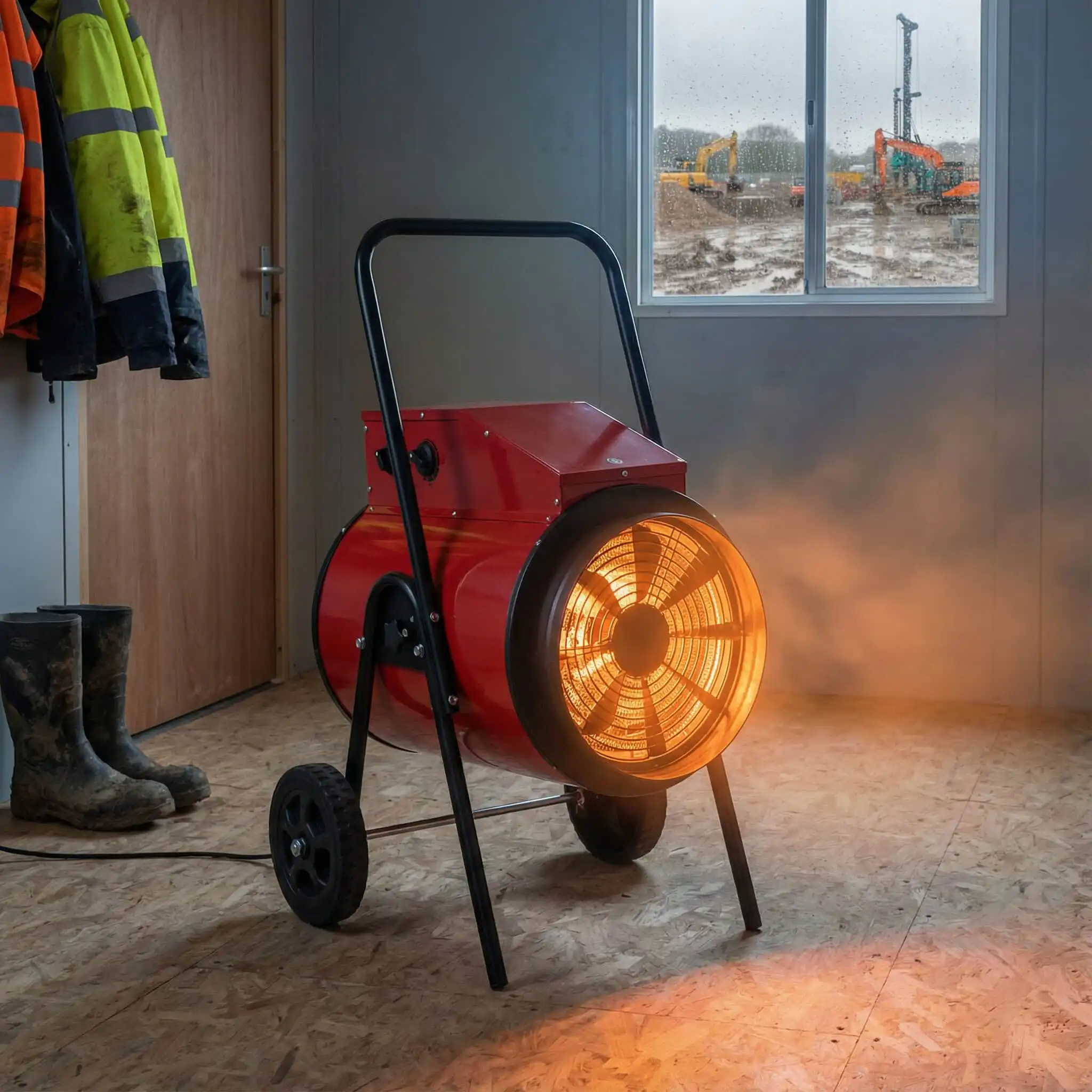
 General Site Tools
Equipment Hire Guides
Heater vs Dehumidifier for Drying — Which Do You Need?
When a Dehumidifier Is the Right Choice
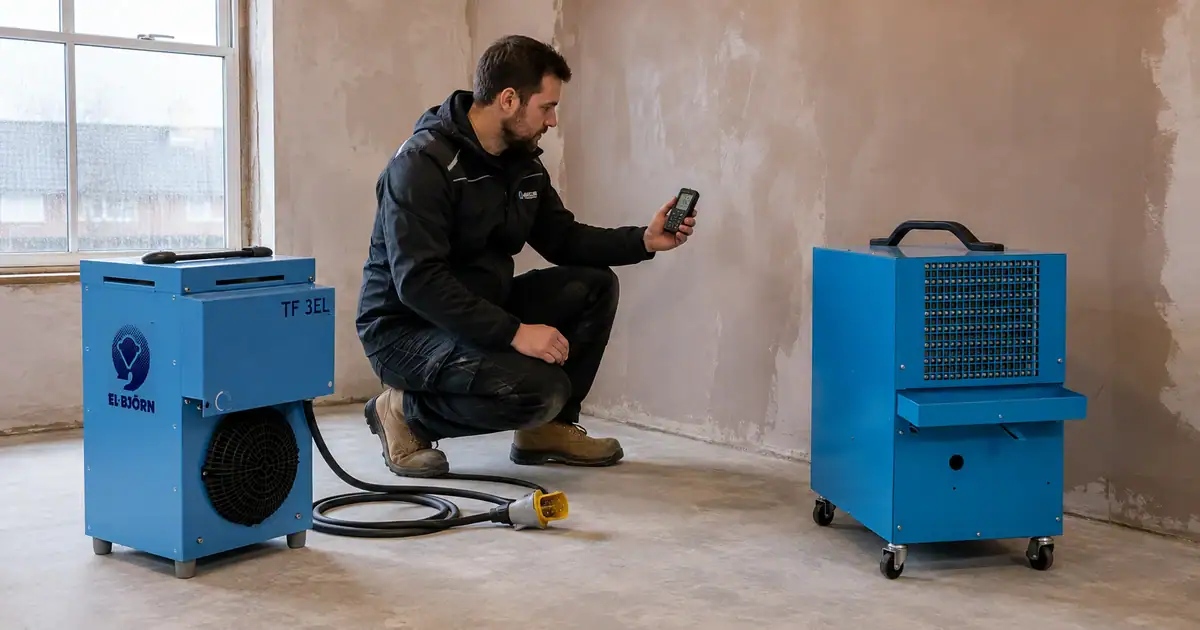
A dehumidifier extracts moisture from the air and collects it as water. It works continuously, pulling humidity levels down over hours and days. This makes it the right tool when the moisture source is already present in the air or in the fabric of a building — not when you need to evaporate water from a surface quickly.
Dehumidifiers are the better choice for condensation problems in flats and houses, tenant damp complaints (particularly relevant under Awaab’s Law deadlines), post-leak moisture extraction once standing water has been removed, basements and rooms that stay humid regardless of ventilation, and long-term drying jobs lasting one to four weeks.
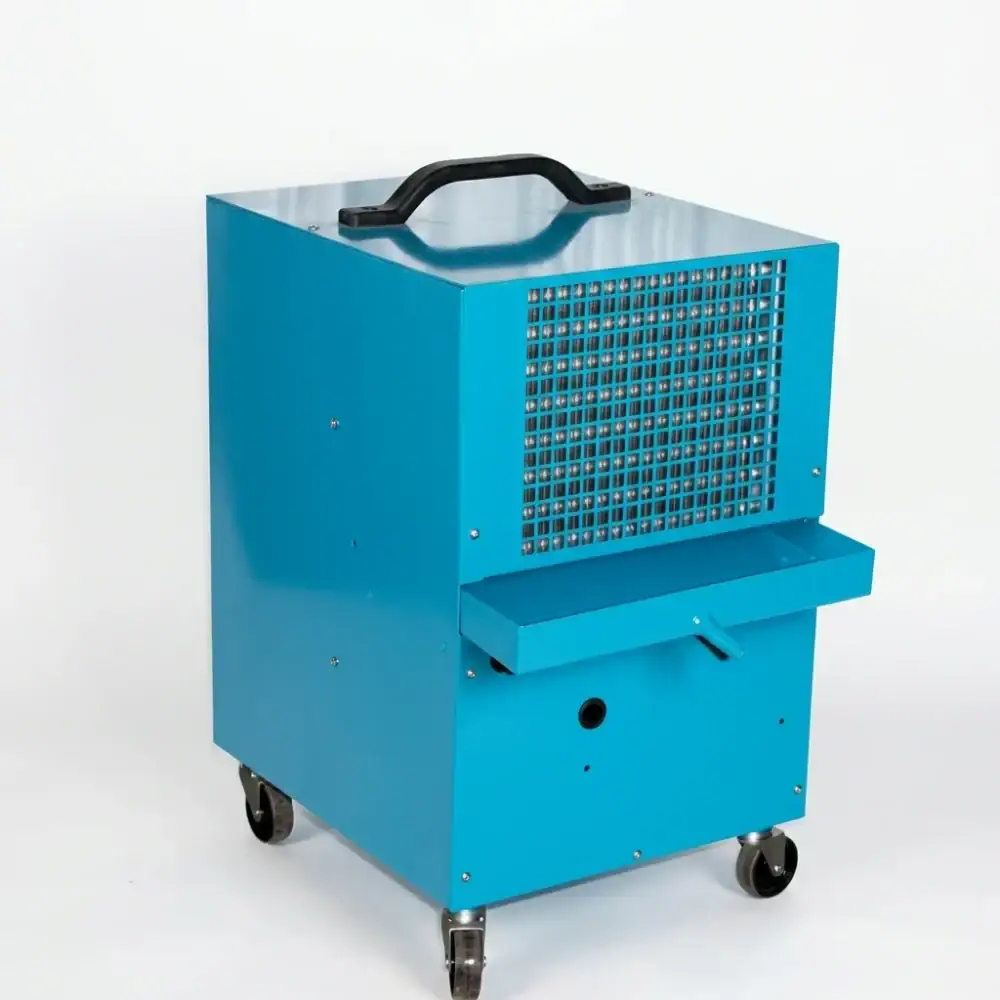
If the room is already at a normal temperature but the air is damp, a dehumidifier on its own will usually do the job. The 38L commercial dehumidifier handles most domestic and light commercial situations. For larger spaces, warehouses, or multi-room drying, the 43L Dri-Eaz Cube covers more ground.
When a Heater Is the Right Choice
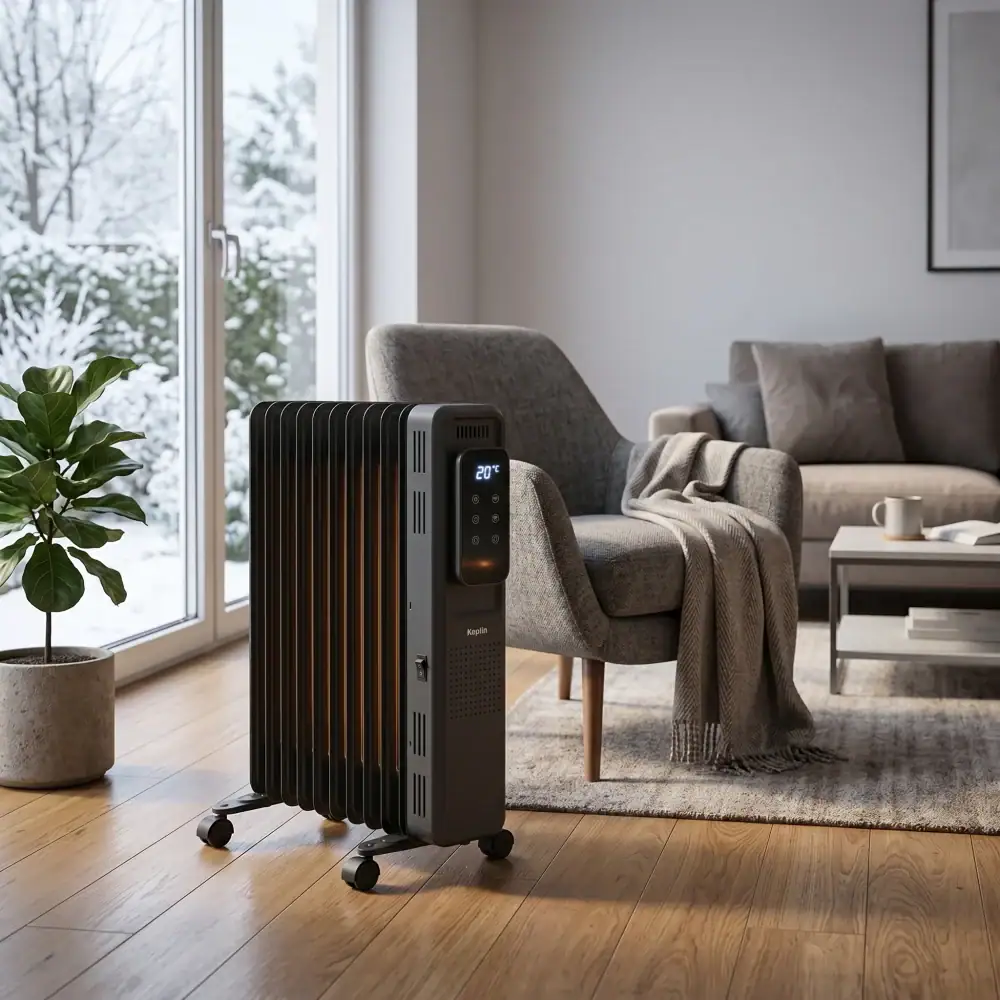
A heater raises the air temperature, which increases the rate at which water evaporates from surfaces. Warmer air can hold more moisture, so heat accelerates the evaporation stage of the drying cycle. This makes heaters essential when the drying process is limited by temperature rather than humidity.
Drying Calculator
Two quick questions and we'll size the right dehumidifier — and tell you how long to hire it.
Heaters are the better choice for drying fresh plaster and render (which needs warmth to cure properly), drying screed before laying flooring, construction drying in winter when ambient temperatures are too low for dehumidifiers to work efficiently, and warming cold rooms where a dehumidifier alone would run for weeks without progress.
The 3kW electric heater suits domestic rooms and small commercial spaces. For construction sites and larger areas, the 9kW industrial fan heater delivers the output needed to raise temperatures in high-volume spaces.
When You Need Both
Professional drying contractors almost always use heat and dehumidification together. The reason is simple: a heater drives moisture out of surfaces and into the air, and a dehumidifier captures that airborne moisture before it settles somewhere else. One without the other is only doing half the work.
You typically need both for structural drying after a flood or serious leak, construction drying on a deadline (plastering, screeding, painting), insurance-managed drying jobs where speed matters, and any situation where the space is both cold and damp simultaneously.
For most combined drying setups, a 38L dehumidifier paired with a 3kW heater covers a standard domestic room. For construction sites or multi-room jobs, step up to the 43L dehumidifier and 9kW industrial heater. If air circulation is also needed, an air mover completes the professional drying trio — see our guide on dehumidifier vs air mover for that comparison.
Common Mistakes to Avoid
Other mistakes we see regularly: running a dehumidifier in a cold room below 15°C and wondering why progress is slow, using a heater without checking the room’s ventilation first, expecting a single domestic dehumidifier to dry a three-storey property, and leaving equipment running without checking moisture levels — if you do not monitor progress, you will not know when to stop.
If the space has electrical damage, sewage contamination, or structural concerns after a flood, stop and call a professional restoration company before running any equipment.
| Your Situation | What You Need | Why |
|---|---|---|
| Condensation on windows and walls | Dehumidifier | Moisture is already airborne — extract it |
| Drying fresh plaster in winter | Heater + dehumidifier | Heat cures plaster, dehumidifier captures released moisture |
| Post-flood room drying | Heater + dehumidifier + air mover | Full drying trio for maximum extraction speed |
| Damp rented property | Dehumidifier | Ongoing humidity control, not a one-off dry |
| Cold unheated property in winter | Heater first, then add dehumidifier | Dehumidifiers lose efficiency below 15°C — warm first |
| Screed drying before flooring | Heater + dehumidifier | Accelerates curing without trapping moisture under floor |
Practical Hire Details
- Landlords facing tenant damp complaints and Awaab’s Law compliance deadlines
- Plastering and screeding contractors who need the previous trade’s work dry before they can start
- Property managers coordinating post-flood or post-leak restoration across multiple rooms
- Homeowners dealing with persistent condensation, rising damp symptoms, or a burst pipe over winter
- Insurance-appointed drying contractors needing rapid equipment availability across London
There is a point where the choice stops being a preference and becomes physics: below about 15°C a refrigerant dehumidifier frosts up and barely extracts, so heat is not optional. Why a dehumidifier stalls in a cold room sets out what happens at each temperature band.
Frequently Asked Questions
Can I use a heater instead of a dehumidifier for damp?
How long does it take to dry a room with a dehumidifier and heater together?
What temperature should I set a heater to for drying?
Do I need an air mover as well?
How much does it cost to hire a dehumidifier and heater together?
Will a dehumidifier work in a cold room?

 Drone Survey & Mapping
 Drone Inspections