
 Drone Services
 Access Equipment
 Breaking & Drilling
 Cleaning Equipment
 Drying & Heating
 General Site Tools
Equipment Hire Guides
How to Sand a Wooden Floor Yourself — And Exactly Which Sander to Hire
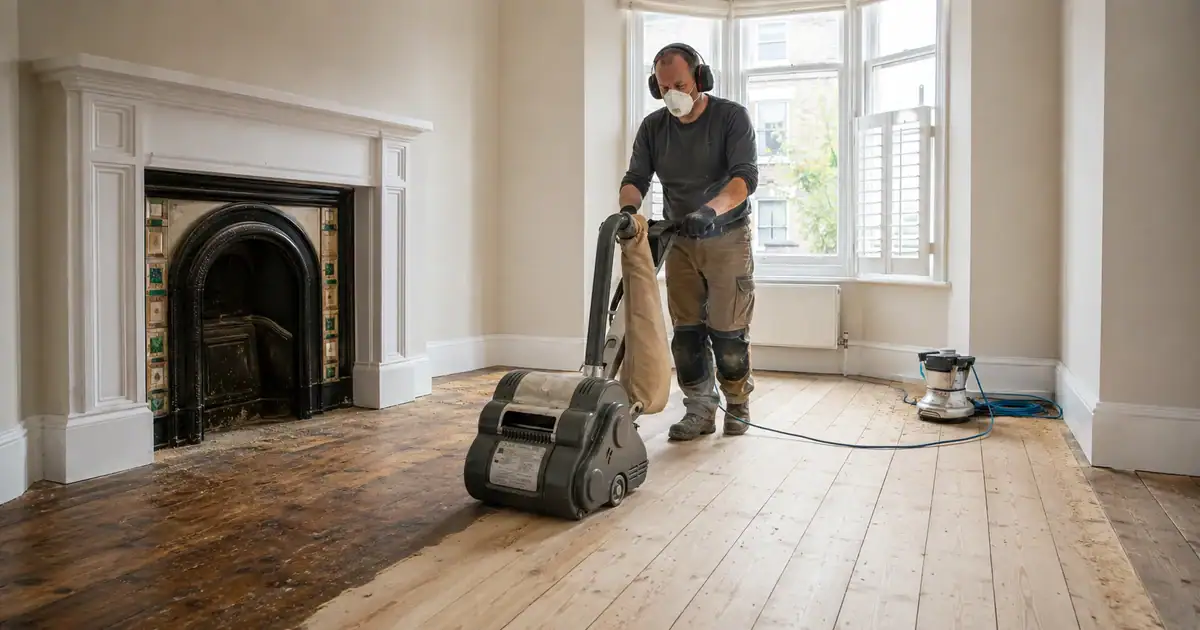
How to Sand a Wooden Floor Yourself — And Exactly Which Sander to Hire — a plain-English guide to taking floorboards back to bare timber without the guesswork or the gouges.
Hireload delivers equipment across London from our Greenford / UB6 operating area. View full London delivery areas.
The quick answer
You need two machines. A drum sander strips the open floor back to bare timber; an edging sander finishes the edges, corners and stairs the drum can’t reach. Most rooms need both, so hiring them together as a pack costs less than booking them separately. Work through three grit stages — coarse, then medium, then fine — always sand with the grain, and vacuum between every pass. A single room is usually a weekend job.
What’s on this page
Drum sander vs edging sander, the grit sequence that actually works, a step-by-step method, how long it takes and what it costs, which floors you can tackle, the three machines to hire, and the mistakes to avoid.
Drum sander vs edging sander: what each one does
A floor is really two jobs. The big open middle is one; the last few inches against the skirting, the corners, the bay and the stairs are another. No single machine does both well, which is why a proper floor refurbishment uses a pair.
The drum floor sander is the workhorse. Its 200 mm (8-inch) drum takes off old varnish, paint and surface marks across the main area, ready for oil, varnish or lacquer. It sits back from its own body, though, so it physically can’t reach the perimeter. That’s the edging sander’s job — a 7-inch rotary disc that sands right up to the skirting and into the corners, so the whole floor matches.
| Machine | What it does | Best for | From |
|---|---|---|---|
| Drum sander (8″) | Strips the open floor back to bare timber | Boards, parquet and block wood — the main area | £42.99/day +VAT |
| Edging sander (7″) | Sands up to skirting, into corners, bays and stairs | The edges a drum sander leaves behind | £32.99/day +VAT |
| Both (the pack) | Complete whole-floor kit, one booking | A full room or a whole property | £64.99/day +VAT |
Booking both? The drum-and-edger pack comes in under the two hired separately — £64.99/day against £75.98 — so you save around £11 a day and get one delivery and one collection instead of two.
The grit sequence that actually works
Sanding is a series of passes, each one removing the scratches left by the last. Skip a grade and you’ll see every swirl once the finish goes on, so it pays to work through them in order.
A common sequence for a floor with old varnish or paint is to start coarse (around 40 grit), move to medium (around 80), then finish fine (around 120). For a heavy build-up of old finish you may need to start coarser still, around 24 grit. Lightly worn but sound boards can often start at 40 to 60. Match the edging sander to the same grade at each stage so the perimeter blends with the middle.
Pro tip: don’t jump grades to save time. Going straight from 24 to 80 leaves deep scratches the finer paper can’t remove, and you’ll end up starting again. Vacuum the whole floor between every grit.
How to sand a wooden floor, step by step
- Prep the room. Clear it completely, then punch every nail head a few millimetres below the surface — a proud nail will rip the sanding belt (and the drum) in seconds. Fix or replace loose boards and give the floor a sweep.
- First coarse pass with the drum. Always sand with the grain, and keep the machine moving — never let the drum spin in one spot, or it gouges a hollow you can’t sand out. Overlap each run slightly.
- Edge as you go. Take the edging sander around the perimeter, into corners and bays, and over any stairs at the same grit as the drum.
- Step up through the grits. Repeat the drum-then-edger routine at medium, then fine. Each pass should look and feel smoother.
- Vacuum thoroughly. Between grits and again before finishing — any grit left behind shows up under oil or lacquer.
- Finish. Once the dust has settled, apply your oil, hardwax-oil, varnish or lacquer.
The three mistakes that ruin a floor: letting the drum sit spinning in one place, skipping grit grades, and sanding across the grain instead of with it. Avoid those three and the rest is mostly patience.
How long it takes and what it costs
A standard room is usually a weekend for someone doing it for the first time; a confident pair can strip and finish a room in a day. A whole house is a multi-day job, so plan the hire accordingly. Most people book a floor sander for a weekend or two to three days.
Hire starts from £42.99/day +VAT for the drum sander and from £32.99/day +VAT for the edger, or from £64.99/day +VAT for the pack. Even at the pack rate, sanding a room yourself is typically a fraction of a professional floor-sanding quote for the same job — you’re paying for the machines, not the labour. Collection is free from our Greenford UB6 base, or we deliver across London by booking.
What a hired floor sander will (and won’t) handle
Good candidates: softwood and hardwood floorboards, parquet and block wood, and stairs (with the edger). It strips old varnish, paint and lacquer and levels minor cupping and everyday surface marks.
Think twice on: structurally damaged or badly cupped boards (replace or re-fix those first), floors coated in old bitumen or adhesive, and engineered boards with a thin wear layer — sand through the veneer and there’s no going back, so check the layer thickness before you start. If you’re unsure what you’ve got, send us a photo and we’ll tell you honestly whether it’s a sanding job.
The machines to hire
Drum Floor Sander (8″)
200 mm drum, 230V mains, integrated dust bag. The main machine for the open floor. From £42.99/day +VAT.
Floor Edging Sander (7″)
7-inch rotary disc, 230V mains, on-board dust collection. Finishes the edges, corners and stairs. From £32.99/day +VAT.
Floor Sander & Edger Pack
Both machines, one booking — the complete whole-floor kit for less than hiring them separately. From £64.99/day +VAT.
Dust and paperwork: both machines collect most of the dust, but sanding is always dusty — wear a mask, open a window and empty the bag before it’s full. Photo ID is required to hire, and a refundable deposit may apply; we confirm both at booking.
Perfect for
- Homeowners restoring original floorboards
- Landlords refreshing a rental between tenancies
- Renovators stripping a whole house back to timber
- Anyone re-oiling or re-varnishing a tired but sound floor
Related guides
Planning the wider job? See the full floor sander hire range, or our guide to using a floor scrubber for the clean-up afterwards.
If this is a rental or a building project, take a look at end-of-tenancy cleaning equipment and post-construction cleaning kit too.
Floor sanding FAQs
Not sure which sander your floor needs?
Tell us the room and the finish you’re after and we’ll point you to the right kit — drum, edger or the full pack. Call 020 3375 4048 (WhatsApp available), or browse the range.

 Drone Survey & Mapping
 Drone Inspections