
 Drone Services
 Access Equipment
 Breaking & Drilling
 Cleaning Equipment
 Drying & Heating
 General Site Tools
Equipment Hire Guides
What Am I Actually Getting When I Hire a “Carpet Shampooer”?
Quick answer
A carpet shampooer hired today is almost always a spray extraction machine. Rotary shampooing works foam into the pile and leaves detergent behind. Extraction sprays solution and vacuums it straight back out, taking the soil with it, so you should not go looking for a true shampooer.
Key takeaways
- Four words, one machine. Shampooer, washer, extractor and cleaner all describe the same kind of hire machine.
- Residue is the difference. Shampooed carpet tends to re-soil faster because detergent stays in the pile.
- Use it the opposite way. One wet pass, then two or more dry passes with the trigger released.
- Dose at the stated dilution. More detergent leaves more residue, not a cleaner carpet.

| Machine | Method | Key facts |
|---|---|---|
| Numatic CTD570-2 | Extraction | Twin motor, 240V, tank set-up for longer cleaning runs |
| Truvox Hydromist HC250 | Extraction plus brush | Built-in rotary brush for agitation, spare pump supplied |
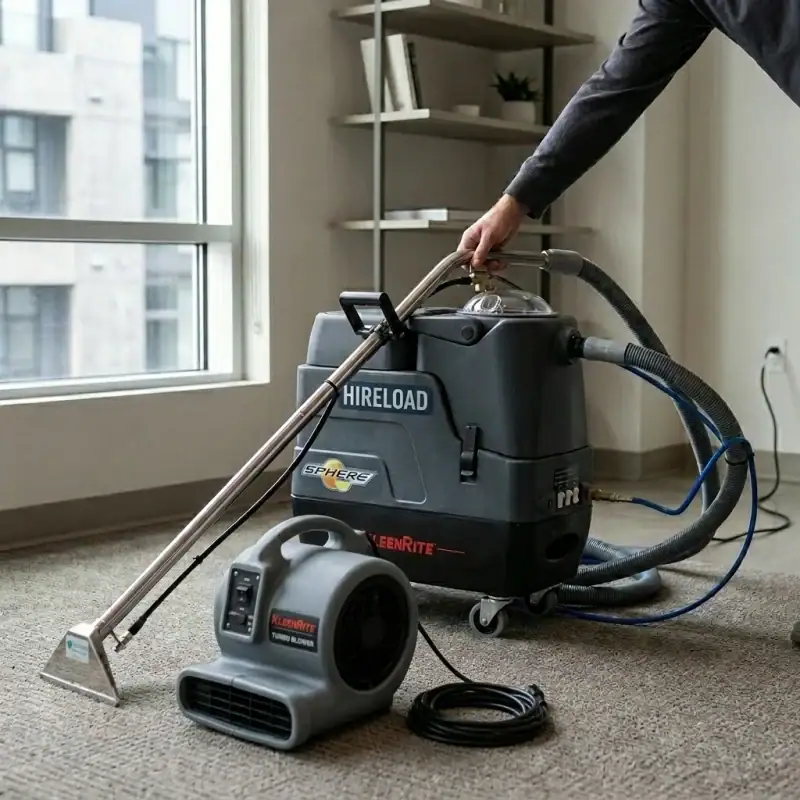
| KleenRite SPHERE | Heated extraction | Heated water, upholstery tool, 4.5 m hoses included |
| TASKI aquamat 20 | Extraction, unheated | 20 litre class tank, 15 m cable, supplied with floor wand |
What is the difference between shampooing and extraction?
Rotary shampooing is the traditional method. A rotating brush or bonnet works a foaming detergent into the pile. The foam suspends the soil, the carpet is left to dry, and the residue is vacuumed out afterwards.
Spray extraction sprays solution into the pile and vacuums it straight back out in the same pass, carrying the suspended soil with it.
Read more: why the hire trade moved to extraction
Detergent left in the pile acts like a magnet for the next round of footfall. Because extraction removes the solution along with the soil, there is far less left behind to attract dirt.
For a hire customer this also means fewer variables. You are not judging how much foam to build or how long to let it sit. You apply solution, then take it back out.
Why does the word cost people a result?
If you think of the machine as a shampooer, you tend to use it like one: lay down plenty of foam, work it in, and let it dry. On an extraction machine that is exactly the wrong approach. It saturates the carpet, leaves residue behind, and can take days to dry.
The better method is the opposite:
- One pass with solution, on the forward stroke only
- Two or more passes with the trigger released, pulling back slowly
- Slow down, because airflow needs time to lift water out of the pile
Our guide on how to use a carpet cleaner covers the full method, and what to do when a machine seems to lose suction covers the most common complaint, which is often a method issue rather than a fault.
How much detergent should I use?
Use the solution the machine is designed for, at the dilution stated on the label, and resist the urge to add extra.
Over-dosing does not clean better. It leaves residue, it foams in the recovery tank where foam interferes with the vacuum, and it makes the carpet re-soil faster.
Read more: what foam does inside the machine
Foam in the recovery tank reduces how well the vacuum lifts dirty water, and it can carry into the motor housing. If you see foam building up, stop, empty the recovery tank and reduce the dose for the next fill.
What will extraction actually achieve?
It generally will: lift general soiling, traffic lanes, surface staining, and a good deal of the odour that comes with them.
It generally will not:
- Remove permanent dye loss from bleach or sunlight
- Reverse pile crush in traffic lanes, which is mechanical wear
- Fix browning that wicks up from a jute backing
- Resolve pet contamination that has soaked through to the underlay
Read more: choosing between the four machines
For general domestic carpets, rugs and stairs, the Numatic CTD570-2 is a sensible starting point. Where soil is ground in, the Truvox HC250 adds a rotary brush. The KleenRite SPHERE adds heated water and an upholstery tool, which helps on greasy soiling and soft furnishings.
The TASKI aquamat 20 has a 20 litre class tank and suits larger open floors where you want to refill less often. It is supplied with the floor wand.
How fast should the carpet dry?
An extracted carpet should be damp, not wet, and usually dries within hours rather than days when airflow is good.
Open windows where the weather allows. On a larger area or in a closed flat, an air mover can shorten drying substantially, and in winter a dehumidifier alongside helps stop the moisture relocating to walls and windows.
Frequently asked questions
Is a carpet shampooer the same as a carpet cleaner?
Why does my carpet get dirty faster after cleaning?
Can I use washing-up liquid in a hired machine?
Which machine suits heavily soiled carpet?
How wet should the carpet be afterwards?
How long before I can walk on it?
The Hireload team runs the hire fleet from our Greenford depot in west London and handles the delivery calls.
Hire an extraction machine, not a residue machine
Commercial spray extraction for carpets, stairs and upholstery.
Or call 020 3375 4048 and describe the carpet
Related guidance
- How to use a carpet cleaner
- Carpet cleaner poor suction: work through this first
- Carpet cleaner hire vs professional
- End of tenancy cleaning equipment
General practical guidance for common hire extraction machines, not professional advice. Always follow the operating and dilution instructions supplied with your specific hire, and test an inconspicuous area before cleaning a whole floor.

 Drone Survey & Mapping
 Drone Inspections