
 Drone Services
 Access Equipment

 Breaking & Drilling
 Cleaning Equipment
 Drying & Heating
 General Site Tools
Drying & Heating, Equipment Hire Guides
Paint Not Drying in Cold, Wet Weather? How to Get It Drying Again
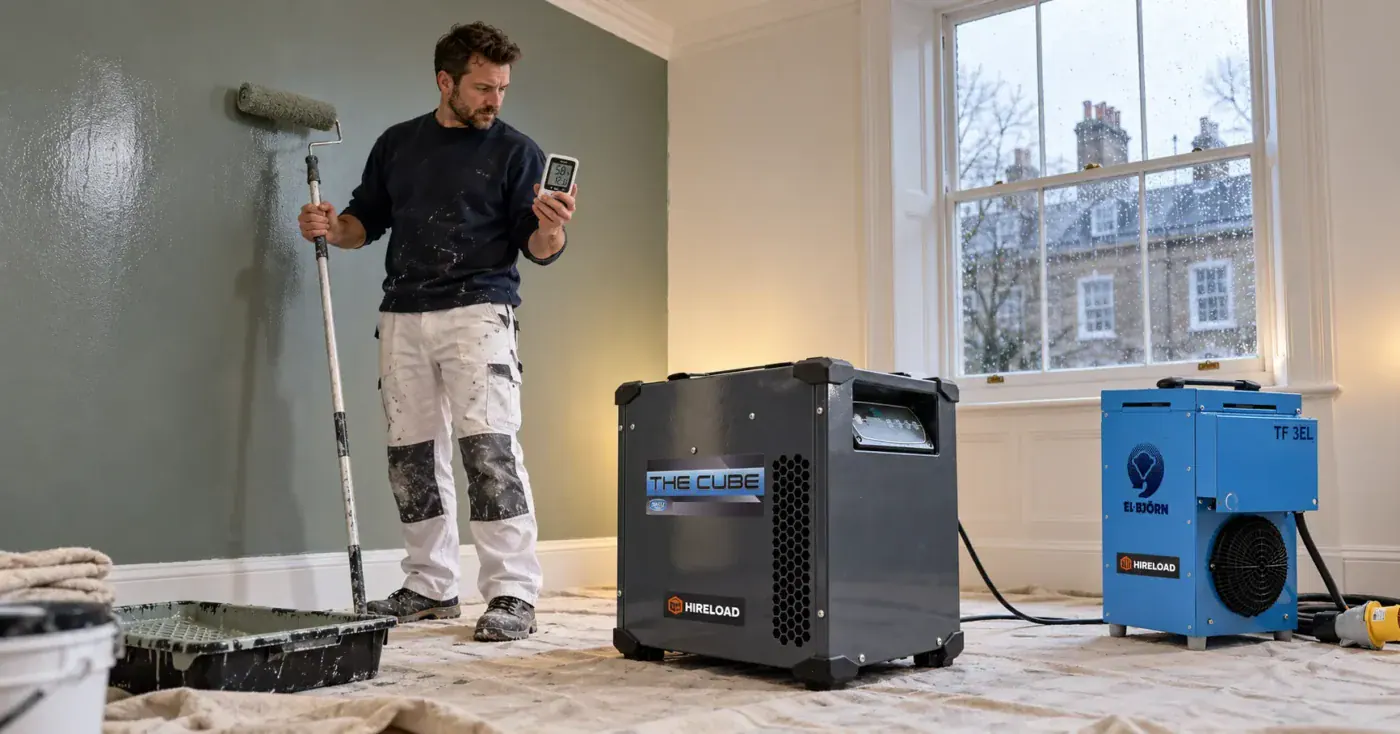
Paint not drying in cold, wet weather? How to get it drying again.
In a wet autumn or winter, paint that should be touch dry in an hour is still tacky the next morning. Second coats are delayed, streaks appear on ceilings and the job runs days over. The cause is almost always the same: the room is too cold and the air is too damp. This guide is for decorators, builders and homeowners painting in wet weather. It explains what the paint needs, how to check the room, and how to set up a dehumidifier and heat so paint dries on time.
Why is my paint not drying in wet weather?
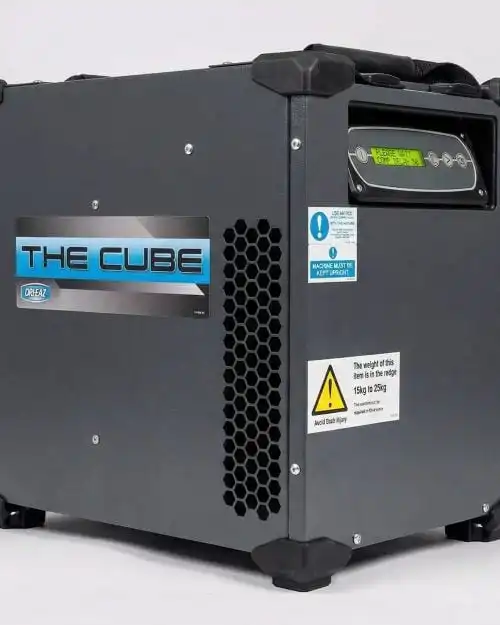
Water-based paint dries by letting its water evaporate. In cold, humid air that evaporation slows right down. Many trade emulsions should not be applied below about 5 to 8°C, or when relative humidity is above about 80% during application and drying. Check your paint’s data sheet. To get paint drying, close the room, run a dehumidifier and keep it steadily warm with electric heat, not gas. A 43 L Dri-Eaz Cube hires from £39.99 + VAT a day and runs overnight with no tank to empty.
Why paint will not dry in cold, wet weather
What the paint needs: check the data sheet
Every paint has a technical data sheet that sets the conditions it needs. For example, a Crown Trade vinyl matt emulsion data sheet says not to apply it when air or surface temperatures are likely to fall below 8°C, or when relative humidity is above 80% during application or the drying period. Other paints set similar limits. Always follow the data sheet for the product you are using. For every size we stock, see our dehumidifier hire London page.
| Room conditions | What happens to water-based paint | What to do |
|---|---|---|
| Above 10°C and below 60% RH | Dries as the tin says | Paint as normal |
| 8 to 10°C or 60 to 80% RH | Slower drying, longer between coats | Run a dehumidifier and heat before and after painting |
| Below about 8°C or above 80% RH | Often outside the paint’s limits; tacky, streaky, poor finish | Warm and dry the room first, then paint |
A cheap thermometer and hygrometer in the room will tell you where you are. Check the surface too: a wall can be colder than the air.
Signs the room is too damp for paint
The first coat should be dry well before the recoat time on the tin. If it is still soft, the room is too cold or damp.
On ceilings and in bathrooms, slow drying can leave sticky, glossy streaks where ingredients in the paint rise to the surface. They can usually be washed off once dry.
Wet windows in the morning mean the air is very humid. That moisture is in the paint film too.
Uneven drying gives a patchy finish, especially on large walls and ceilings.
Setting up the room so paint dries
1. Close the room
Shut windows and doors so the dehumidifier and heater work on the same air. Hang polythene over open doorways in houses under renovation.
2. Dry the air first
Run a dehumidifier for several hours, ideally overnight, before you start painting. Aim for below about 60% RH.
3. Warm the room with electric heat
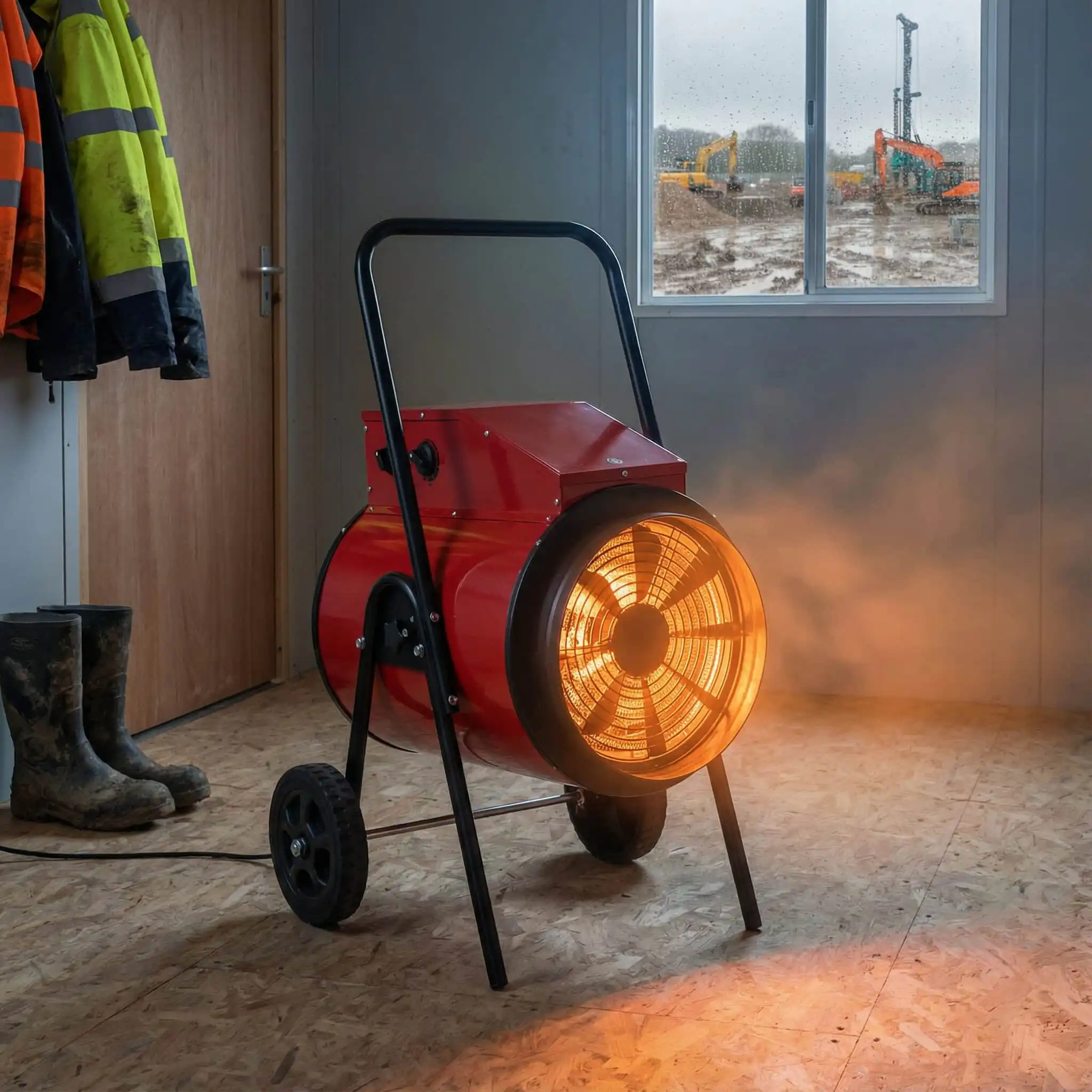
Bring the room up to a steady temperature above the paint’s minimum. An infrared heater warms the walls themselves, not just the air. Avoid gas heaters.
4. Paint, then keep the kit running
Keep the dehumidifier and heat on while the paint dries and overnight between coats. Do not point fans straight at wet paint; gentle air movement is enough.
5. Ventilate in short bursts
Open a window wide for a few minutes now and then to clear paint smell, then close it again.
6. Check before the next coat
Only recoat when the first coat is fully dry and the room is back within the paint’s limits.
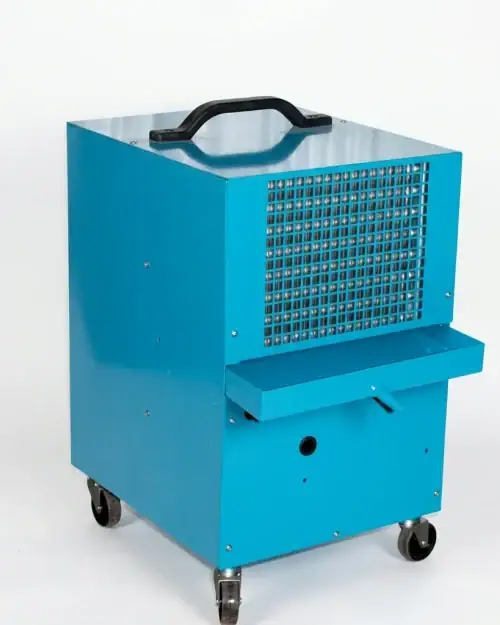
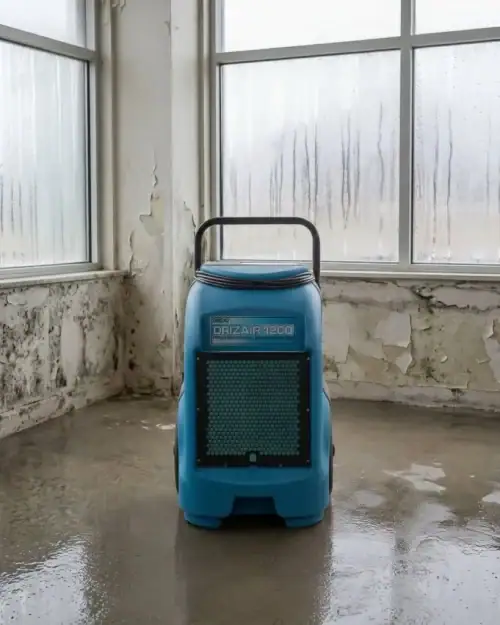
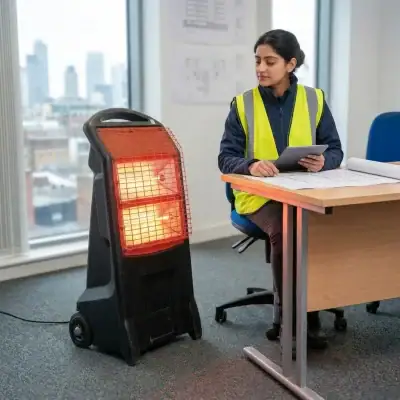
On a job with high ceilings or stairwells, pair the drying kit with the right access. See our guide to scaffold towers for decorating. For heaters, read heater vs dehumidifier for drying.
Painting new plaster in winter
New plaster holds a lot of water and dries far more slowly in cold, wet weather. Painting it too early traps moisture behind the paint, which can cause flaking, blistering and patches. Dry the plaster fully first. A dehumidifier in a closed, warm room is the fastest way to do it. For the full method, read drying new plaster with a dehumidifier and plaster still wet after a week.
The same applies to walls that took on rain. If a wall got wet from outside, fix the cause and dry it before decorating; see damp walls after heavy rain.
Frequently asked questions
Why is my emulsion still tacky after a day?
The room is usually too cold or too humid. Water-based paint dries by evaporation, which slows sharply in cold, damp air. Warm and dry the room and it will normally cure.
Can you paint when it is raining?
Indoors, yes, as long as the room is within the paint’s temperature and humidity limits. Close the windows and run a dehumidifier. Outdoors, do not paint in rain or on wet surfaces.
Does a dehumidifier help paint dry?
Yes. Lowering the humidity lets the water in the paint evaporate faster. Combined with steady electric heat, it is the most reliable way to get paint drying in wet weather.
What is the minimum temperature for painting?
It depends on the product. Many trade emulsions say about 5 to 8°C for air and surface temperature. Check the data sheet for your paint.
Should I use a gas heater to dry paint?
Better not. Burning gas adds water vapour to the air. Use electric or infrared heat with a dehumidifier.
Is there a deposit to hire a dehumidifier or heater?
Yes. A refundable deposit applies to every hire and is returned when the equipment comes back in good condition. The amount is shown when you book.
Related guides
Job held up by wet weather?
Tell the hire desk the room sizes and we will suggest the right dehumidifier and heater, delivered across London.
Note: this guide is general information. Always follow the technical data sheet and instructions for the paint you are using. The 8°C and 80% RH example is from a Crown Trade vinyl matt emulsion data sheet; other products set their own limits. Prices are ex VAT as shown on our product pages in October 2026.

 Drone Survey & Mapping
 Drone Inspections