
 Drone Services
 Access Equipment
 Breaking & Drilling
 Cleaning Equipment
 Drying & Heating
 General Site Tools
Drying & Heating, Equipment Hire Guides
Rain Got Into Your Shop or Office? How to Dry It Fast and Keep Trading
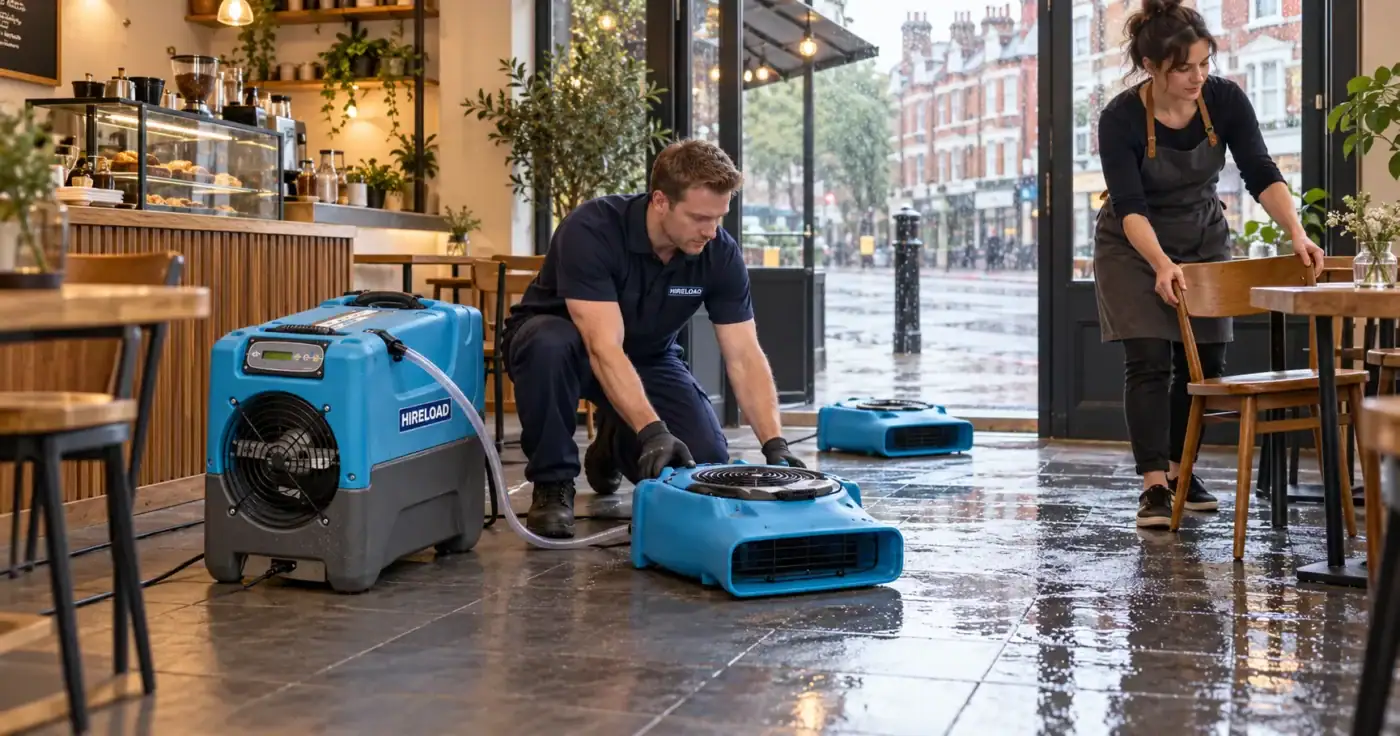
Rain got into your shop or office? Dry it fast and keep trading.
Heavy rain can put water through a shop’s back door, a flat roof over an office or a basement kitchen in an hour. For a business, every closed day costs money. This guide is for shop owners, office and facilities managers, restaurants and cafés. It covers what to do in the first hour, how to dry the premises fast, how to keep part of the business open while you dry, and which drying equipment to hire for each type of premises.
How do you dry out a shop or office after rain gets in?
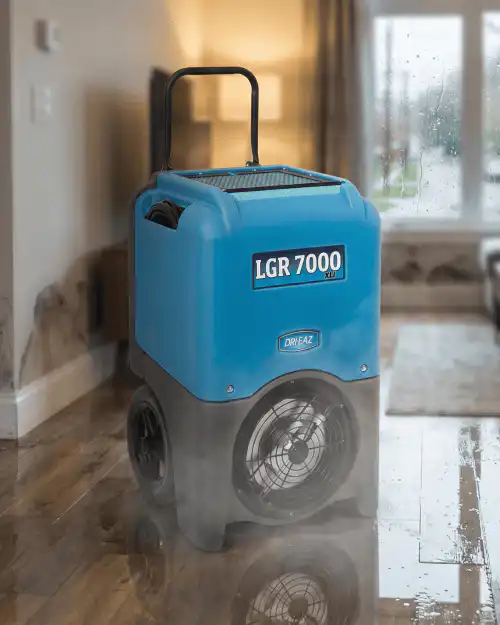
Make it safe, stop the water and get the standing water out. Move stock and equipment off wet floors. Then close the affected area and run a commercial LGR dehumidifier with several air movers day and night until floors and walls are dry. Many businesses keep trading from the dry areas while the drying kit runs in the wet ones. For a shop floor or an office, our 95 L LGR building dryer hires from £77.99 + VAT a day or £149.99 + VAT for up to 7 days, and air movers from £19.99 + VAT, delivered across London.
The first hour
1. Make it safe
Keep staff and customers away from wet floors. Switch off circuits where water has reached sockets, floor boxes or equipment, and do not use them again until an electrician has checked them.
2. Stop the water
Clear blocked drains and gutters, put sandbags or barriers at doorways if rain is still coming, and call a roofer for flat roof leaks.
3. Get the water out
Squeegee, mop or pump out standing water. A wet vacuum helps on carpet tiles and hard floors.
4. Lift stock and equipment
Move stock, paperwork, computers and furniture off the floor and away from wet walls. Lift carpet tiles if they are soaked.
5. Photograph everything
Take photos of the water, the damage and any damaged stock before you clear it.
6. Book the drying kit
The sooner drying starts, the less damage to floors, walls and stock, and the sooner you are back to normal.
Restaurants, cafés and food businesses
Food businesses have extra steps before they reopen. Local council guidance for food businesses after flooding says:
Rainwater that comes through a roof is different from flood water that has come across streets and drains, but if in doubt, treat it as contaminated. You can hire a dehumidifier in London from us in every size we stock.
Drying the premises fast
Commercial drying follows the same rule as any professional drying job: close the area, remove the moisture, move the air and keep it warm.
Low grain refrigerant (LGR) dryers keep pulling water out as the air gets drier, so they dry floors, walls and fittings, not just the air. Route the hose to a drain so they run day and night.
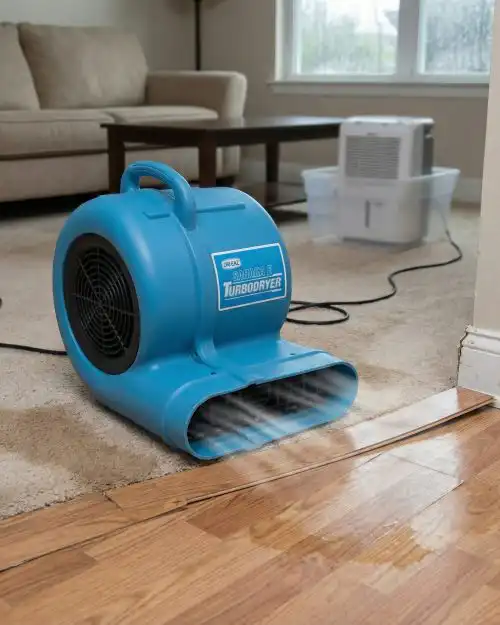
Point them across wet floors and along wet walls. Moving air is what pulls moisture out of screeds, carpet tiles and plaster. Plan on roughly one air mover for every few metres of wet wall.
Shut doors or hang polythene to separate the wet area. A dehumidifier dries a closed space far faster than an open shop floor with the front door opening all day.
Steady warmth helps materials release moisture. Avoid gas heaters, which add water vapour to the air.
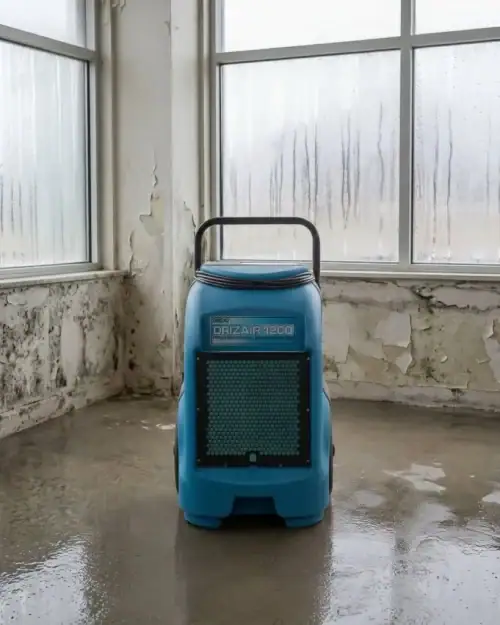
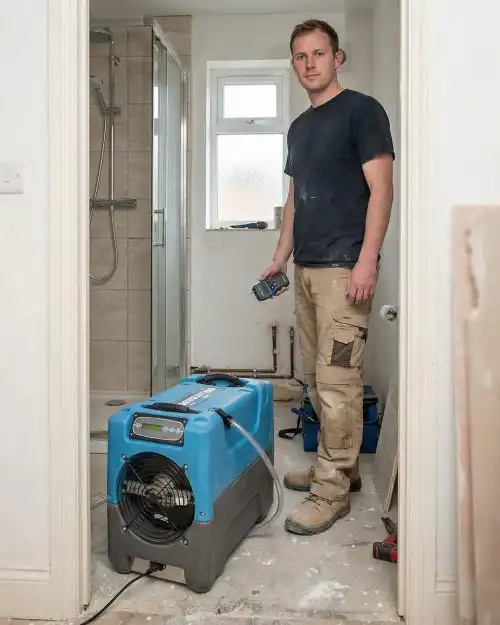 95 L LGR building dryerWhole floors, construction and flood drying£149.99 + VAT up to 7 daysHIRE NOW →

Keeping the business open while you dry
Most businesses do not need to close completely. A few simple steps let you keep trading from the dry areas.
Drying kit by type of premises
| Premises | Dehumidifier | Air movers |
|---|---|---|
| Small shop or café, one room wet | 55 L DrizAir 1200 or the Leak & Plaster package | 1 to 2 |
| Office floor or stockroom | 63 L LGR building dryer | 2 to 3 |
| Large shop floor, restaurant or basement | 95 L LGR building dryer | 3 to 4 |
| Several floors or units | One 95 L LGR per floor | 3 to 4 per floor |
Wet carpet tiles and office carpet dry faster with a high airflow dryer; see our carpet and floor dryers. For commercial carpet cleaning after the water has gone, read office and commercial carpet cleaning. Businesses can open a free trade account for 15% off hire rates.
Frequently asked questions
How long does it take to dry a shop or office after rain gets in?
A light soaking of carpet and plaster can dry in a few days with the right kit. Wet screeds, solid walls and basements take longer, often one to several weeks. Moisture readings tell you when it is done.
Can I keep trading while the drying equipment runs?
Usually, yes. Close off the wet area, keep the kit out of customer routes and run the noisiest machines out of hours.
What size dehumidifier do I need for a shop or office?
For one wet room, a 55 L machine. For an office floor or stockroom, a 63 L LGR. For a large shop floor, restaurant or basement, a 95 L LGR with three or four air movers.
Do you deliver drying equipment to businesses in London?
Yes. We deliver and collect across London from our Greenford depot. Trade account customers get 15% off hire rates.
Is there a deposit?
Yes. A refundable deposit applies to every hire and is returned when the equipment comes back in good condition. The amount is shown when you book.
Related guides
Water in your premises?
Tell the hire desk the size of the area and what got wet. We will put the drying kit together and deliver across London.
Note: this guide is general information. Hireload hires drying equipment; we do not inspect buildings or carry out drying work. Food business points summarise local council guidance on flooding; check with your own council’s food team before reopening. Kit numbers are typical starting points. Prices are ex VAT as shown on our product pages in October 2026.

 Drone Survey & Mapping
 Drone Inspections