
 Drone Services

 Access Equipment

 Breaking & Drilling
 Cleaning Equipment
 Drying & Heating
 General Site Tools

Drying & Heating, Equipment Hire Guides
Damp Walls After Heavy Rain: Why It Happens and How to Dry Them Out
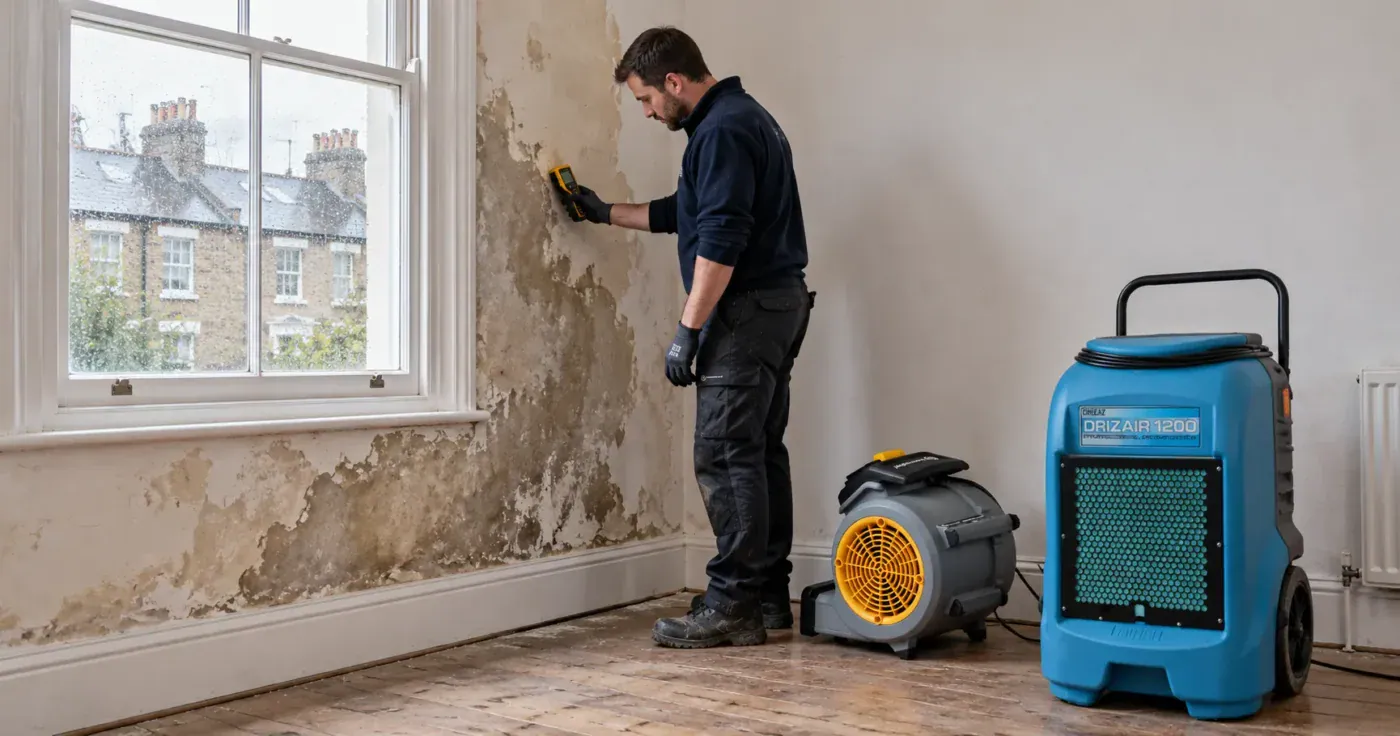
Damp walls after heavy rain: why it happens and how to dry them out.
After a storm or a week of heavy rain, a damp patch appears on an inside wall. It might be under a window, around a chimney breast, near the ceiling or low down by the skirting. It grows when it rains and fades when it is dry. This guide explains the usual reasons rain gets into a wall, what to check first, how to dry the wall properly once the leak is fixed, and how long it takes.
Why is my wall damp inside after heavy rain?
A wall that gets damp inside after rain is usually letting rain in from outside. Common causes are blocked or leaking gutters and downpipes, cracked render, worn pointing, failed window seals or sills, and leaks around chimneys and flashing. Fix the cause first. Then dry the wall with a dehumidifier in a closed, heated room, plus an air mover aimed at the wall to speed things up. Plaster can dry in days to weeks; solid brick walls can take months. Our 55 L DrizAir 1200 hires from £49.99 + VAT for a day, or £89.99 + VAT for up to 7 days.
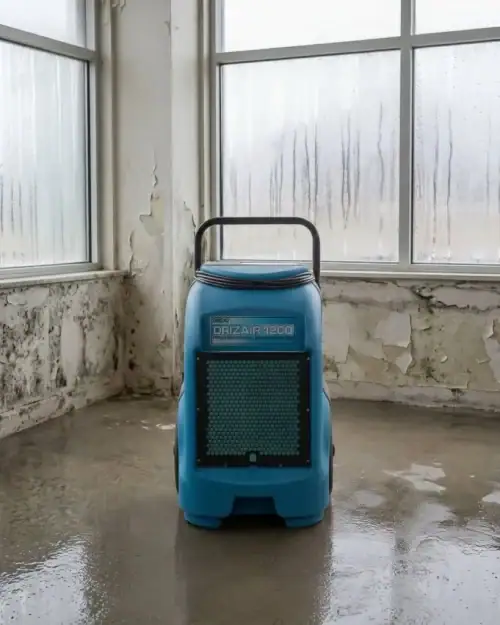
Why walls get wet inside after rain
A damp patch that comes and goes with the weather is a strong clue that water is getting in from outside. This is often called penetrating damp. These are the usual routes:
Not every damp wall is rain, though. If it is worst on cold mornings and in corners, it may be condensation; see why your house is damp when it rains. For the differences between the main types of damp, read rising damp vs condensation vs penetrating damp.
Where the patch is, and what it usually means
| Where the damp appears | Likely cause to check |
|---|---|
| High on the wall, near the ceiling | Overflowing gutter, roof edge, slipped tiles or flashing |
| A vertical strip down the wall | Leaking downpipe or a joint in it |
| Below or beside a window | Window sealant, sill or blocked drainage slots |
| On a chimney breast | Chimney stack, flashing, flaunching or an uncapped flue |
| Scattered patches on a solid wall facing the weather | Cracked render, porous brick or worn pointing |
| Low down, near the floor | Raised ground, splashback or a blocked drain outside |
What to do first
1. Look outside while it is raining
Go out with an umbrella and watch the gutters, downpipes and the wall above the patch. Overflowing gutters and leaking joints are easy to spot in heavy rain.
2. Get the cause fixed
Clear gutters, repair downpipes and reseal windows. For render, pointing, chimneys and roofs, use a builder or roofer. Drying a wall that is still letting rain in is wasted effort.
3. Protect the room
Pull furniture away from the wall, lift rugs and take down pictures. Remove anything soaked, such as wet wallpaper or crumbling plaster, so the wall underneath can breathe.
4. Be careful with electrics
If water has reached sockets, switches or light fittings, keep that circuit off and have an electrician check it before use.
5. Start drying straight away
The longer a wall stays wet, the more likely mould, blown plaster and salt marks become. Set up a dehumidifier as soon as the leak is stopped.
How to dry a wet wall properly
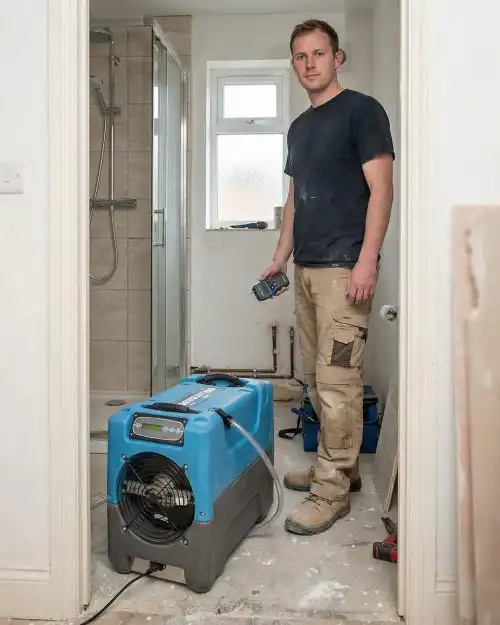
A wet wall dries from its surface. Your job is to keep the air next to that surface warm, dry and moving, so moisture keeps leaving the wall. That takes three things working together. You can hire a dehumidifier in London from us in every size we stock.
Pulls the moisture out of the air so the wall can keep drying. Keep the room closed. For a single room, a 55 L DrizAir 1200 is a strong choice.
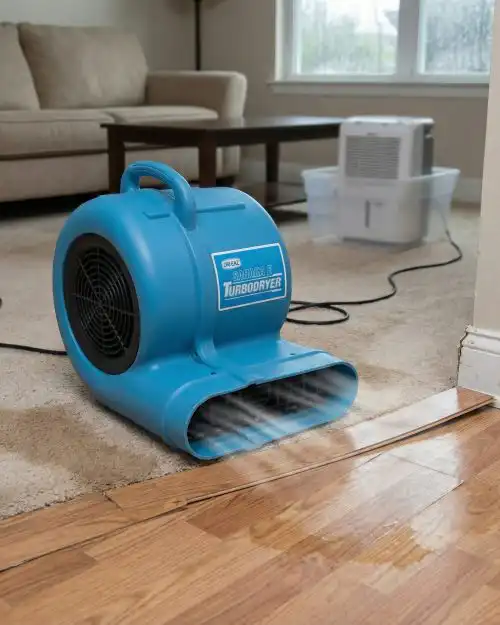
Blows air across the wet surface, which speeds up drying a lot. Aim it along the wall, not straight at it. Our air mover hires from £19.99 + VAT.
Warm air holds more moisture and helps the wall release it. Keep the heating on at a steady, moderate level. Avoid fierce direct heat on plaster, which can crack it.
The easiest way to get both machines is a package. Our Leak & Plaster drying package pairs a 55 L dehumidifier with a 2700 CFM air mover for £99.99 + VAT for up to 5 days. For several rooms, or a whole side of the house, step up to a 63 L LGR building dryer. Not sure which package fits? See which drying package do I need.


How long does a wall take to dry after rain?
It depends on how wet it got, how thick it is and what it is made of. Plaster and plasterboard surfaces can dry in days to a couple of weeks with a dehumidifier running. Solid masonry is much slower. A rule of thumb many plasterers quote is about a month for every 25 mm (one inch) of wall thickness in natural conditions. A soaked 225 mm solid brick wall can therefore take months to dry right through on its own.
| What got wet | Without help | With a dehumidifier and air mover |
|---|---|---|
| Surface plaster, lightly damp | 1 to 3 weeks | Several days to 1 week |
| Plaster soaked through | Several weeks | 1 to 3 weeks |
| Solid brick wall, heavily soaked | Months | Weeks, with the surface ready sooner |
These are typical ranges, not promises. The real test is the wall itself: when readings stop falling and the surface looks and feels the same as a dry wall nearby, you are close. For whole rooms, see how long it takes to dry out a room.
When can you redecorate?
Wait until the wall is dry, not just dry to the touch. Painting or papering too early traps moisture, and the patch, salts or mould come straight back.
Frequently asked questions
Why does my wall get damp only when it rains?
Because rain is getting into the wall from outside. Check gutters, downpipes, render, pointing, window seals and chimneys above or around the patch.
Will a dehumidifier dry a damp wall?
Yes, once the cause is fixed. It dries the air so the wall can keep releasing moisture. An air mover and steady heat make it faster. It will not stop rain coming in, so fix the leak first.
How long does it take to dry a wall after rain?
Plaster can dry in days to a few weeks with a dehumidifier. Solid brick walls are slower; a common rule of thumb is about a month per 25 mm of thickness in natural conditions.
What size dehumidifier do I need for a damp wall?
For one room, a 55 L machine such as the DrizAir 1200. For several rooms or a whole elevation, a 63 L or 95 L LGR building dryer.
Can I paint over a damp patch?
Not until it is dry. Paint traps moisture and the stain comes back. Dry the wall, brush off any salts, then use a breathable paint.
Is there a deposit to hire a dehumidifier?
Yes. A refundable deposit applies to every hire and is returned when the equipment comes back in good condition. The amount is shown when you book.
Related guides
Need to dry a wall fast?
Tell the hire desk how big the area is and how wet it got. We will put the right dehumidifier and air mover together and deliver across London.
Note: this guide is general information. Hireload hires drying equipment; we do not inspect or repair buildings. Find and fix the source of water with a builder, roofer or damp specialist before drying. Drying times are typical ranges and vary with the wall, the weather and how wet it got. Prices are ex VAT as shown on our product pages in October 2026.

 Drone Survey & Mapping
 Drone Inspections