
 Drone Services

 Access Equipment

 Breaking & Drilling
 Cleaning Equipment
 Drying & Heating
 General Site Tools

Drying & Heating, Equipment Hire Guides
Rain Got Into Your Build? How to Dry Out a Renovation or Extension
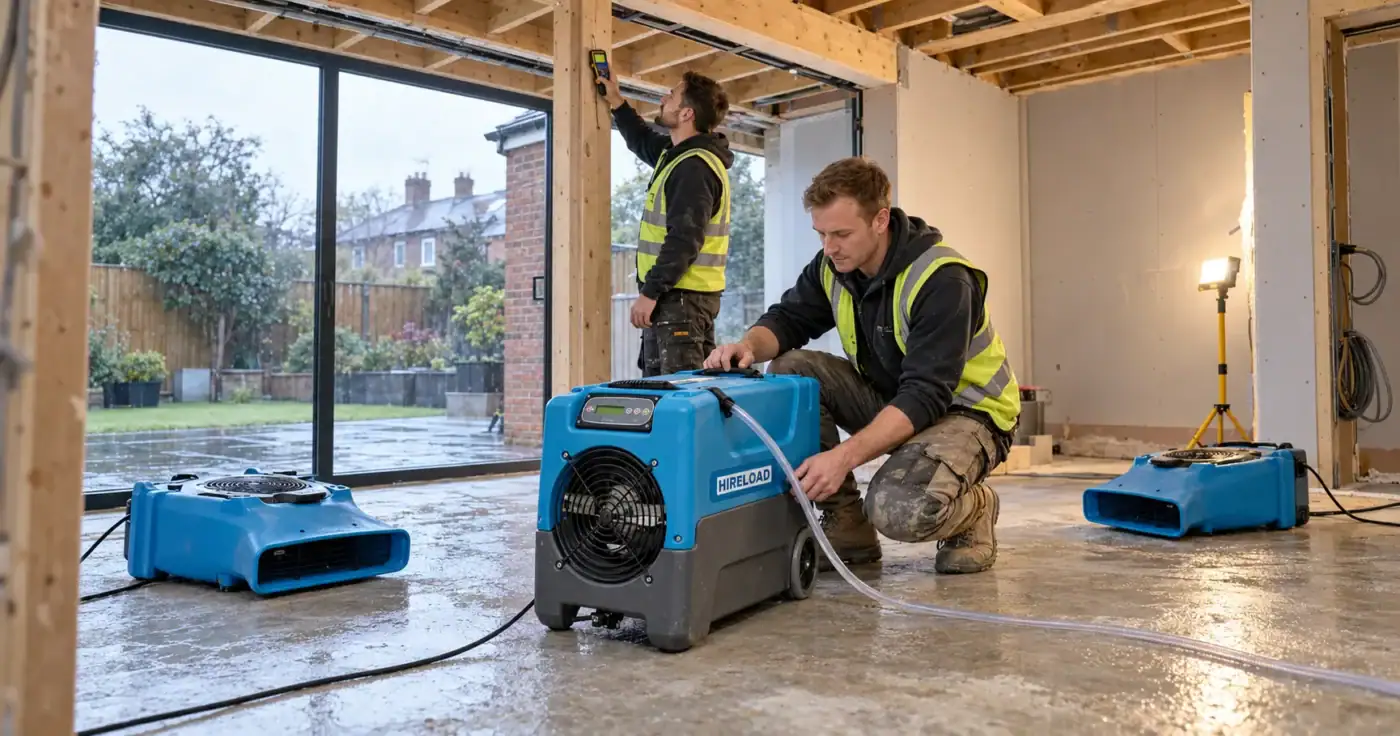
Rain got into your build? How to dry it out before you carry on.
It happens on every kind of job. The roof is off for a loft conversion, a rear extension is not yet watertight, a tarp blows loose in the night, and a storm pours water onto new joists, insulation, plasterboard and screed. The worst thing you can do is board over it and carry on. This guide is for builders, renovators and homeowners mid-project. It covers what to do in the first hours, which materials can be dried and which usually need replacing, how to set up drying equipment on site, and how to know when it is dry enough to close up.
What should you do if rain gets into a renovation or extension?
Make it safe, get the standing water out and make the building watertight again. Then strip out anything that holds water and is cheap to replace, usually soaked plasterboard and insulation, and dry what stays: timber, masonry, screed and plaster. Close the space, then run an LGR building dryer with air movers and steady heat. Do not board, plaster or lay floors until readings show it is dry. Timber should be below about 20% moisture content before it is closed in. Our 95 L LGR building dryer hires from £77.99 + VAT a day or £149.99 + VAT for up to 7 days, delivered to sites across London.
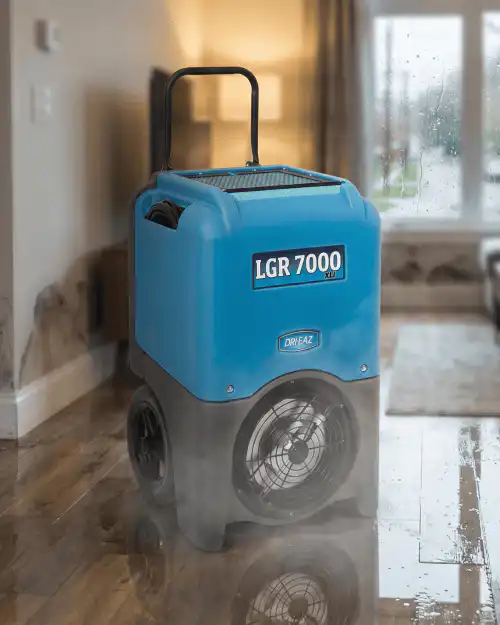
The first hours after the rain
1. Make it safe
Isolate any circuits that got wet and keep them off until an electrician has checked them. Watch for sagging ceilings holding water and for slippery boards and scaffold.
2. Get the water out
Mop, squeegee or pump out standing water. Drill small relief holes in ceilings that are bellied with water, with a bucket underneath, rather than letting them drop.
3. Make it watertight
Re-sheet the roof, fix the membrane and secure tarps with battens, not just bricks. Drying equipment cannot keep up if rain keeps getting in.
4. Photograph everything
Take photos and notes of what got wet and how badly, before you strip anything out. It helps you plan the work and talk to your client.
5. Start drying the same day
Timber, plaster and screed that dry quickly come back far better than materials left wet for a week.
Dry it or replace it?
Some materials dry well. Others hold water, sag or lose their performance, and are cheaper to replace than to dry. This is the typical approach on site. For every size we stock, see our dehumidifier hire London page.
| Material | Usual approach | What to watch |
|---|---|---|
| Joists, rafters and studs | Dry in place | Get below about 20% moisture content before closing in, to avoid decay |
| OSB and chipboard decking | Dry if it was a light soaking; replace if swollen or delaminated | Swelling at edges and soft spots |
| Plasterboard | Usually replace if soaked | Sagging, soft paper face, staining |
| Mineral wool and quilt insulation | Usually replace if saturated | Wet insulation loses performance and holds water against timber |
| Rigid PIR or foam boards | Dry and reuse if undamaged | Water trapped behind boards and in joints |
| Fresh plaster | Dry | Do not decorate until fully dry; see drying new plaster |
| Screed and concrete | Dry | Slow; test before laying flooring; see how long screed takes to dry |
| Brick and block walls | Dry | Slow to dry right through; salts may appear on the surface |
Always follow the manufacturer’s guidance for a specific product, and the building control or warranty requirements on your job.
Setting up drying equipment on site
Professional drying on a build follows a simple rule: close the space, remove the moisture, move the air, add steady heat.
Sheet open doorways and window openings with polythene. A dehumidifier can only dry a space it can control.
Low grain refrigerant (LGR) dryers keep pulling water out as the air gets drier, which is what you need to dry timber and masonry, not just the air. Use a 63 L for a room or two, a 95 L for a floor or a whole extension.
Point them across wet floors, along walls and up into open joists. Moving air across the surface is what pulls moisture out of materials. Our air mover hires from £19.99 + VAT.
Keep the space warm and steady, especially in winter. Avoid gas heaters that put water vapour back into the air. See heater vs dehumidifier for drying.
Route the dehumidifier’s hose to a drain or sink so it can run day and night without stopping when the tank is full. Check and empty or reposition kit once a day, and move air movers as areas dry.
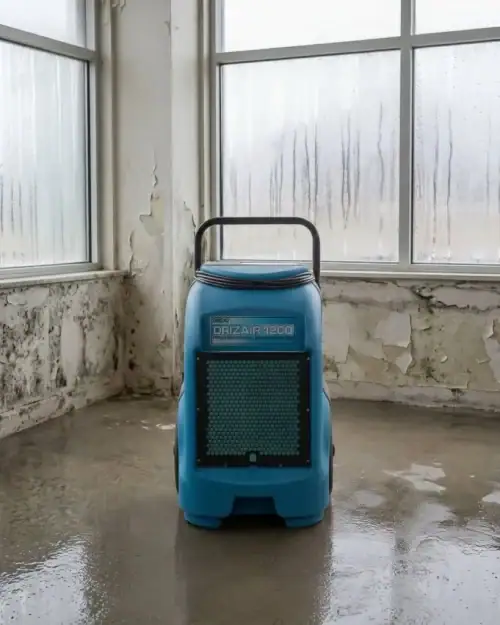
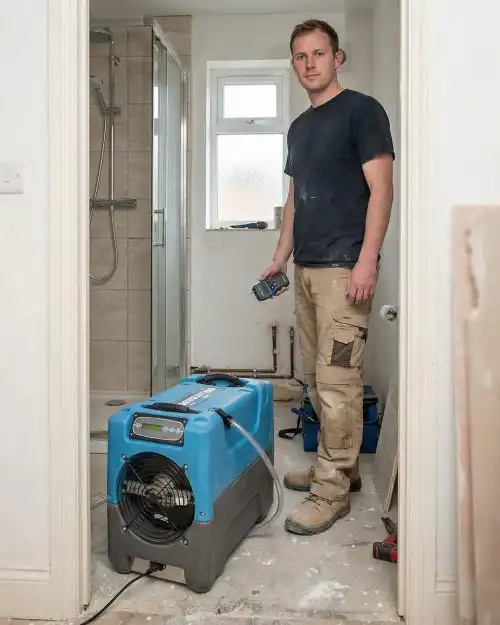 95 L LGR building dryerWhole floors, construction and flood drying£149.99 + VAT up to 7 daysHIRE NOW →
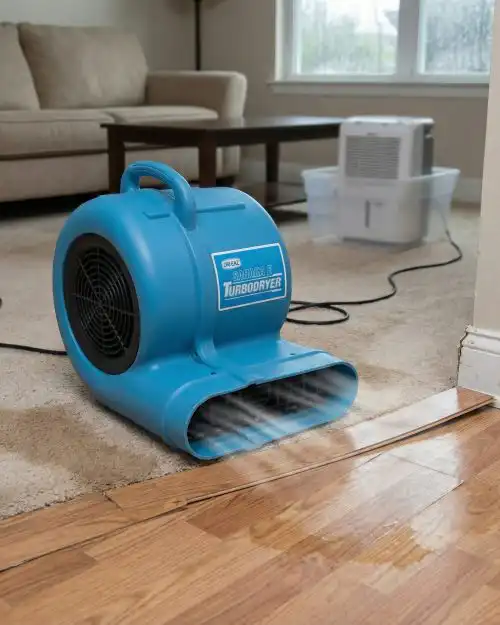

How much drying kit do you need?
As a starting point for a typical London job:
| What got wet | Dehumidifier | Air movers |
|---|---|---|
| One room or a small kitchen extension | 55 L DrizAir 1200 or the Leak & Plaster package | 1 to 2 |
| Two or three rooms, or a loft conversion | 63 L LGR building dryer | 2 to 3 |
| A whole floor or a large extension | 95 L LGR building dryer | 3 to 4 |
| A whole house or several floors | One 95 L per floor | 3 to 4 per floor |
Heavily soaked jobs may need more. For a fuller method, see how many dehumidifiers do I need and drying a building site in winter. Builders and contractors can open a free trade account for 15% off hire rates.
When is it dry enough to carry on?
Do not go by how it looks. Surfaces dry long before the inside of a joist or a screed does. Use a moisture meter, and take readings in the same spots every day.
Before the next storm
October and November bring the first big autumn storms. The Met Office named Storm Austen on 20 October 2026, with wind warnings across southern England and 20 to 30 mm of rain in many places. If your job is open to the weather:
Frequently asked questions
Rain got into my extension. Can the joists be saved?
Usually, yes. Structural timber can normally be dried in place. Get the space watertight, then dry with an LGR dehumidifier and air movers until the timber is below about 20% moisture content before closing it in.
Does wet plasterboard need replacing?
Plasterboard that is soaked, soft or sagging is usually replaced. Boards with light surface wetting can sometimes be dried, but check the face and the core before reusing them.
How long does it take to dry a building after rain gets in?
Light wetting can dry in a few days with equipment. Soaked timber, screed or masonry can take one to several weeks. Readings tell you when it is done.
Which dehumidifier is best for drying a building?
An LGR building dryer. It keeps working as the air gets drier, which is what draws moisture out of timber and masonry. Use a 63 L for a room or two and a 95 L for larger areas.
Do you deliver drying equipment to building sites?
Yes. We deliver dehumidifiers, air movers and drying packages to sites across London from our Greenford depot. Trade account customers get priority routing.
Is there a deposit?
Yes. A refundable deposit applies to every hire, and is returned when the equipment comes back in good condition. The amount is shown when you book.
Related guides
Water in the build? Get drying today.
Tell the hire desk what got wet and how big the area is. We will put together the dryers and air movers and deliver to your site across London.
Note: this guide is general information for planning drying on a building job. It is not a structural assessment. Hireload hires drying equipment; we do not inspect buildings. Follow product manufacturers’ guidance and your building control or warranty requirements. The 20% timber moisture figure reflects published guidance on the threshold for fungal decay. Storm details are from the Met Office (October 2026). Prices are ex VAT as shown on our product pages in October 2026.

 Drone Survey & Mapping
 Drone Inspections