
 Drone Services

 Access Equipment

 Breaking & Drilling

 Cleaning Equipment
 Drying & Heating
 General Site Tools

Drying & Heating, Equipment Hire Guides
Why Is My House So Damp When It Rains? (And Should You Run a Dehumidifier?)

Why your house feels damp every time it rains, and how to fix it.
When it rains for days, many London homes start to feel clammy. Windows stream, towels never dry, the washing on the airer smells musty and the bedroom wall feels cold and damp. It is not your imagination. Rainy weather changes the air inside your home. This guide explains why, what humidity your home should be at, whether a dehumidifier works when it is raining, and which size to hire to get your rooms dry again.
Why is my house so damp when it rains?
When it rains, the outdoor air is close to saturated, so opening a window does little to carry moisture away. At the same time, everyday life keeps adding water: washing dried indoors, showers, cooking and breathing. With windows shut and nowhere for that moisture to go, indoor humidity climbs above the healthy 40 to 60% range and settles as condensation on cold walls and windows. A dehumidifier works perfectly well in rainy weather, because it dries the air inside your home, not outside. Keep doors and windows closed while it runs. For a flat or a few rooms, our 43 L Dri-Eaz Cube hires from £39.99 + VAT for a day.

Why rain makes a house damp
Rain itself rarely comes through the wall. What changes is the balance between the moisture your home produces and the moisture it can get rid of. For prices and sizes, see our dehumidifier rental in London page.
The signs are familiar: streaming windows in the morning, a musty smell, clothes that stay damp, black spots on window seals and silicone, and bedding that feels cold. If your home already smells damp, see why does my house smell damp.
What humidity should your home be?
Most experts recommend keeping indoor relative humidity (RH) between 40% and 60%. Mould grows easily when humidity stays above about 60% and the temperature is above 10°C, which describes many London homes in a wet autumn. A cheap hygrometer will tell you where you are.
| Indoor humidity | What it means | What to do |
|---|---|---|
| 40 to 60% | Healthy range | Keep normal ventilation going |
| 60 to 70% | Condensation likely on cold windows and walls | Run a dehumidifier, dry washing in one closed room |
| Above 70% | Mould and musty smells become likely | Run a dehumidifier daily until it settles below 60% |
| Above 80% for days | Damp is building up in walls, carpets and furniture | Hire a larger machine, or one per floor, and keep it running |
Does a dehumidifier work when it is raining?
Yes. This is one of the most common questions we get. A dehumidifier treats the air inside the room it is in. It does not matter what the weather is doing outside, as long as the room is closed. In fact, rainy weeks are when a dehumidifier collects the most water, because that is when the indoor air holds the most moisture.
To get the best from it:
A dehumidifier cannot dry the street. Keep the room shut so it works on the same air.
Dry clothes on an airer in the same room as the dehumidifier, with the door closed. They dry faster and the moisture ends up in the tank, not on your walls.
Dehumidifiers work best in a heated room. In a cold room, see dehumidifier not working in a cold room.
A target of around 50% keeps you in the healthy range without over-drying the air.
Should you open the windows when it is raining?
Briefly, yes, especially in cold weather. Cold air holds very little water. When cold, wet outdoor air comes inside and warms up, its relative humidity drops sharply, so it can still soak up moisture from your rooms. Open windows wide for five to ten minutes after showers and cooking, then close them. Leave trickle vents open and use extractor fans.
What does not work is leaving a window slightly open all day while the heating runs. It cools the walls, wastes heat and does little to dry the air. On long wet spells, ventilation alone cannot keep up with indoor washing. That is where a dehumidifier makes the difference.
Which dehumidifier to hire for wet weather
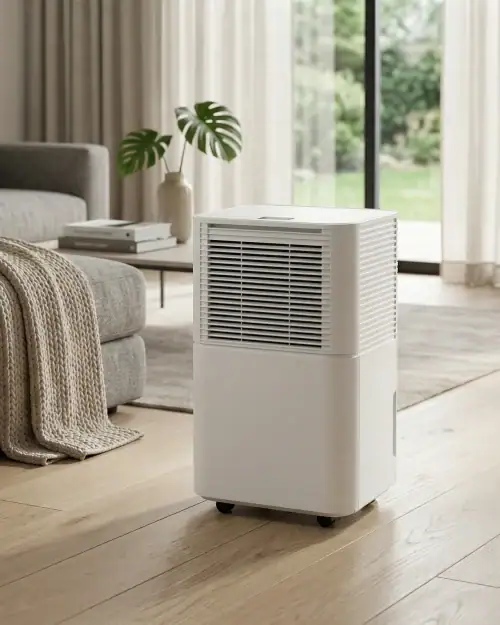
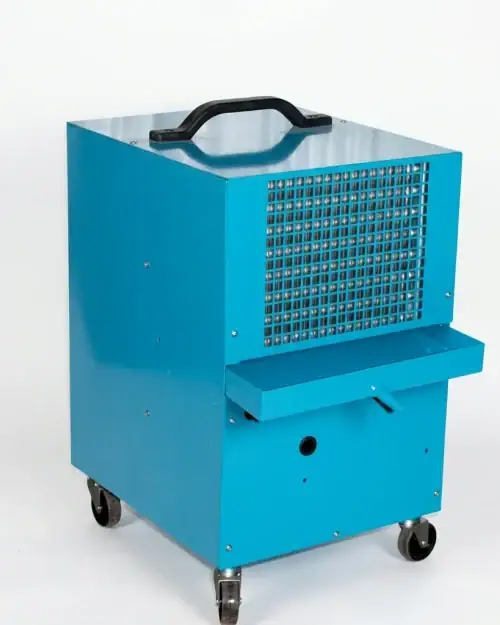
Size the machine to the space. Bigger machines pull more water a day, so they get a damp home back under control faster.
| Your situation | Best to hire | From (ex VAT) |
|---|---|---|
| One bedroom or a drying room for laundry | Compact 20 L dehumidifier | £19.99 a day |
| A single damp room in a home or flat | 38 L dehumidifier | £29.99 a day |
| A whole flat, or running overnight while you sleep | 43 L Dri-Eaz Cube (no tank to empty) | £39.99 a day |
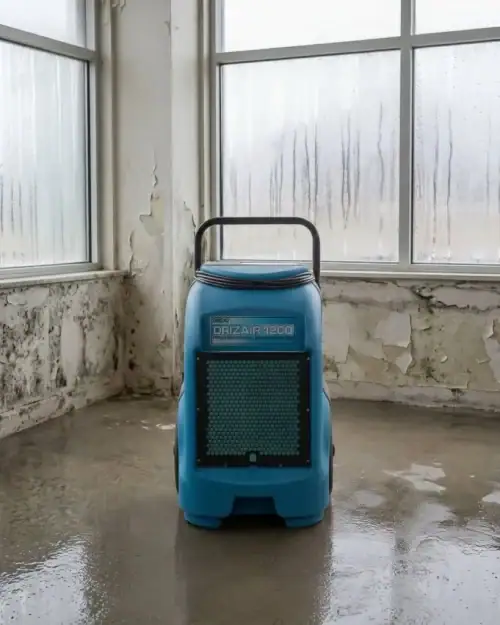
| Large rooms, open-plan spaces or a very damp house | 55 L DrizAir 1200 | £49.99 a day |
| Several rooms, or water has actually come in | 63 L LGR building dryer | £59.99 a day |
Hire for a week rather than a day if you can. A week costs less per day, and it gives the machine time to dry the walls, carpets and furniture as well as the air. For more on sizing, see what size dehumidifier do I need and how long should a dehumidifier run for.
A simple plan for a wet week
1. Check your humidity
Put a hygrometer in the dampest room. If it reads over 60% most of the day, the house needs drying, not just airing.
2. Pick one drying room
Choose one room for the washing. Put the airer and the dehumidifier in it and keep the door shut.
3. Air in short bursts
Open windows wide for five to ten minutes after showers and cooking. Use extractor fans and keep trickle vents open.
4. Keep a steady, low heat
Warm rooms hold condensation in the air where the dehumidifier can catch it, instead of on cold walls.
5. Move furniture off outside walls
Leave a few centimetres behind wardrobes and sofas on external walls so air can move and corners do not grow mould.
6. Move the dehumidifier around
Run it in the dampest room first, then the bedrooms at night. A larger machine on the landing with doors open can treat a small flat.
7. Wipe and treat early mould
Wipe condensation off windows each morning. If black spots appear, deal with them early; see how to get rid of black mould on walls.
Late October 2026 is a good example of why this matters. The Met Office named Storm Austen on 20 October, with warnings for strong winds across southern England and 20 to 30 mm of rain in many places, and more unsettled weather behind it. Weeks like this are when indoor humidity climbs fastest.
Frequently asked questions
Why is my house so damp when it rains?
Because more moisture is produced indoors than can escape. Washing dries inside, windows stay shut, the outdoor air is already wet and cold walls collect condensation. A dehumidifier removes that moisture from the air.
Should I run a dehumidifier when it is raining?
Yes. Rainy weather is when it is most useful. It dries the air inside the closed room, whatever the weather outside.
Why is the humidity in my house so high?
Usually a mix of indoor washing, showers, cooking, too little ventilation and cold walls. In wet weather all of these get worse at once. Readings above 60% for long periods are worth acting on.
Is it better to open windows or use a dehumidifier when it rains?
Do both, at different times. Open windows wide in short bursts after steamy activities, then close them and let the dehumidifier work. Leaving a window cracked open all day while the heating runs does little.
What size dehumidifier do I need for a damp flat?
For a whole flat, a 43 L machine such as the Dri-Eaz Cube is a good choice. For a single room, a 38 L is enough. For a large or very damp house, hire a 55 L.
How long should I hire a dehumidifier for?
For wet-weather damp, a week usually gives the best result and the lowest daily price. It gives time to dry the walls and soft furnishings as well as the air.
Is there a deposit?
Yes. A refundable deposit applies to every hire and is returned when the machine comes back in good condition. The amount is shown when you book.
Related guides
Not sure which size you need?
Tell the hire desk how many rooms are damp and how bad it is. We will suggest the right machine and deliver it across London.
Note: this guide is general information about humidity and condensation at home. Persistent damp patches, leaks or damaged walls need the cause found and fixed by a builder or damp specialist. Humidity ranges are from expert guidance quoted by Ideal Home (Meaco, Dryzone). Storm details are from the Met Office (October 2026). Prices are ex VAT as shown on our product pages in October 2026.

 Drone Survey & Mapping
 Drone Inspections