
 Drone Services
 Access Equipment
 Breaking & Drilling
 Cleaning Equipment
 Drying & Heating
 General Site Tools
Drying & Heating, Equipment Hire Guides
Extra Drying Capacity for Restoration Firms: Sizing, Cold Buildings and Cross-Hire
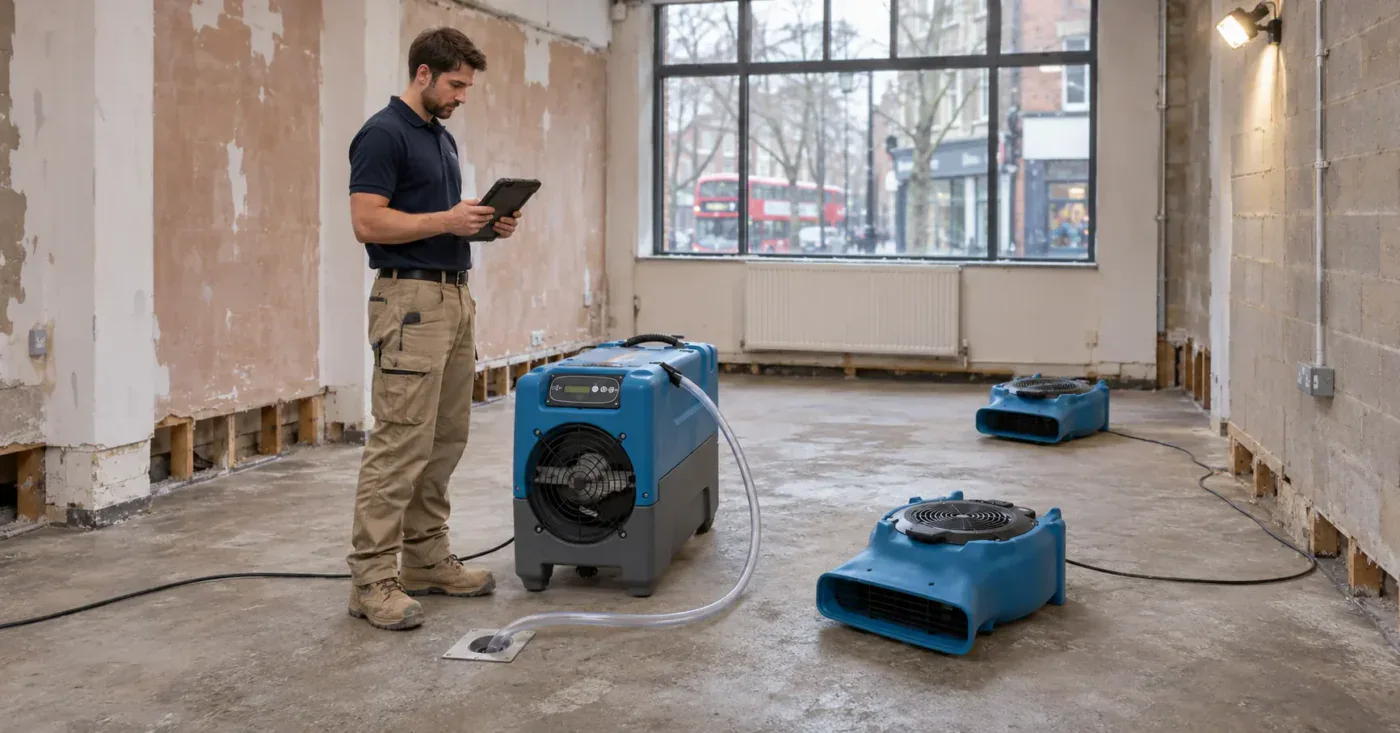
When storms and burst pipes fill the diary, add drying capacity by the week.
Every winter the same thing happens to London drying firms. A cold snap freezes pipes across a dozen postcodes, a storm pushes water into shops and offices, and every dehumidifier you own is already out on a job. The choice is to turn work away, wait for kit to come back, or add machines for as long as the busy spell lasts. This guide is for firms that already dry buildings for a living. It covers how to size a fleet by volume, how to dry a cold or unheated building, how to plan the power, how to run several sites at once and what a winter top-up fleet costs on a trade account.
How do drying firms add capacity in a busy winter?
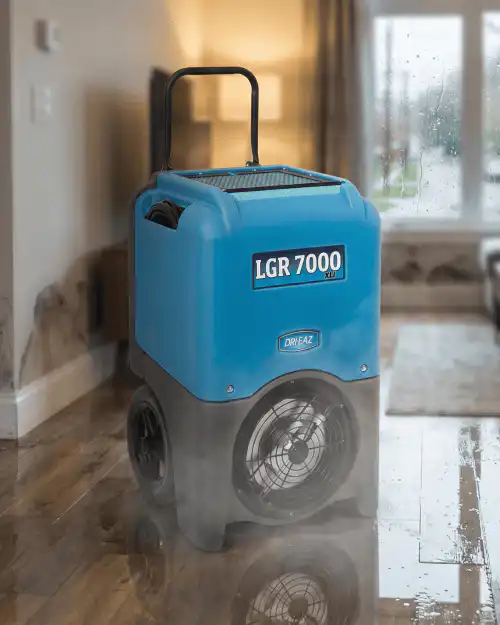
Most firms cross-hire: they hire extra dehumidifiers, usually low grain refrigerant (LGR) units, and air movers by the week while their own fleet is out, then send them back when the spell ends. Size the extra kit by room volume and the manufacturer’s AHAM rating, not by the headline litres. In a cold building, add electric heat before you add more dryers. Hireload hires the 95 L LGR (Dri-Eaz LGR 7000XLi, from £149.99 + VAT for up to 7 days), the 63 L LGR (from £119.99), air movers (from £29.99) and electric heaters, delivered across London from its Greenford depot. A free trade account takes 15% off every hire.
Why winter stretches every drying fleet
Calls arrive in clusters, not one at a time. Zurich reported almost 2,000 burst pipe claims in December 2022 alone, its highest month on record and 77% up on the year before.
Wind-driven rain through roofs, flat roofs and shop fronts lands on top of the domestic work, often on ground floors with large open areas.
Dehumidifier ratings are measured in warm air. In a cold, unheated building the same machine removes far less water, so each job keeps its kit for longer.
When a three-day dry becomes a two-week dry, the units you would normally move on to the next job stay where they are. That is when firms run short.
Five ways to add capacity, compared
When the fleet is full, there are only a few ways to take the next job. Most firms end up using more than one.
| Option | Works well when | The catch |
|---|---|---|
| Buy more machines | The extra demand is steady all year | Capital tied up in kit that sits idle in summer, plus servicing and storage |
| Wait for kit to come back | The customer can wait a few days | Materials keep absorbing water, so the job grows and secondary damage becomes more likely |
| Turn the job away | The job is outside your area or skills | The client, and often the referrer, goes to another firm |
| Borrow from another firm | You have a trusted partner with spare kit | They are usually busy at the same time as you |
| Cross-hire by the week | The busy spell lasts days or weeks | Book early in a cold snap, as demand rises across London at once |
Size a large loss by volume, not floor area
Restoration firms usually size dehumidification by the volume of the affected space and how wet it is, then check the plan against daily readings. Two points matter when you add hired units to your own fleet.
| Job | Air volume | AHAM capacity needed | Hired fleet |
|---|---|---|---|
| Leak in an office suite, 60 m² at 2.6 m | 156 m³ | About 52 L a day | 1 × 95 L LGR + 6 air movers |
| Storm water on a shop floor, 120 m² at 3 m | 360 m³ | About 120 L a day | 2 × 95 L + 1 × 63 L LGR + 12 air movers |
| Burst pipe in an empty house, 80 m² at 2.5 m | 200 m³ | About 67 L a day, plus heat | 1 × 95 L + 1 × 63 L + 4 air movers + 2 heaters |
| Office floor after a riser leak, 300 m² at 2.7 m | 810 m³ | About 270 L a day | 5 × 95 L + 24 air movers |
For drying after building work rather than water damage, see which LGR each trade hires and how many.
Drying a cold or unheated building
Winter losses often happen where the heating is off: empty houses, closed shops, offices over the holidays and buildings where the boiler has failed. These are the points that decide whether a cold job dries.
For the order to run heat, dryers and air movers on a site, see heater vs dehumidifier for drying.
Plan the power before the kit arrives
A big drying set-up can trip circuits in an older property, especially once heaters go in. Total the load on each circuit before the van arrives, and ask the building’s electrician what each circuit can carry.
| Machine | Supply | Typical draw | Planning note |
|---|---|---|---|
| 95 L LGR (LGR 7000XLi, 230 V) | 13 A plug | About 920 W, 4 A | Several can share a circuit; count each one in the total |
| 3 kW fan heater (240 V) | 13 A plug | 3,000 W, about 13 A | Takes a full socket’s rating. Give each heater its own circuit where you can |
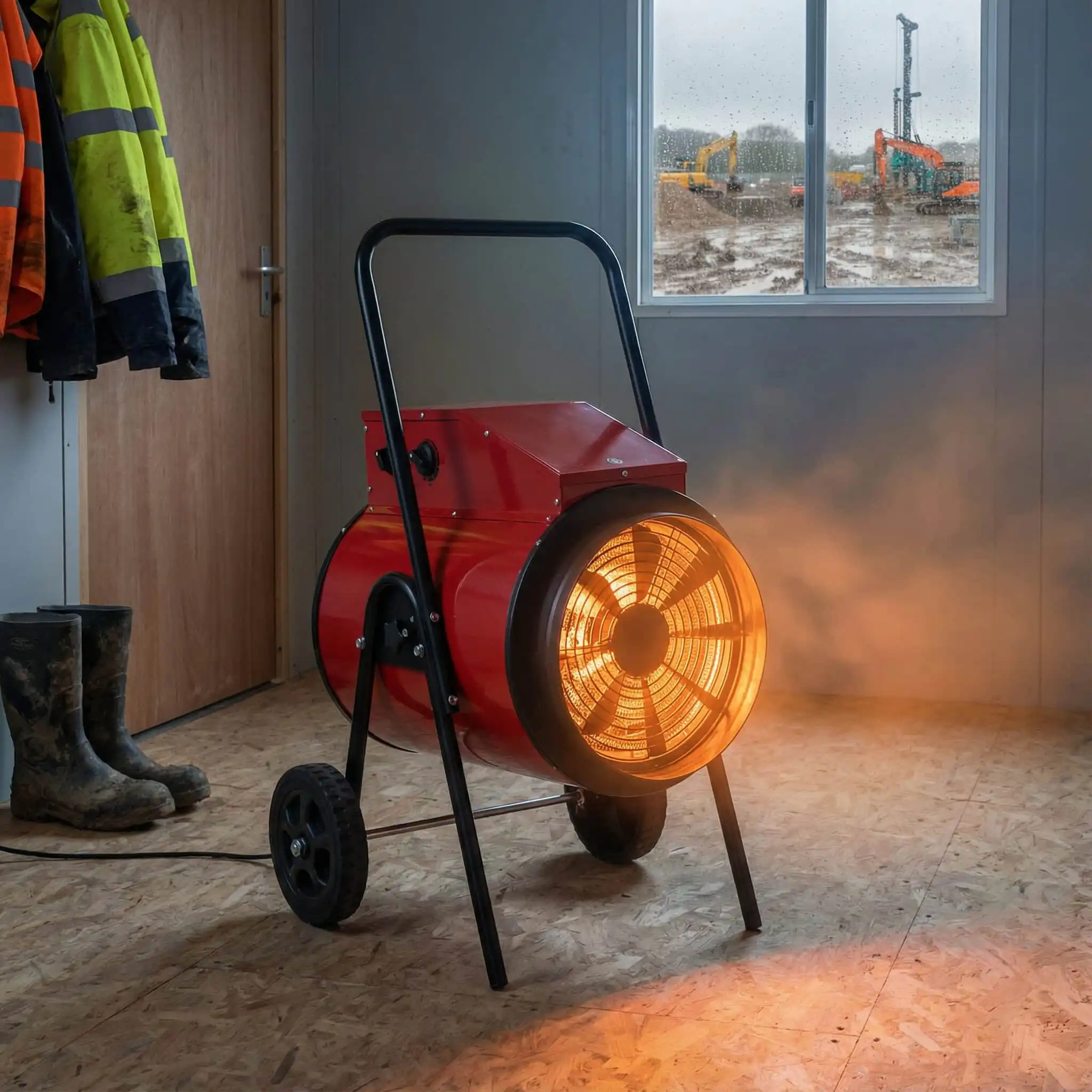
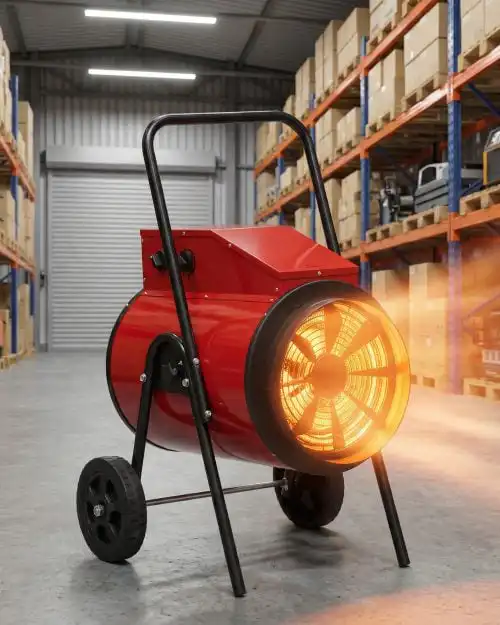
| 15 kW fan heater | 3-phase | 15 kW | Needs a 3-phase supply, so it suits commercial buildings and sites, not most homes |
| Air movers (240 V) | 13 A plug | Check the rating plate | Count every air mover in the circuit total |
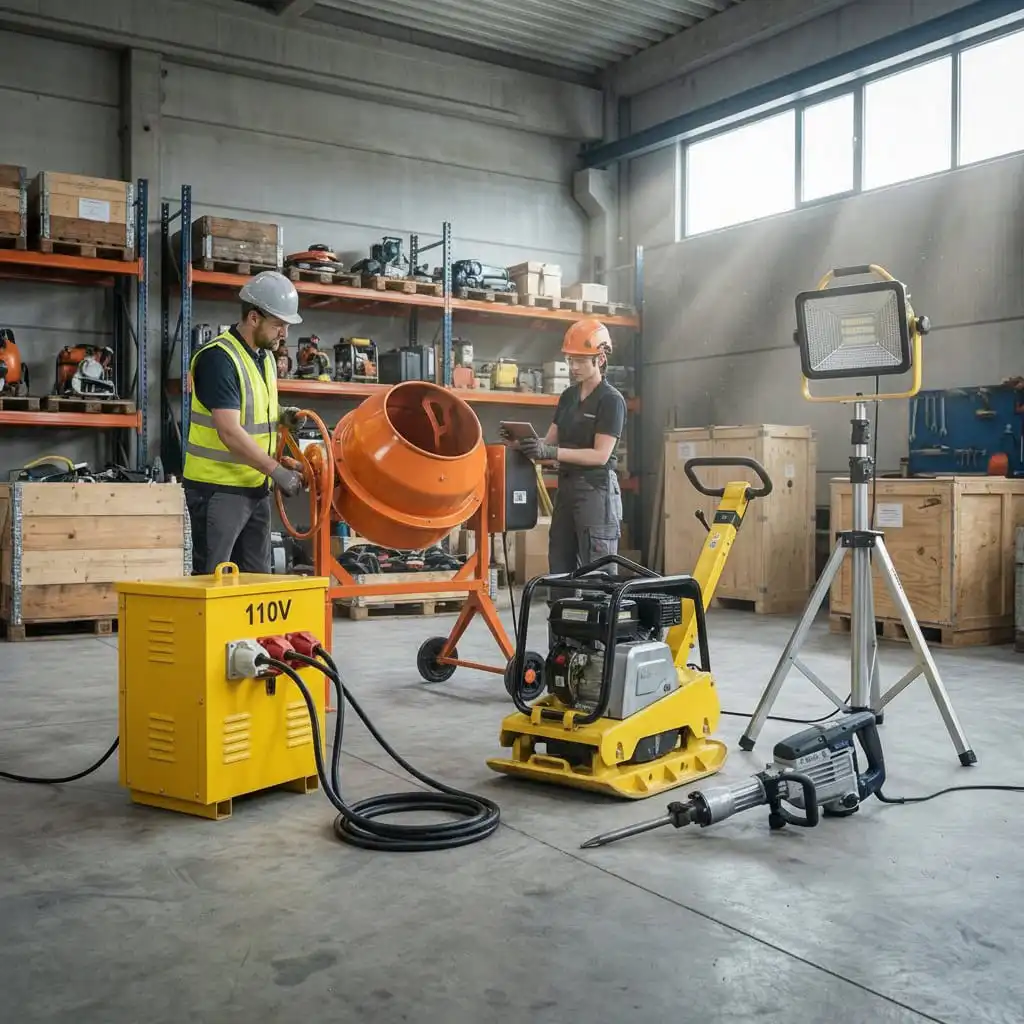
On sites that run 110 V, use a 3 kVA site transformer for 110 V tools and check the supply each 230 V machine needs before you plug in.
95 L LGR building dryerLarge losses, whole floors, cold buildings£149.99 + VAT up to 7 daysHIRE NOW →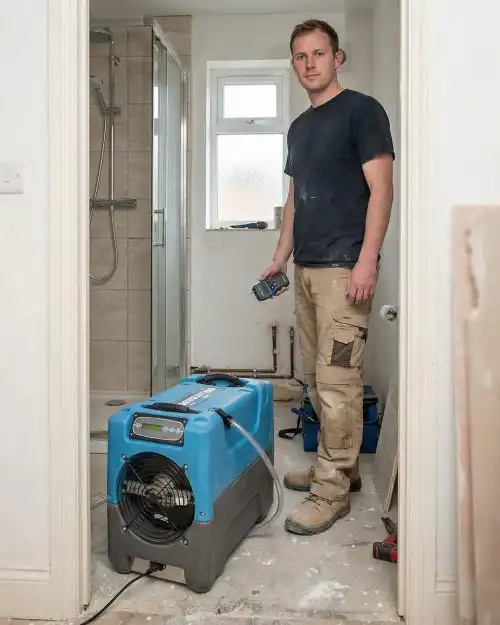

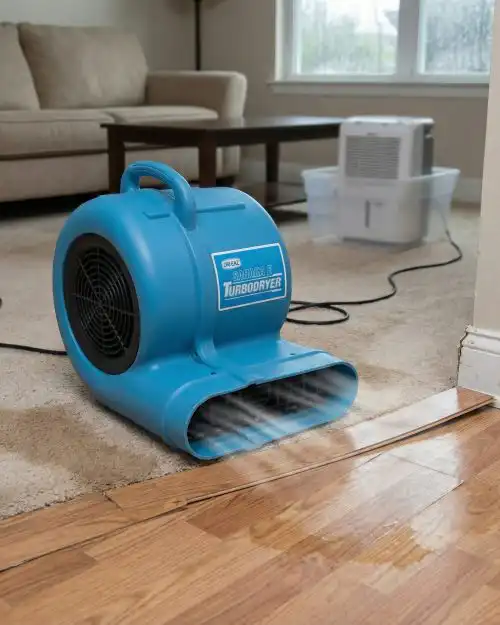
What a winter top-up fleet costs
Drying jobs run in weeks, so the weekly rate matters more than the day rate. These fleets use our prices for 3 to 7 days, listed at standard rates and at trade account rates (15% less).
| Fleet | Typical job | Up to 7 days | With 15% trade discount |
|---|---|---|---|
| 2 × 63 L LGR + 4 air movers | Top-up for your own fleet in a busy week | £359.94 | £305.95 |
| 1 × 95 L LGR + 6 air movers | Leak in an office suite | £329.93 | £280.44 |
| 1 × 95 L + 1 × 63 L + 4 air movers + 2 × 3 kW heaters | Burst pipe in a cold, empty house | £469.92 | £399.43 |
| 2 × 95 L + 1 × 63 L + 12 air movers | Storm water on a shop floor | £779.85 | £662.87 |
| 5 × 95 L LGR + 24 air movers | Office floor after a riser leak | £1,469.71 | £1,249.25 |
Single machines for 3 to 7 days: 95 L LGR £149.99, 63 L LGR £119.99, air mover £29.99, 3 kW fan heater £39.99 and 15 kW 3-phase heater £59.99. Longer hires add a daily rate after the first week, shown on each product page. Trade pricing comes off the hire rate only, so zone delivery and the refundable deposit stay at full price. For bundled kit, see which drying package do I need.
Running drying on several sites at once
1. List each job with its volume
For every address, note the wet area, ceiling height, whether the heating works and when you need the kit on site.
2. Book each site as its own order
One trade account, one order per address, so each site has its own delivery, extension and collection.
3. Name a contact and the access
Give the hire desk a name and number for each site, plus key safe or concierge details for empty properties.
4. Set up drainage for unattended running
Run each LGR’s drain hose to a sink, gully or bucket you can check, so the machines keep working between visits.
5. Take readings on every visit
Record material moisture, temperature and humidity in the room and at the dryer outlet, and keep the log with the job.
6. Step down and off-hire as each site dries
Take out air movers as surfaces reach target, keep the LGRs to finish, then message the hire desk to collect.
Readings that tell you when to step down
Hired kit costs money every day it stays on site, so step-down decisions matter as much as the first set-up.
Cross-hiring on a trade account
Hireload is a CHAS-verified supplier delivering drying kit across London from our depot in Greenford (UB6), with delivery priced by zone. A free trade account suits firms that cross-hire through the winter.
Open an account on our trade account page, or browse our full dehumidifier range.
Frequently asked questions
How do restoration firms get extra drying capacity in winter?
Most cross-hire. They rent extra LGR dehumidifiers and air movers by the week while their own fleet is out, then off-hire them when the busy spell ends. Hireload hires 95 L and 63 L LGRs, air movers and electric heaters across London, with 15% off on a trade account.
How many LGR dehumidifiers does a large loss need?
Size by volume. For a Class 2 loss, a common starting point is about 1 litre a day of AHAM-rated LGR capacity for every 3 m³ of air. An 810 m³ office floor needs about 270 L a day, which is five 95 L LGRs, then you adjust after the first readings.
What is the difference between “95 L” and the AHAM rating?
95 L is what the machine can extract in hot, saturated air. The AHAM rating is measured at 26.7 °C and 60% RH and is the better figure for planning: about 58 L a day for the 230 V LGR 7000XLi.
Do LGR dehumidifiers work in a cold, unheated building?
They are rated to run from 1 °C, but they remove far less water in the cold and spend more time defrosting. Bring the space up to temperature with electric heat, then let the LGRs do the work.
Can we use gas heaters to warm a wet building?
It slows drying. Burning gas or paraffin puts water vapour into the air, roughly 1.6 kg of water for every kilogram of propane burnt. Electric heaters add heat without adding moisture.
How much power does a 95 L LGR draw?
The 230 V LGR 7000XLi draws about 920 W, or 4 A, from a standard 13 A plug. A 3 kW fan heater draws about 13 A, so give each heater its own circuit where you can.
Can we hire drying kit for several sites at the same time?
Yes. Book each site as its own order on one trade account, with its own delivery date, contact and collection, and extend or off-hire each one separately.
How do delivery and collection work?
Kit is delivered to the property across London from our Greenford depot, with delivery priced by zone. Call the hire desk with the address and the date you need it, and message us to arrange collection when the job is dry.
Is there a trade discount on drying kit?
Yes. A free trade account cuts 15% from hire rates. Zone delivery and the refundable deposit are charged in full.
What happens if a job runs longer than a week?
Extend the hire by message. After the first week, each product adds a daily rate, shown on its product page, so long jobs stay predictable.
Related guides
Fleet full this week?
Send the addresses, volumes and dates. The hire desk will confirm what is available and schedule delivery to each site across London.
Note: this guide is general planning information for drying professionals. It is not a drying specification, an electrical assessment or advice on any insurance claim. Sizing figures are starting points based on the IICRC S500 approach; always check against the current edition of the standard you work to and your own readings. Machine figures are from manufacturer and UK supplier specifications (Dri-Eaz/Legend Brands; National Heater Shops for the 230 V LGR 7000XLi). Burst pipe figures are from Zurich UK, November 2023. Prices are ex VAT from our product pages in November 2026, subject to availability; trade discount terms are confirmed when your account opens.

 Drone Survey & Mapping
 Drone Inspections