
 Drone Services

 Access Equipment

 Breaking & Drilling
 Cleaning Equipment
 Drying & Heating
 General Site Tools
Drying & Heating, Equipment Hire Guides
Condensation in Commercial Buildings: A Guide for Warehouses, Offices, Shops and Halls
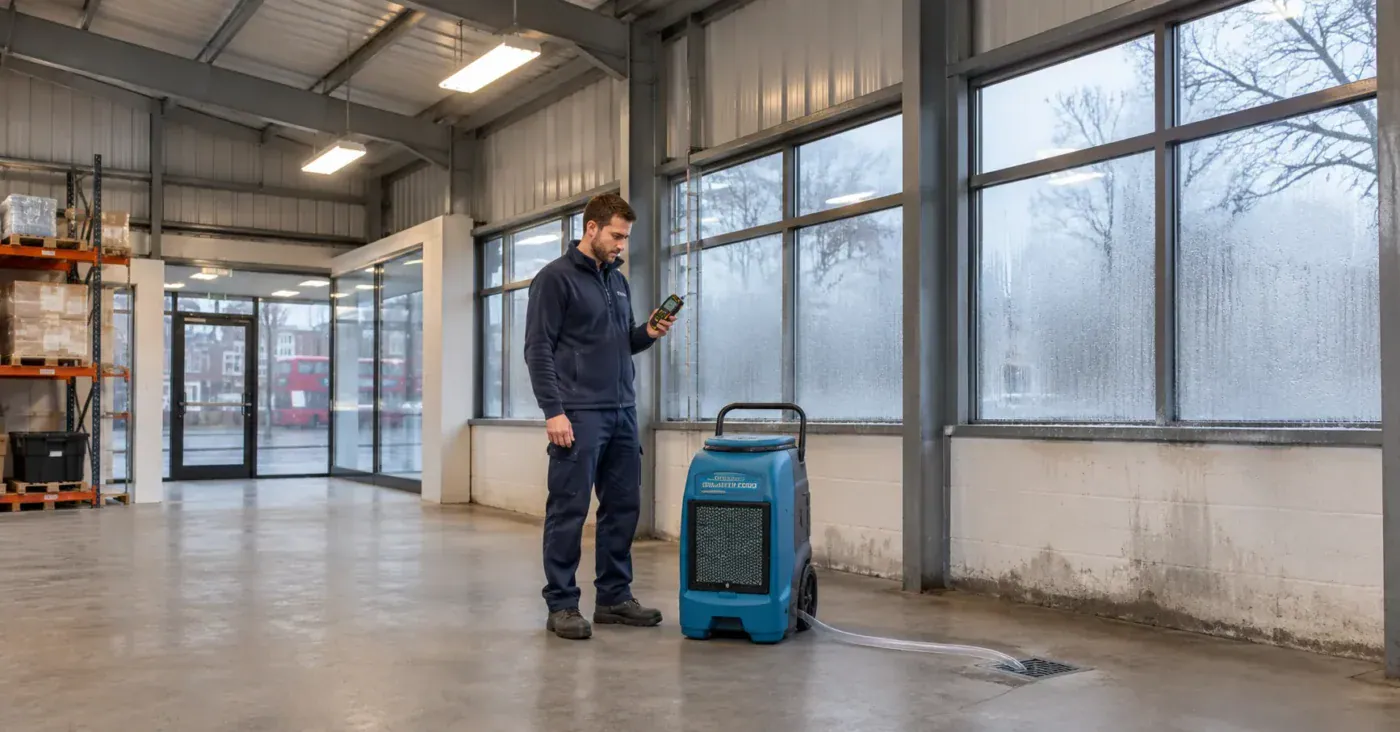
Water inside a commercial building in winter is often not a leak. It is condensation.
Drips falling from a warehouse roof onto racking. Black spots on the walls of an office floor that has been empty since the last tenant left. Wet windows and a musty smell in a church hall every Monday morning. Damp cardboard in a storeroom. These problems share one cause: warm, moist air meeting a cold surface. This guide is for the people who look after commercial buildings. It explains why condensation forms in each type of building, what it damages, and how to control it through the winter with dehumidifiers and steady heat.
How do you control condensation in a commercial building?
Condensation forms when air meets a surface colder than its dew point. You control it in two ways: take moisture out of the air with a dehumidifier, and keep surfaces warmer with steady background heat instead of short bursts. Cut the moisture you add, such as gas heaters, wet deliveries and open loading doors. For occupied offices, schools and halls, a 55 L Dri-Eaz DrizAir 1200 (from £89.99 + VAT a week) runs day and night with continuous drainage. For warehouse bays, empty floors and large halls, a 95 L LGR building dryer (from £149.99) moves more air. Hireload delivers both across London from its Greenford depot, with a daily rate for long hires and 15% off on a trade account.
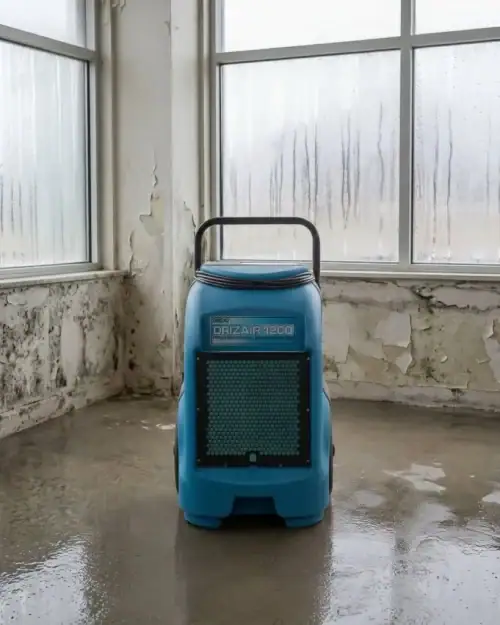
What condensation is, in one minute
Air always holds some water as invisible vapour. Warm air can hold more than cold air. When air touches a surface that is colder than its dew point, it cannot keep all that vapour, and the surplus turns back into water on the surface. That is condensation: the same thing that makes a cold drink “sweat”. In a building, the cold surfaces are single glazing, metal roof sheets, steel frames, external walls, floor slabs and anything that has been sitting in an unheated space.
| Room air | Relative humidity | Dew point | What it means |
|---|---|---|---|
| Heated office, 20 °C | 50% | About 9 °C | Only very cold glass or steel gets wet |
| Busy hall, 18 °C | 70% | About 12 °C | Cold external walls and windows run with water |
| Lightly heated store, 12 °C | 80% | About 9 °C | Stock, cardboard and steel near the walls stay damp |
| Unheated warehouse, 8 °C | 90% | About 6.5 °C | A roof sheet chilled by a clear night sky drips |
The lower the humidity, the colder a surface has to be before water appears. That is why taking moisture out of the air works even when you cannot warm every surface.
Where condensation shows up, building by building
| Building | Where it forms | Usual cause | Kit that usually suits |
|---|---|---|---|
| Warehouses and logistics | Underside of roof sheets, steel frames, racking, stock near walls | Cold roof at night, open loading doors, wet deliveries | 95 L LGR per bay |
| Stores and archive rooms | Boxes, paper, shelving against external walls | Little heat, little air movement | 55 L or 38 L on a drain |
| Occupied offices | Windows, window reveals, corners of external walls | Heating off overnight, people and kitchens adding moisture | 55 L running out of hours |
| Empty offices and void units | Walls, ceilings, carpets, finishes | No heat and no airflow for weeks | 55 L or 95 L plus background heat |
| Shops and showrooms | Shop windows, stockroom walls, basement stores | Doors opening onto wet streets, cold basements | 55 L in the stockroom or basement |
| Schools and nurseries | Classroom windows, sports halls, changing rooms | Full rooms, wet coats, heating off over holidays | 55 L in holidays and out of hours |
| Churches and community halls | Walls, windows, wooden floors and pews | Heat switched on only for services and events | 55 L or 95 L, plus steady low heat |
| Basements and plant rooms | Walls, cold pipes, floors | Cold ground and poor ventilation | 55 L with the hose to a drain |
When a warehouse roof drips
On a clear, still winter night a metal roof loses heat to the open sky and can fall below the dew point of the air inside. Water forms on the underside of the sheets and drips onto racking and stock below, often in the early morning. It is easy to mistake for a roof leak, but it happens on dry nights.
Empty buildings over winter
An office floor between tenants, a shop waiting for a new lease or a building waiting for refurbishment has no people, no heat and no air movement. Its walls and floors cool right down, and any moist air that gets in condenses on them. After a few weeks there is a musty smell, marks on the walls and damage to finishes and carpets.
Occupied buildings: offices, schools and halls
In buildings people use every day, condensation usually comes from the heating pattern. The building cools overnight or over the weekend. In the morning the heating comes on, people arrive with wet coats, kettles boil and cleaners mop the floors. The warm, moist air meets walls and windows that are still cold, and they run with water.
What humidity to aim for
Mould can start to grow when the air at a surface stays at about 80% relative humidity, before any water is visible.
The Archives & Records Association recommends a consistent 35% to 60% RH for paper archives, following BS 4971.
Sharp ups and downs in heat and humidity stress timber, finishes and stored goods more than steady conditions do.
A humidity meter in each problem area shows whether the dehumidifier is keeping up, and when you can switch it off.
Which dehumidifier for which space
For condensation control you are holding a building steady over weeks, not drying out a flood. The right machine depends on the size of the space, whether people are in it and whether there is a drain nearby.
| Space | Machine | Why it suits |
|---|---|---|
| Office floor, classroom, meeting rooms, small hall | 55 L DrizAir 1200 | Continuous drainage through a 12.2 m hose for unattended running, rated to work from 1 °C |
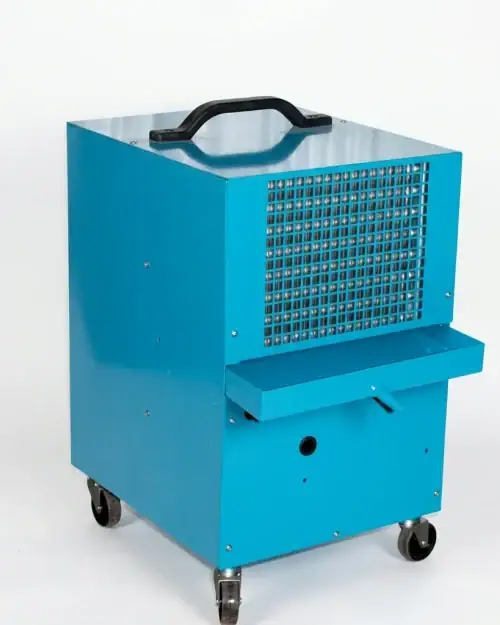
| Warehouse bay, empty office floor, large hall or church | 95 L LGR building dryer | The most capacity in our range, keeps working as the air gets drier, draws about 4 A |
| Several rooms in one unit, or a mid-sized store | 63 L LGR | A step between the 55 L and the 95 L |
| Single store room, archive room or small basement | 38 L dehumidifier | Enough for one closed room |
Refrigerant dehumidifiers remove less water in cold air. Below about 15 °C, output drops noticeably, so a little background heat helps them work. For cold stores that cannot be heated at all, a desiccant dryer is the specialist option. Not sure what size you need? Send the hire desk the floor area, ceiling height and how the building is heated, or see our dehumidifier range.
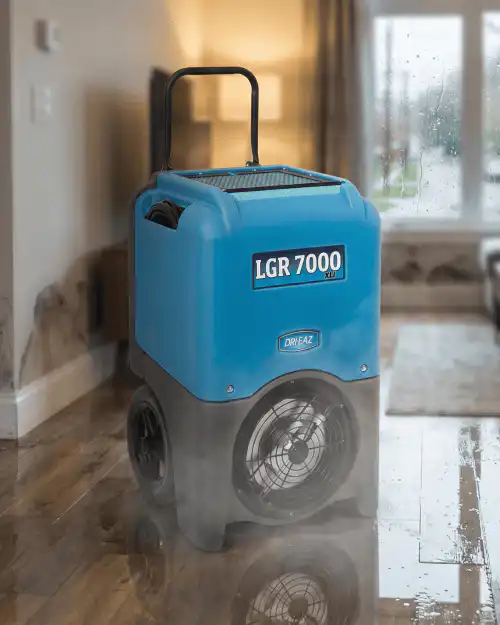 95 L LGR building dryerWarehouse bays, empty floors, large halls£149.99 + VAT up to 7 daysHIRE NOW →
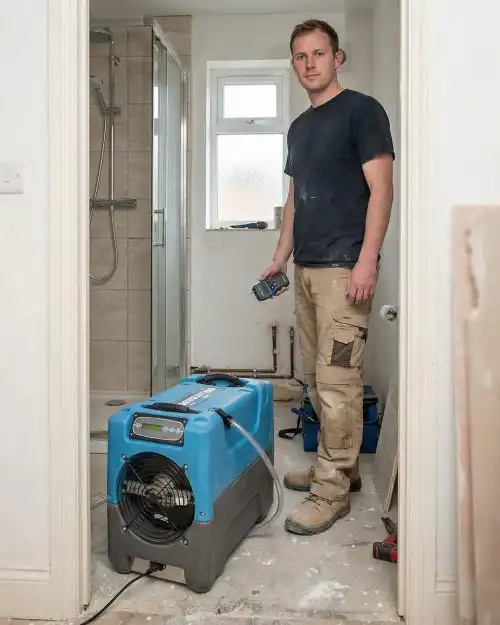
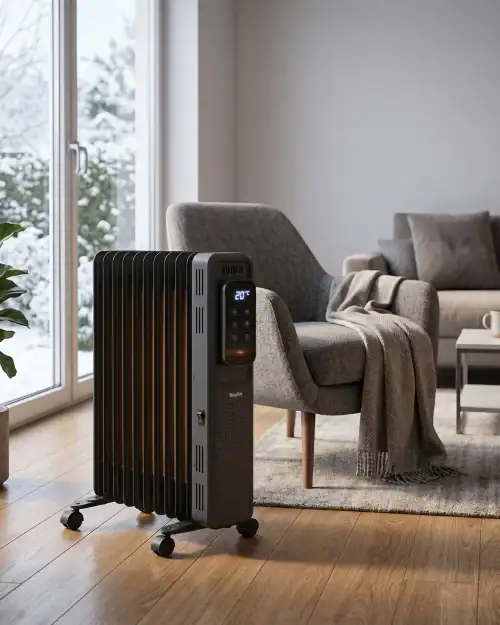 3 kW oil-filled radiatorSilent background heat for empty or occupied rooms£39.99 + VAT up to 7 daysHIRE NOW →
Weekly and long-term hire rates
Condensation control usually runs for weeks or the whole winter, so the long-hire rate matters most. These are the rates shown on each product page, ex VAT.
| Machine | 3 to 7 days | Hires of 8 days or more |
|---|---|---|
| 55 L DrizAir 1200 | £89.99 | £12.50 a day |
| 63 L LGR | £119.99 | £16.80 a day |
| 95 L LGR building dryer | £149.99 | £19.99 a day |
| 3 kW oil-filled radiator | £39.99 | £5.60 a day |
A free trade account takes 15% off these hire rates. Delivery is priced by zone from our Greenford depot, and a refundable deposit applies to every hire. To compare running costs, see what a hired dehumidifier costs to run.
Several buildings? Use one trade account
Hireload is a CHAS-verified supplier. Open an account on our trade account page.
Frequently asked questions
What causes condensation in a commercial building?
Warm, moist air meeting a surface colder than its dew point. In commercial buildings the usual triggers are cold roofs and walls, heating that switches off overnight or for weeks, people and kitchens adding moisture, and doors opening onto wet weather.
Why does a warehouse roof drip in winter when it is not raining?
On clear, still nights a metal roof loses heat to the sky and falls below the dew point of the air inside, so water forms under the sheets and drips. Lowering the humidity in the bay with a dehumidifier means the roof has to get much colder before it drips.
Will a dehumidifier stop condensation in a warehouse?
It controls it by lowering the dew point of the air. Start with one 95 L LGR in each affected bay and check the humidity after a few days. Keep loading doors shut between vehicles, and plan roof insulation with a specialist for a permanent fix.
Which dehumidifier suits an office, school or church hall?
A 55 L DrizAir 1200 for most rooms and small halls: it drains continuously through a hose and can run overnight unattended. For a large hall or church, a 95 L LGR moves more air.
How do you keep an empty building free of condensation over winter?
Keep low, steady background heat on, run a dehumidifier with its hose to a drain, leave internal doors open so air can circulate, and check a humidity meter on each visit.
What humidity should a commercial building be kept at?
Keep surfaces well below the roughly 80% relative humidity where mould can start. For paper archives, the Archives & Records Association recommends a steady 35% to 60%.
What is a condensation dehumidifier?
It is another name for a refrigerant or compressor dehumidifier. It cools air over a cold coil below the dew point, so the water condenses and drains away. The 55 L, 63 L and 95 L machines we hire all work this way.
Do dehumidifiers work in a cold warehouse?
Refrigerant machines are rated to run from about 1 °C, but they remove less water in cold air and output drops noticeably below about 15 °C. A little background heat helps. For cold stores that cannot be heated, a desiccant dryer is the specialist option.
How much does it cost to hire a dehumidifier for the winter?
For hires of 8 days or more, the 55 L is £12.50 a day and the 95 L LGR £19.99 a day, ex VAT, with 15% off on a trade account. Delivery is priced by zone and a refundable deposit applies.
Can you supply dehumidifiers to several buildings at once?
Yes. Place one order per building under a single trade account. Every site keeps its own delivery slot and contact, and each machine can stay or go back on its own timetable.
Related guides
Condensation in one of your buildings?
Send the address, floor area and how the building is heated. The hire desk will suggest the size and number of machines and arrange delivery across London.
Note: this guide is general information on controlling condensation with hired equipment. It is not a building survey, and a dehumidifier does not fix roof, wall or ventilation defects; ask a surveyor or specialist about permanent solutions. Dew points are calculated with the Magnus formula and rounded. The 80% figure is from Schöck’s guidance on condensation in buildings; the archive range is from the Archives & Records Association (BS 4971). Machine figures are from manufacturer specifications and our product pages. Rates were taken from our product pages in November 2026 and exclude VAT. Stock is subject to availability, and trade terms are set when your account is opened.

 Drone Survey & Mapping
 Drone Inspections