
 Drone Services

 Access Equipment

 Breaking & Drilling

 Cleaning Equipment

 Drying & Heating

 General Site Tools

Drying & Heating, Equipment Hire Guides
Mould on Clothes and Inside Wardrobes: How to Stop It
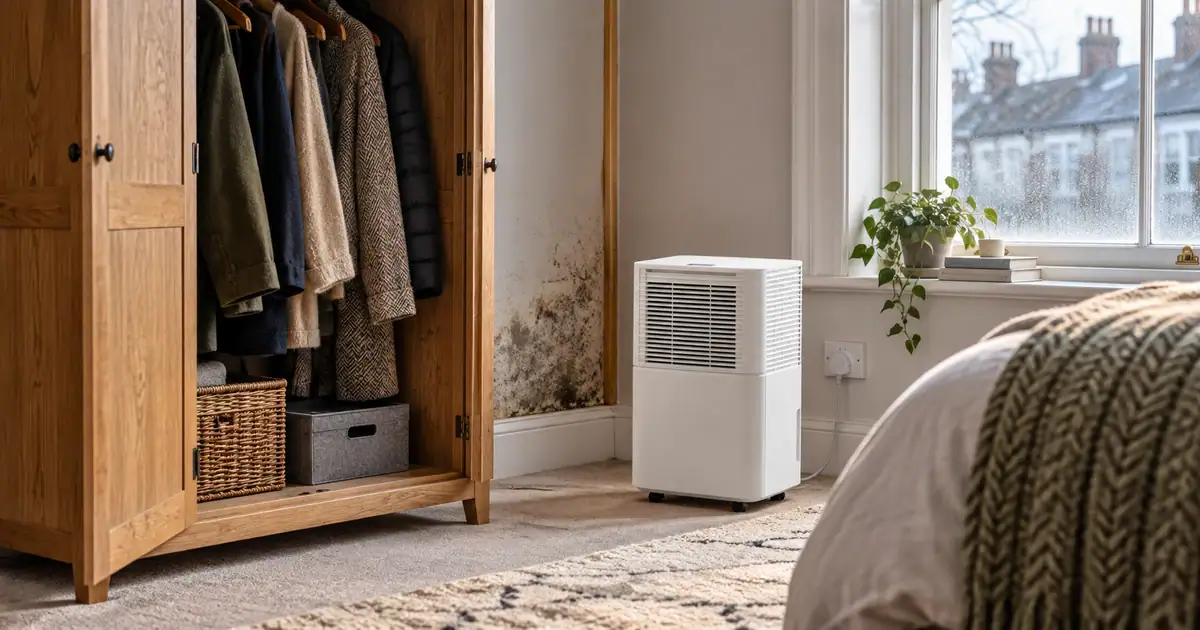
Mould in a wardrobe is a cold wall with no air moving.
White fuzz on a leather jacket, green spots on a winter coat, a musty smell in everything hanging at the back. It is not dirty clothes and it is not bad luck. It is a wardrobe pushed against the coldest wall in the house, packed full, with still air and nowhere for moisture to go. This guide covers how to save the clothes, and what actually stops it happening again.
Why do clothes go mouldy in a wardrobe, and how do you stop it?
Mould needs three things: moisture, still air and something to grow on. A wardrobe against an outside wall supplies all three in winter. The wall behind it is the coldest surface in the room, the humid air in the room condenses on it, the packed clothes stop any air moving, and natural fibres, leather and dust are exactly what mould feeds on.
Stopping it is four things: empty and clean it, move the wardrobe a few centimetres off the wall, stop putting anything damp inside, and bring the humidity of the room down to around 50 to 55%. The first three are free. The fourth is what a dehumidifier is for, and in a bedroom a small quiet machine does it better than a large one.
Why wardrobes go mouldy
The same five conditions turn up in nearly every wardrobe we get asked about.
An outside wall, a north-facing wall or a chimney breast sits several degrees below the rest of the room. Push furniture flat against it and the surface behind gets colder still, because no warm air can reach it.
A closed, full wardrobe has essentially still air inside it. Still air next to a cold surface is how condensation forms and stays, which is why the back wall and the clothes nearest it go first.
Clothes that were dried indoors and not quite finished, a coat worn in the rain, gym kit, shoes, a towel. Each one adds moisture to a space with no way of losing it.
Drying washing on a radiator, a bathroom with poor extraction, cooking without a fan: the moisture spreads through the house and settles in the coldest, stillest places. Our guide on drying clothes indoors without causing damp deals with the biggest single source.
A rail so full that nothing can move, with boxes and bags on the floor of the wardrobe, is a mould incubator. Air cannot circulate and you cannot see what is happening until the smell arrives.
Built-in wardrobes on an outside wall are the worst case, because there is no gap at all between the back panel and the cold masonry. Freestanding furniture at least gives you the option of pulling it forward.
Saving the clothes
Most things survive if they are dealt with promptly. Take everything outside or into a well ventilated room before you start brushing anything, so the spores are not released over the bed. You can hire a dehumidifier in London from us in every size we stock.
| Item | What usually works | Watch out for |
|---|---|---|
| Cotton, linen and synthetics | Brush off dry outdoors, then wash at the highest temperature the care label allows and dry fully, ideally outdoors or in a tumble dryer | Washing at 30°C and line drying indoors often leaves the smell behind |
| Wool and knitwear | Brush dry, air outside, then wash on a wool cycle or hand wash and dry flat with air moving around it | Heat and agitation shrink wool; do not try to boil the problem away |
| Leather and suede | Wipe the surface with a cloth, let it dry naturally away from heat, then condition the leather | White bloom is common on leather and is usually surface mould, not damage, if caught early |
| Silk and delicates | Air first, then follow the care label or take it to a cleaner and tell them it is mould | Home remedies stain silk more often than they save it |
| Shoes and boots | Empty, brush outside, wipe out, then dry slowly with air moving — not on a radiator | Drying leather fast cracks it; stuff with paper and give it days rather than hours |
| Suitcases, bags and belts | Wipe down, dry completely, and store somewhere with air movement rather than back in the wardrobe | Zips and linings hold damp long after the outside feels dry |
| Anything heavily affected or valuable | A specialist cleaner, and say that it is mould when you book it in | Cleaners can refuse badly affected items, so go early rather than late |
While you are doing it:
Mould on the wall behind the wardrobe is a separate job, and our guide on getting rid of black mould on walls covers it properly.
Stopping it coming back
In this order, and the first four cost nothing.
1. Pull the wardrobe off the wall
Five centimetres is enough to let air pass behind it, and it makes a visible difference within weeks. For a built-in wardrobe on an outside wall, drill or cut discreet vents in the doors or the plinth so the inside is not sealed, and leave a gap behind anything stacked against the back panel.
2. Stop packing it solid
Air has to be able to move between garments. If the rail is so full that nothing slides, take a quarter out and store it elsewhere. Boxes on the wardrobe floor block the only other route air has.
3. Only put dry things away
Clothes that were dried indoors need to be properly dry, not nearly dry. Coats worn in the rain go on a hook until they are dry. Shoes get a day out of the cupboard. Gym kit does not live in a wardrobe at all.
4. Cut the moisture in the room
Wet washing on a radiator puts litres into a bedroom. Extractor fans run during and after showers. Keep the bedroom door open during the day if the room is cold and still. This is the part that fixes the whole room, not just the wardrobe.
5. Bring the humidity down and hold it
A hygrometer costs a few pounds and tells you where you actually are. Somewhere around 50 to 55% relative humidity keeps a house out of mould territory. A small dehumidifier running on a humidistat holds that without over-drying the room.
6. Check again during the first cold snap
The test is a cold week, not a mild one. Look at the back wall of the wardrobe and the garments nearest it on a cold morning. Dry and clean means the set-up is working; damp means one of the first four steps has slipped.
One thing that does not work: hanging a tub of moisture absorbing crystals in the wardrobe and leaving everything else the same. It removes a token amount of water compared with what a bedroom produces overnight, and it does nothing about the still air or the cold wall.
What a dehumidifier actually does here
It dries the room, not the wardrobe. That is the right way round: lower the humidity of the air in the bedroom, and the air inside the wardrobe follows, as long as it is not sealed shut. A machine with a humidistat only runs when the air needs it, which matters in a room where someone is sleeping.
Which machine for a bedroom:
Not sure? Our sizing guide works from the space, and we will happily tell you on the phone that a bedroom does not need the big one.
A week or two of hire is usually enough to dry a room down and get the wardrobe back to normal, after which the free steps above keep it there. If the room goes damp again every winter, the wider damp guide looks at the house rather than the cupboard.
What it costs
A wardrobe problem is a short hire: dry the room down, sort the storage, hand the machine back. Current London prices, before VAT:
| Machine | 1 day | 2 days | Up to a week | Longer hires |
|---|---|---|---|---|
| Compact 19 L | £19.99 | £24.99 | £34.99 | from £4.50 a day |
| 38 L dehumidifier | £29.99 | £44.99 | £59.99 | from £8.40 a day |
| Dri-Eaz Cube with pump | £39.99 | £59.99 | £74.99 | from £11.20 a day |
| High-airflow air mover | £15.49 | £23.49 | £29.99 | from £4.20 a day |
Pick your dates on the product page and the exact total appears before you book. A refundable deposit and photo ID apply to every hire. Delivery and collection across London can be added at checkout, or collection from our Greenford depot is free. Our running cost guide works out the electricity for your tariff, which for a small machine on a humidistat is modest.
Mould in wardrobes: common questions
Why are my clothes mouldy but the room looks fine?
Because the wardrobe is colder and stiller than the room. The air behind and inside it sits against an outside wall with nothing moving, so moisture condenses there first. The room can look and feel perfectly normal while the back of the wardrobe is at the dew point every night.
Can mouldy clothes be saved?
Usually, if you deal with them promptly. Brush off outdoors, wash at the highest temperature the care label allows and dry fully. Leather, silk and heavily affected items are better taken to a cleaner, and it is worth telling them it is mould when you book it in.
Does washing at 30 degrees kill mould?
It removes a lot of it but often leaves the smell, which is the giveaway that something is still in the fabric. Wash as hot as the garment allows, dry it completely, and deal with the wardrobe at the same time or it will simply happen again.
Is mould in a wardrobe dangerous?
It is not something to live with, and damp and mould in a home are worth dealing with promptly rather than ignoring. If anyone in the house has asthma, a breathing condition or symptoms they think are linked, that is a conversation for a doctor rather than a hire company.
Should I leave the wardrobe doors open?
It helps, and it is free. Open doors let the air inside the wardrobe join the air in the room, which is drier and warmer. Combined with pulling the furniture off the wall, that alone solves a lot of mild cases.
Do moisture absorbing crystals work?
They take out a token amount of water compared with what a bedroom produces overnight, and they do nothing about still air or a cold wall. They are a tidy addition to a drawer, not a solution to a wardrobe full of mould.
What humidity should the bedroom be?
UK building-services guidance puts 40 to 60% relative humidity as the sensible range for homes. Holding around 50 to 55% keeps a room out of mould territory without over-drying it. A cheap hygrometer tells you where you are now.
Will a dehumidifier in the room reach inside the wardrobe?
Yes, as long as the wardrobe is not sealed shut. The machine lowers the humidity of the room, and the air inside the wardrobe follows — faster with the doors open and the furniture off the wall, slower if it is packed solid.
Why does it happen in winter and not in summer?
Because the walls are cold and the house is closed up. In summer the same wall is warm and the windows are open, so the moisture never settles. The moment the outside temperature drops, the coldest surfaces in the house start collecting it.
Can I hire a dehumidifier for just a week?
Yes. Hires start at one day, and most wardrobe jobs are a week or two to dry the room down properly. We deliver and collect across London, or you can collect free from our Greenford depot.
Related guides
More damp guides:
Tell us about the room and we will tell you what to hire
Say which room it is, whether the wardrobe is against an outside wall, what the hygrometer says if you have one, and whether anything else in the house is damp. We will tell you which machine, what to set it to and how long to run it. If moving the furniture and airing it would fix it without a hire, we will say that instead.
Sources and limits: the 40–60% relative humidity range for homes is from CIBSE TM40:2020, Health and Wellbeing in Building Services. Cleaning advice here is general: always follow the garment care label and the instructions on any cleaning product, never mix bleach with other cleaners, and use a specialist cleaner for valuable or heavily affected items. This guide is not medical advice; anyone with asthma, allergies or symptoms they think are linked to damp should speak to a doctor. Persistent damp in a building is worth a professional inspection rather than repeated cleaning. Hire prices are correct at the time of writing, exclude VAT, and the full price for your dates is shown at checkout.

 Drone Survey & Mapping
 Drone Inspections