
 Drone Services
 Access Equipment
 Breaking & Drilling
 Cleaning Equipment
 Drying & Heating
 General Site Tools
Equipment Hire Guides
Indoor Pool, Spa and Hot Tub Room Humidity Control
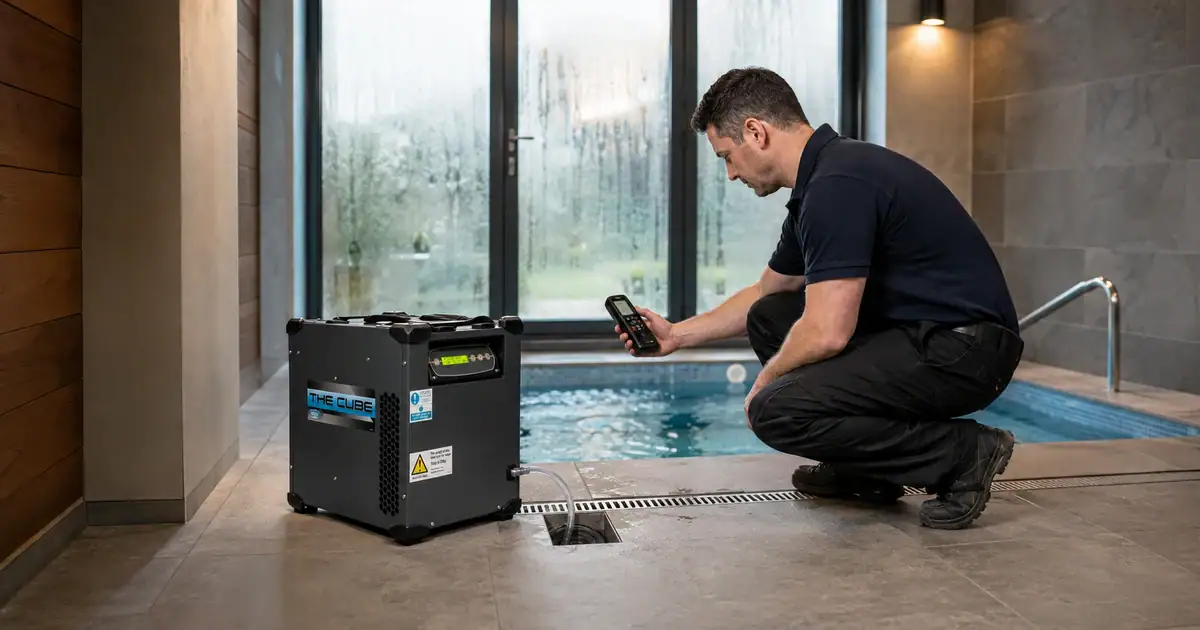
Short answer: an indoor pool, spa or hot tub room should sit at 50 to 60% relative humidity, with the air held about 1 to 2°C above the water temperature. Let it drift above 70% and you are no longer managing comfort — you are watching the building corrode.
Portable dehumidifiers are what you hire when the fixed plant fails, when a new pool is being commissioned, or when a spa room never had a system in the first place. Industrial units from £39.99 a day, delivered across London.
A pool room is the only part of a building deliberately designed around a large, warm, open tank of water. Everything else in the structure — the steel, the timber, the plaster, the glazing, the insulation — is being asked to live next to it. Get the air right and it lasts decades. Get it wrong and the damage is quiet, continuous and expensive, and it usually shows up in the roof void long before anyone notices a problem in the room.
This guide covers the numbers that actually matter, what goes wrong when they slip, when a hired dehumidifier is the right answer and when it is not, and what the kit costs.
On this page
The three numbers that run a pool room
Almost every pool room problem traces back to one of these three being wrong. They work together — fixing one while ignoring the others rarely helps.
1. Relative humidity: 50 to 60%
Below 50% the water evaporates faster, swimmers feel cold the moment they step out, and you waste heat replacing pool water. Above 60% you are into corrosion territory, and above 70% mould will grow on surfaces. The band is narrower than people expect.
2. Air temperature: 1 to 2°C above the water
Warmer air holds more moisture, which reduces evaporation off the pool surface, and it keeps swimmers comfortable when they get out. Air cooler than the water is the classic mistake — it drives evaporation up and dumps the moisture on every cold surface in the room.
3. Dew point versus surface temperature
Condensation does not care about the room average. It forms wherever a surface is colder than the dew point of the air — a window reveal, a steel purlin, an uninsulated lintel. This is why the damage usually starts somewhere nobody is looking.
Why a pool room sweats
A 46 m² pool can lose around 355 litres of water a day to evaporation alone. That is not a leak — that is the pool doing what warm open water does, and it is 355 litres a day that has to leave the building as vapour or condense somewhere inside it. There is no third option.
What uncontrolled humidity destroys
Pool air is not just damp. It is damp and chlorinated, and that combination is far more aggressive than moisture on its own. Damage runs in this order, roughly.
Structural steel and fixings
Ferrous metal corrodes quickly above 60% RH, and chlorinated moisture accelerates it. Roof fixings and hidden brackets are the ones that matter, because nobody inspects them until something moves.
Timber — roof, joinery, decking
Wood absorbs moisture, swells, and eventually rots. Ceiling timbers above a pool hall live in the worst air in the building and dry out the slowest.
Plaster, paint and render
Blown plaster, peeling paint, salt bloom. Redecorating a pool room that has not had its humidity fixed simply buys you the same job again in two years.
Glazing, frames and seals
Condensation running down glass rots frames, degrades seals and stains sills. In a domestic pool room this is usually the first visible symptom.
Insulation
Wet insulation stops insulating. The wall gets colder, the surface drops below dew point more easily, and the problem accelerates itself.
Air quality and comfort
High humidity concentrates chloramines, which is the smell people wrongly call “too much chlorine”. It irritates eyes and airways, and floors around the pool get slippery with condensate.
The quiet version of this problem is the expensive one. Most pool room damage is discovered during unrelated work — a roof repair, a re-roof, a survey before a sale. By then the humidity has been wrong for years. If your glass runs with water in winter, treat it as a reading, not a nuisance.
When hiring a dehumidifier is the right call
Straight answer, because it saves everyone time: a permanently used pool hall should have a fixed dehumidification or air handling system sized for the water surface area. Portable units are not a substitute for that, and we will tell you so on the phone.
What portable industrial dehumidifiers are genuinely good at is everything around that system.
Six jobs a hire unit does well
- The fixed plant has failed and parts are two weeks away. A hire unit keeps the building safe in the meantime.
- A new pool is being commissioned and the room has to be dried and stabilised before handover.
- A spa, hot tub or plunge pool room that never had a system, because nobody expected a domestic room to produce that much vapour.
- Seasonal or occasional use — a pool covered for winter still evaporates unless the cover is genuinely sealed.
- Refurbishment — screed, tanking, plaster and adhesive all have to dry before tiling, in a room already fighting humidity.
- Proving the problem before you spend on fixed plant. A month of readings with a hire unit tells you the real moisture load.
Find your building
Open the one that matches. Each gives the kit, the daily hire price and the thing most people get wrong in that situation.
How much extraction you need
Sizing a pool room is different from sizing a bedroom, because the moisture load is continuous rather than a fixed amount of water you are removing once. Two things drive it: the water surface area and the temperature difference between air and water.
| Space | Water surface | Start with | Per day |
|---|---|---|---|
| Hot tub or spa room | Up to 6 m² | 43L Dri-Eaz Cube | £39.99 |
| Small domestic pool room | 10 to 25 m² | 55L DrizAir 1200 | £49.99 |
| Domestic pool hall | 25 to 45 m² | 63L LGR | £59.99 |
| Large or commercial hall | 45 m² and up | 95L building dryer, often two | £77.99 each |
| Refurbishment, pool covered | Any | 55L or 63L plus air movers | from £49.99 |
These are starting points for a hire unit holding a room, not a design calculation for permanent plant. If the room has been wet for a long time the fabric itself is saturated, and the first two or three weeks are spent pulling water out of the building rather than out of the air. Our guides to sizing a dehumidifier and how many units you need cover the arithmetic in more detail.
Four setup details that decide whether it works
Drain it, do not empty it
Every unit we send for this kind of work can run to a drain or gully. A tank that fills in four hours is a machine that stops for twenty.
Keep the room closed
Doors to the rest of the house shut. Otherwise you are exporting pool humidity into bedrooms and hallways, which is how a pool room damages the house around it.
Cover the pool when you can
A properly fitted cover cuts evaporation dramatically. During refurbishment it is the cheapest single thing you can do.
Measure, do not guess
A £15 hygrometer left in the room tells you whether you are at 55% or 75%. Without it you are hiring on a feeling.
What it costs to hire
Daily hire from our Greenford UB6 depot, delivered across Greater London with same and next day delivery available. A refundable deposit applies and comes back in full when the equipment returns undamaged.
| Equipment | Per day | Extraction | Best for |
|---|---|---|---|
| 20L compact dehumidifier | £19.99 | 20 L/day | Changing rooms, small shower rooms, holding a dry room dry |
| 38L dehumidifier | £29.99 | 38 L/day | A closed pool hall over winter, quiet enough for occupied buildings |
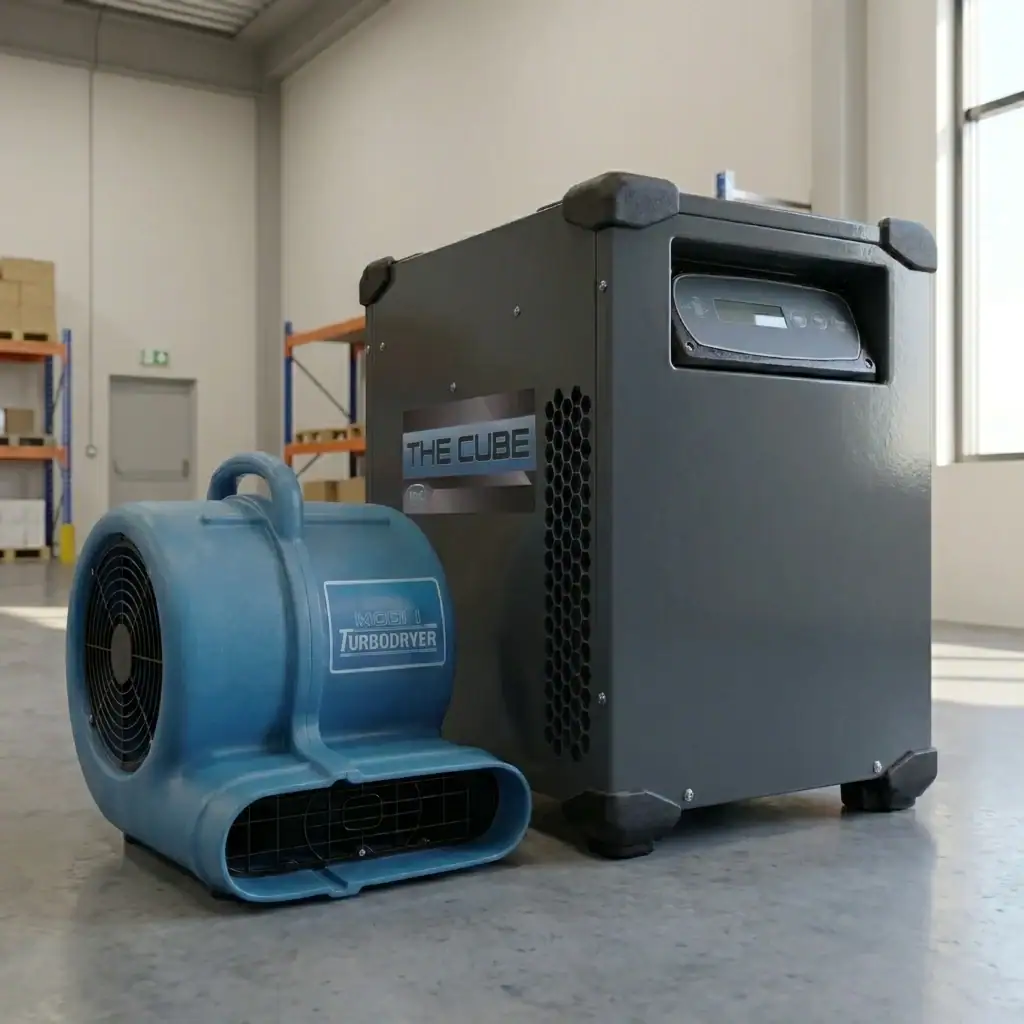
| the 43 litre Dri-Eaz Cube | £39.99 | 43 L/day | Hot tub and spa rooms, tight access, stackable |
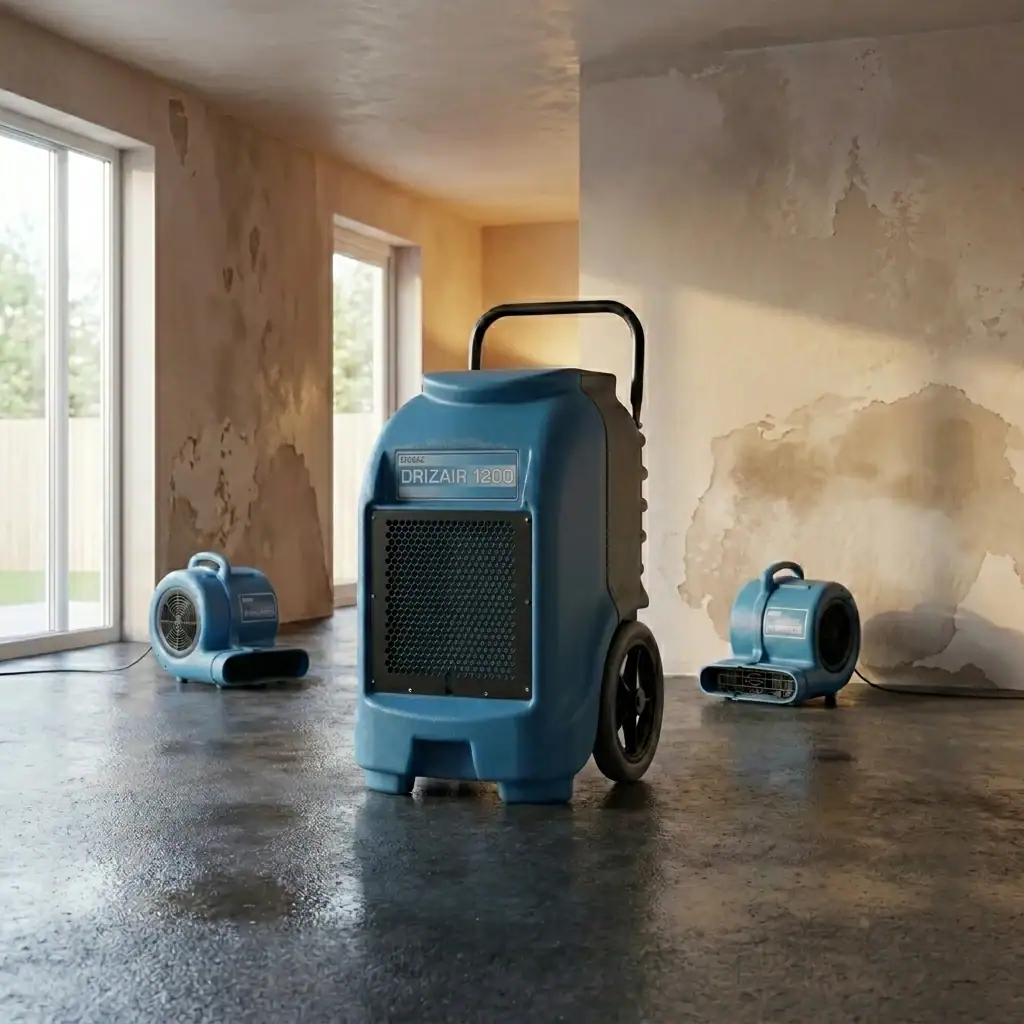
| 55L Dri-Eaz DrizAir 1200 | £49.99 | 55 L/day | Small pool rooms and commissioning, pump-out with a 12.2 m hose |
| 63L LGR industrial dehumidifier | £59.99 | 63 L/day | Domestic pool halls — keeps working once the air is already dry |
| a 95 litre building dryer | £77.99 | 95 L/day | Commercial halls and failed plant cover |
| Air mover | from £15.49 | — | Moving air onto cold surfaces and into dead corners |
For longer jobs, weekly rates and trade accounts are available — how tool hire trade accounts work explains the terms. Running cost is covered in what it costs to run a hired dehumidifier.
Six mistakes that cost buildings
Running the air cooler than the water
The single most common error. Cool air evaporates more water off the pool and holds less of it, so everything cold in the room starts dripping. Hold the air 1 to 2°C above the water.
Leaving the pool uncovered overnight
An uncovered pool evaporates all night, into a room nobody is heating or ventilating. A cover is the cheapest humidity control there is.
Opening the doors to the house
It moves the moisture rather than removing it, and it takes the problem into rooms with soft furnishings and no drainage.
Treating it as a decorating problem
Repainting a wall that is wet from the inside buys you two years. The paint is not failing — the air is.
Sizing on floor area, not water surface
Two rooms with the same footprint but different pool sizes have completely different moisture loads.
Ignoring the roof void
Warm moist air rises into it, condenses on cold steel and timber, and does its damage where nobody looks until the ceiling stains.
Pool and spa humidity questions
Related guides
What size dehumidifier do I need
Sizing by room volume and moisture load rather than by guesswork.
Dehumidifiers in cold rooms
Why a closed pool hall in winter can stall a refrigerant unit.
Warehouse and office humidity
The same physics in a much bigger box, and what it does to stock.
Dehumidifier versus air mover
Why the two machines do different jobs and why you usually need both.
Stopping condensation on windows
The domestic version of the pool room problem.
Solving a damp problem properly
Finding the cause before spending money on the symptom.
Pool, spa or hot tub room out of control?
Industrial dehumidifiers with pump-out drainage from £39.99 a day, delivered across Greater London.
See dehumidifier hireTell us the water surface area and the room temperature and we will tell you exactly what to take. Call 020 3375 4048 or message us on WhatsApp.

 Drone Survey & Mapping
 Drone Inspections